
Patterns worth studying.
What the corpus reveals about winning creative.
avatar monologue1.0M best392.6K avg · 5 videos10–16 min · 150 wpm
Rob Harlan: single-food correction (10-16 min)
Rob's primary format (about 70% of uploads): one food, one prohibited familiar method, one tested correction, proved side by side. Adopts the Granger mechanics (failure, absolution, delayed reveal, numbered pieces, identity close) without the fictional biography or interchangeable template.
Source: Rob_Harlan_YouTube_Master_Blueprint.docx (own channel blueprint, 15 Sep 2026)
Audience
Older practical Americans who cook at home; the pain is ruined familiar food or paying too much.
Emotional sequence
Recognition of the failure -> relief (it was the method, not you) -> curiosity held by one central question -> proof -> a repeatable method and one assignment this week.
Evidence


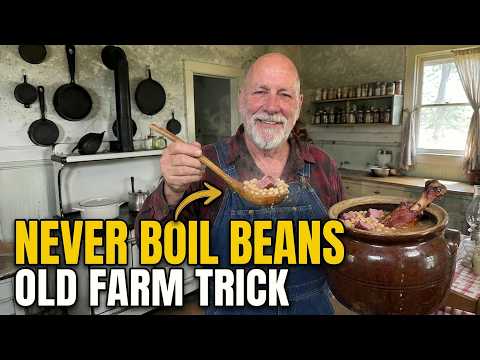

Title formulas
NEVER [common method] [specific food] Again — [credible alternative or result]
e.g. NEVER Start Bacon in a Hot Pan — The Cold-Pan Method Cooks It More Evenly
Corrective food. Part one interrupts a familiar behavior, part two promises the correction. Name the wrong action; do not leave it vague ('STOP Cooking Eggs Like This' failed for that reason).
STOP Buying [expensive cut or product] — [whole-item method] Gives You [specific advantage]
e.g. STOP Buying Only Chicken Breasts — One Whole Bird Makes Three Meals
Price reversal; fits the stretch-one-ingredient pillar and the digital product.
STOP [apparently sensible action] — It Is Ruining [valuable result]
e.g. STOP Crowding Fried Chicken in the Pan — This Is Why the Crust Falls Off
Myth correction; needs a supportable mechanism.
Script beat sheet
- 1Mirror the pain · 0:00-0:20
Open inside a scene in progress: the exact failed food in sensory detail, ideally a paired failure (dry vs watery, burnt outside vs raw inside). No greeting. Food visible in five seconds.
“The rib sauce has turned to tar and the meat clings to the bone like it is holding on for its life.”
- 2Remove shame · 0:20-0:45
The failure is not a lack of talent; it is one inherited modern instruction. Recast the familiar tool or method as the cause.
“If that keeps happening, it is probably not you. It is the hard boil. Most kitchens do it because the bag says so.”
- 3Earn authority with proof, not memory · 0:45-1:20
Promise what will be tested and what visible, measurable result the viewer will see. Use sourced history if any; no invented memories.
“Today I am testing the covered skillet against the grill, and before we finish you will see the two racks side by side.”
- 4Map the journey · 1:20-1:50
Name the 5-7 pieces and promise one tested turning point late.
“There are six pieces: the cut, the salt, the fat, the heat, the lid, the rest. The lid is the one that decides it.”
- 5Identity, one sentence · 1:50-2:20
Rob identifies himself in one sentence only after the problem is clear. Soft CTA at most; no product yet.
- 6Progressive value · 2:20-9:30
Each section: rule -> what most people do -> mechanism -> exact instruction (quantity, temperature, time, cue) -> failure mode -> micro open loop into the next. Give one immediately usable improvement inside the first two minutes of the body.
“Salt earlier. Most people salt right before the pan. Time lets the seasoning move past the surface. Half a teaspoon of coarse salt per chop, an hour ahead. Do not cover before browning. The lid only works because of what goes underneath.”
- 7Re-open tension · 9:30-11:30
Signal that ordinary advice is finished and the missing method is next, using a genuine midpoint question or a test result, never a stage label.
“Everything so far improves the result. The next change is the one that decides it.”
- 8Reveal and prove · 11:30-13:00
Name the old method, explain why it works as a synthesis of the earlier facts, and show the side-by-side evidence at the reveal.
“Here is where the two pans begin to look different.”
- 9Reduce friction · 13:00-14:30
Substitutions, the simplest version, safe alternatives, likely objections. Keep it short.
- 10Recap and identity close · 14:30-15:30
Recap chronologically; name the single highest-leverage action; one assignment this week; close the story without invented loss; one specific comment question; preview the next episode from that question; one stable channel line. One CTA only.
Retention devices
- Delayed reveal: the decisive method is promised near the opening and revealed around two thirds to three quarters through; every earlier section must still change the viewer's next action (value before delay).
- Numbered progress (cut, salt, fat, heat, lid, rest) so the viewer knows where they are; vary the arc episode to episode.
- Mechanism before instruction: moisture, starch, connective tissue, heat, or cost, explained accurately.
- Counter-position: modern habit versus old practice, without anti-modern rhetoric.
- Pattern reset at section boundaries: 'everything so far was the easy part; the missing piece comes next' (never read production cues aloud).
- Objection handling: substitutions, safety limits, slow-cooker alternative; keep caveats short.
- Transitions that carry cause into effect: 'Because the pan is now dry, the fat can coat the potato instead of floating in water.' 'Here is where the two pans begin to look different.'
- Proof over provenance: side-by-side test, measured temperature, weight, time, texture, or cost, instead of invented memories.
Calls to action
- One CTA only at the end; no stacked subscribe/like/share/product/newsletter asks.
- Comment question: one specific, answerable question about a family method, ingredient, tool, or region; use the answers to preview a credible next episode.
- Product (a method-card decision guide, not a generic cookbook) only after value, one sentence.
- Show the title's food or object in the first five seconds; the first sentence must fulfil the click.
Thumbnail pattern
hero_result_with_actionOne hero food or object at 40-55% of frame; Rob on the opposite third, chest up, gaze or gesture toward the subject; one frozen action (lifting the lid, pouring, pressing the meat); 2-5 words that add a clue the title did not give ('START COLD', 'ONE DRY MINUTE', 'SAUCE GOES LAST'), never a repeat of the title; yellow/white condensed caps with black outline, red only for genuine contradiction; at most one arrow, pointing at the causal detail; must read at 10% size. Make three concepts: result-led, mistake-led, mystery-led.

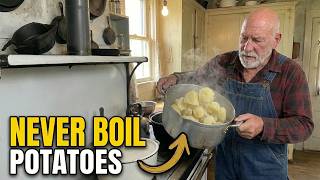
Persona bible
| Name | Rob Harlan |
| Credential | The practical older neighbor who tests forgotten kitchen methods against modern habits. Identified in one sentence, only after the problem is clear. |
| Region | None claimed. No invented county, farm, mother, profession, or memory. |
| Catchphrase | One stable channel line at the close; never stacked with like/share/product asks. |
| Voice | 145-155 words per minute; sentences of 8-18 words; concrete nouns (skillet, lid, blade chop, cold pot, rendered fat); says what is known, what was tested, and what remains preference; one dry joke at most every two to three minutes; never belittles the viewer; describes industry incentives accurately, never as conspiracy. |
| Disclosure | Realistic AI presenter: select YouTube's altered/synthetic content disclosure on upload. |
Do not
- Do not reuse Otis Granger's occupation, mother, locations, slogans, costume exactness, or invented history.
- No invented first-person family history or dead-relative memories; use documented accounts, viewer stories with permission, or clearly labelled composite storytelling.
- No filler that exists only to delay the reveal; if the episode summarises in one sentence and the rest stalls, rewrite.
- No health, safety, historical, price, or performance claim without a source or a test; do not use one person's longevity as proof.
- Never write PATTERN BREAK, B-ROLL, CUT TO, ASTERISK or NUMBER inside spoken narration.
- Do not stack emotional mechanisms in a title: one of contradiction, hidden value, thrift, disgust, nostalgia, or danger.
- Reject any title whose promised reveal is not clearly delivered; reject thumbnails that repeat the title, show a result absent from the video, or need tiny labels.
- Do not introduce collectibles or general decluttering on the Kitchen channel.