
Patterns worth studying.
What the corpus reveals about winning creative.
listicle explainer4.0M best1.1M avg · 85 videos26–31 min · 148 wpm
Consumer Exposed – 'Don't Buy These X Brands' Playbook
A faceless investigative-style channel that ranks 5-17 mass-market grocery brands from 'avoid' to 'safe,' using regulatory loopholes, lab tests, and legal minimums to justify each verdict. Winners hit 1M-4M views by picking universal pantry staples (bread, ground beef, ice cream, tuna, bacon, butter) with a shocking cold-open stat, while losers picked narrower/premium categories (steak, avocado oil, instant coffee, parmesan) with the same structure but far lower search demand and views in the low thousands.
Source: @consumerexposed-ghz (extracted)
Audience
Health-conscious grocery shoppers and parents, 30-65, who read ingredient labels but don't fully understand regulatory codes; skew female, budget-and-wellness minded US consumers.
Emotional sequence
betrayal (I trusted this brand) -> alarm (specific chemical/legal numbers) -> vindication (I was right to be suspicious) -> empowerment (now I know exactly what to check) -> mild relief (safe alternatives exist) -> social duty (share to protect others).
Evidence


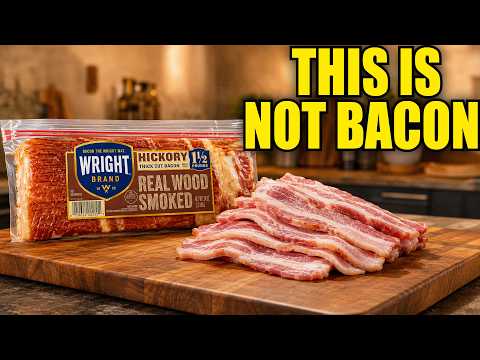


Title formulas
{Number} {Everyday Food Category} Brands to AVOID (And {Small Number} That Are Actually {Safe/Real})
e.g. 10 US Bread Brands to AVOID and 3 That Are Actually Safe
best 4.0M
Category must be a daily-purchase staple food everyone in the country buys weekly (bread, ground beef, bacon, ice cream, tuna, butter) — high universal search volume, not a niche/premium product
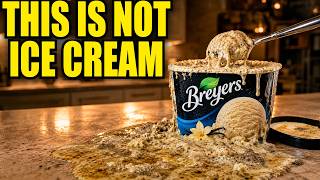
DON'T Buy These {Number} {Food} Brands (And {Small Number} That Are ACTUALLY {Real Descriptor})
e.g. DON'T Buy These 17 Ice Cream Brands (And 8 That Are ACTUALLY Real Ice Cream)
best 4.0M
'Real/Actually' framing implies a legal-definition loophole (e.g., 10% milk fat rule) that most brands fail — needs a genuine bright-line regulatory threshold to hang the whole list on
{Number} US {Food} Brands That Don't Use 100% {Core Ingredient} (And {Small Number} That Do)
e.g. 10 US Ground Beef Brands That Don't Use 100% BEEF (And 8 That Do)
best 4.0M
Core ingredient slot must be something consumers assume is the sole/obvious content of the product — the twist is legal substitution consumers don't expect
We Sent {Number} Popular {Food} Brands to a Lab — Most FAILED the Test
e.g. We Sent 11 Popular Instant Coffee Brands to a Lab — Most FAILED the Test
best 5.5K
Weaker variant: works when the underlying category has less universal daily-purchase weight (coffee, avocado oil, parmesan, steak) — evidence shows these titles underperform even with identical structure
Script beat sheet
- 1Cold-open shock stat · 0:00
Open with a single alarming, specific, sourced number or fact before any brand is named — must reference an official body (lab, state health dept, USDA) to establish this isn't opinion.
“Six out of eight came back positive for glyphosate, the active chemical in Roundup.”
- 2Universalize the target · 0:10-0:20
State that this is a food nearly every viewer eats regularly, to make the threat feel personal and unavoidable.
“Ground beef is one of the most purchased foods in America. And most people buying it this week have no idea what's actually inside the package.”
- 3Reveal the mechanism/loophole · 0:20-0:40
Introduce the specific legal definition, threshold, or regulatory gap that will be used to judge every brand on the list (must be a real, citable rule).
“The USDA requires a minimum of 10% milk fat for a product to legally carry the name ice cream.”
- 4Preview the twist · 0:40-1:00
Tease that expensive/organic/trusted brands will fail too, subverting the assumption that price or health-labeling equals safety.
“Some of the worst results didn't come from the cheap brands. They came from the ones with organic labels.”
- 5State the structure & promise the payoff · 1:00-1:15
Tell viewer exactly how many to avoid and how many are safe, and that the list moves worst-to-least or low-to-high concern, ending with recommended safe picks.
“We're counting down all 10 from concerning to genuinely shocking and finishing with the three brands that came back completely clean.”
- 6Countdown entries: trust-then-betrayal per brand · 5%-70%
For each numbered brand: (a) name the emotional/marketing hook of the brand ('sounds like a backyard cookout'), (b) flip the label/evidence to contradict it, (c) cite one specific lab number, lawsuit, recall, or legal citation, (d) close with a one-line verdict.
“Bubba Burgers are sold as beef patties, not ground beef... every one of those restrictions disappears.”
- 7Escalation to worst offender · ~60-70%
Reserve the single most damning entry (death, criminal charge, largest fine) for the #1 avoid slot, framed as worse than mere ingredient concerns.
“Evidence showed senior leadership, including the CEO, had been aware of contamination concerns and had not acted on them... The CEO was criminally indicted.”
- 8Pivot to the safe list · ~70-80%
Explicitly flip tone from avoid to reward; name the small number of brands that meet the earlier-stated legal/quality bar with one specific reason each.
“Tillamook is in that aisle. Van Leeuwen is in Walmart. Häagen-Dazs classics are in virtually every grocery store.”
- 9Give a checkable field test · ~85%
Hand the viewer a concrete, repeatable action they can do in-store tonight (an ingredient to spot, a number to find, a texture/smell test).
“Look for guar gum. Look for potassium metabisulfite. Look for carrageenan, polysorbate 60, and locust bean gum.”
- 10Reframe the stakes / cost justification · ~90%
Reduce cognitive dissonance about paying more by comparing small price delta to long-term health cost.
“Clean bread costs more, roughly 50 cents a slice at the high end. That is still considerably less than managing long-term health conditions.”
- 11Close with knowledge-as-power line · ~95%
Deliver a short rhetorical closer that reframes the whole video as 'now you know' / label vs. truth contrast.
“The label tells a story. The lab result tells the truth.”
- 12Share-CTA to a specific person · 98-100%
Ask viewer to share with a named type of person who needs this (not a generic subscribe ask), tied to the video's specific topic.
“Share this with anyone you know who's eating canned tuna for their health right now.”
Retention devices
- Numbered countdown format (10→1) creates a checklist the viewer scans for their own brands
- Direct second-person instructions to physically interact with a real object ('Flip it over,' 'Press on the bag,' 'Pour a small amount and check')
- Specific hard numbers used as pattern interrupts throughout (587 parts per billion, $11 billion, 40% of daily sodium)
- Recurring 'trust-then-reveal' micro-structure per entry keeps a mini cliffhanger every 60-90 seconds
- Teases the #1/worst entry early ('the one at number one isn't the worst because of a lawsuit...') to sustain curiosity across full runtime
- Cross-video hooks at the close ('the olive oil aisle has the exact same problem... that one's already up') to drive session watch time
Calls to action
- Always target sharing, not subscribing, and name a specific type of person to send it to (someone who buys it regularly / eats it weekly / cooks with it)
- Tie the share ask to the specific investigated food, never a generic 'like and subscribe'
- End on an empowerment line reframing the video as giving the viewer detection ability, not just information ('Now you know how to see through them')
Thumbnail pattern
Grid or side-by-side of 3-5 real, recognizable brand packages/logos for the featured food category, with a red X or warning graphic over the 'avoid' ones and a green check over the 'safe' ones; narrator/avatar not required to be visibleShort bold all-caps or title-case overlay text matching the video title's key phrase (e.g., 'DON'T BUY THESE' or 'AVOID'), 3-6 words max, high-contrast red/white on the product photography


Persona bible
| Name | unnamed narrator (no on-screen persona name used) |
| Credential | implied investigative team: 'we investigated,' 'independent laboratory testing,' 'Florida's Department of Health,' 'Consumer Reports' — authority borrowed from labs/regulators rather than a named host |
| Region | United States (national grocery chains, USDA/FDA/EPA framing) |
| Catchphrase | 'Every fact in this video comes directly from the ingredient label' / 'Share this with someone who still grabs the first one they see.' |
| Voice | calm, measured, forensic-narrator tone; short declarative sentences; frequent direct address ('you,' 'your kitchen,' 'flip it over'); never yells, builds dread through fact-stacking rather than tone |
Do not
- Do not choose niche/premium categories with lower universal purchase frequency (steak, avocado oil, instant coffee, parmesan) — losers used identical structure but topics had far less mass relevance and underperformed
- Do not let the emotional hook (brand nostalgia, trust, premium story) go unresolved without a concrete lab number, legal citation, or recall figure to back the reveal — losers lean more on inference and corporate-structure explanation with fewer hard sourced numbers per entry
- Do not end on vague ownership/consolidation trivia as the climax (losers dwell on JDE Peet's/Nestlé market share) instead of a visceral consumer-facing consequence (illness, death, fine)
- Do not soften the worst-brand reveal with hedging language ('understandable response,' 'to their credit') — losers show sympathy toward brands (Wegmans, Kroger) which dilutes the exposé tension winners maintain