15 GENIUS Car Hacks You Won't Believe Actually Work!
CarCraft · 1.8M views · 2026-05-24 · 357.2x outlier
Title analysis
{N} Genius {category} Hacks You Won't Believe Actually Work · curiosity_gap · list
Disbelief framing challenges viewer to verify surprising claims themselves.
Title features
9 words · number
Script
3609 words · 137 wpm · 26.4 min
Hook: Most drivers, nearly 94% of them, have never come across the kind of tricks I'm about to walk you through. Some of these can save you hundreds of dollars a month on repairs.
Type / score: bold_claim · 7/10
Structure: list
Promise: full
Tone: conspiratorial, money-saving, confident
Diagnosis: The consistent price-comparison structure (shop cost vs cheap household fix) gives every segment a satisfying mini-payoff, which should hold viewers through the list since each hack reliably delivers on the 'genius hack' promise. However the repetitive formula (problem, chemistry explanation, cost comparison) across 15 items risks fatigue and predictability by the midpoint, especially with no persona backstory or vocal variation to break the pattern.
Full transcript with timestamps
00:00 Most drivers, nearly 94% of them, have
00:04 never come across the kind of tricks I'm
00:06 about to walk you through.
00:08 Some of these can save you hundreds of
00:10 dollars a month on repairs. Others
00:13 quietly add years to the life of your
00:15 car, and mechanics would honestly prefer
00:18 you never figured out a single one of
00:20 them.
00:21 Here are 15 genius car hacks no one
00:24 believes actually work.
00:27 Let's start with number 15. Glance at
00:30 your tires for a second. Odds are the
00:32 sidewalls look dull, worn, faded. Here's
00:36 something the detailing world quietly
00:38 cracked years ago. Black shoe polish,
00:41 the paste version and not the liquid,
00:43 behaves on rubber exactly the way it
00:46 behaves on leather. Grab an old brush or
00:48 a soft cloth, work the paste into the
00:51 sidewall with short circular strokes,
00:53 let it sit for about a minute, then buff
00:56 away the excess with a dry rag.
00:59 What you're left with is a deep, even,
01:01 matte black finish. It doesn't fling off
01:04 at highway speed. It doesn't grab grime
01:07 the way glossy sprays do. Tire dressings
01:10 at the auto parts store run anywhere
01:12 between $10 and $18 a bottle, and most
01:15 of what you're paying for washes off the
01:18 first time it rains. A tin of paste shoe
01:20 polish costs about $3 and lasts for
01:23 months.
01:25 Detailers have been quietly using this
01:27 trick on customer vehicles for years.
01:30 They just never advertise it. Because
01:32 the markup on branded tire products is
01:35 too generous to give up.
01:38 Now let's drop down to something most
01:40 people overlook every time they get
01:42 behind the wheel.
01:44 Hack number 14.
01:46 Your gas, brake, and clutch pedals take
01:49 a beating every day. The rubber slowly
01:52 hardens, cracks, and wears down. And
01:54 when that starts happening, the pedals
01:56 turn stiff, squeaky, and slippery
01:59 whenever they get wet, which is the
02:01 exact moment you need them to behave.
02:04 Here's a fix almost nobody thinks about.
02:07 A thin layer of petroleum jelly rubbed
02:10 into rubber pedal covers brings the
02:12 material back to life. The flexibility
02:15 returns, the squeaking stops, and the
02:18 surface stops cracking under heat and
02:21 constant pressure.
02:23 Apply a small amount with your fingertip
02:26 cloth. Work it gently into the texture,
02:29 then wipe away the excess so the pedal
02:31 stays grippy rather than slick.
02:34 Interior shops will quote between 50 and
02:37 80 dollars to replace worn pedal covers
02:40 with aftermarket sets.
02:43 What they leave out is that half the
02:44 time the existing rubber just needs
02:46 conditioning, not replacing.
02:49 A $2 jar of petroleum jelly handles that
02:52 job and keeps your pedals performing the
02:55 way they should.
02:57 Up next, a hidden feature sitting inside
03:00 your car door right now that almost
03:02 nobody knows is there.
03:05 Hack number 13.
03:07 Maybe one of your power windows has been
03:10 acting strange lately.
03:12 It hesitates, stops halfway, or refuses
03:16 to close fully unless you hold the
03:18 button the entire time.
03:20 Before you assume the motor is dying and
03:23 hand a mechanic 200 to 400 dollars for
03:26 the repair,
03:28 there's one thing worth trying first.
03:31 Here's what your dealer won't volunteer
03:34 at delivery.
03:35 Power windows on most modern vehicles
03:38 operate through a calibrated memory
03:40 system.
03:41 If the battery has ever been
03:43 disconnected, if the car had a software
03:46 glitch, or if the window got pushed
03:48 manually out of position, that
03:51 calibration resets and the window loses
03:53 its reference points.
03:55 The fix takes roughly 30 seconds.
03:59 Hold the button all the way down until
04:01 the glass reaches the bottom, then keep
04:03 holding it for 3 more seconds. Now pull
04:06 the button all the way up, hold it until
04:09 the window is fully closed, then keep
04:11 holding for another 3 seconds.
04:15 Release.
04:16 Test it.
04:18 On most vehicles, that sequence rewrites
04:21 the window motor's memory and restores
04:23 full one-touch operation immediately.
04:26 Mechanics file this under window
04:28 regulator diagnostic and pocket between
04:31 60 and $90 in labor for what is, in
04:35 reality, a 30-second button sequence.
04:39 Now let's pop the hood for something you
04:41 can buy at any gas station.
04:44 Hack number 12. Battery corrosion is one
04:47 of those problems that creeps up on you.
04:49 That chalky white crust builds slowly
04:52 around your terminals until one morning
04:54 your car hesitates to start and you're
04:56 already late for something.
04:58 Most drivers either panic and buy a new
05:01 battery or hand $50 to a shop for a
05:04 cleaning.
05:05 Here's the chemistry behind a fix that
05:07 costs [music] almost nothing.
05:10 The acids naturally present in cola
05:12 react with the alkaline compounds that
05:14 form battery corrosion and break them
05:16 down on contact. Pour a small amount
05:19 directly over the affected terminals and
05:22 you can watch it work in real time,
05:24 fizzing and lifting the build-up.
05:27 Give it about 2 minutes, scrub the area
05:30 with an old toothbrush, [music] rinse
05:32 thoroughly with water, dry everything
05:34 completely, and start the car.
05:37 What shops use for this service is a
05:39 commercial battery cleaner, which is
05:41 essentially the same acid-based
05:43 chemistry packaged into a branded
05:46 aerosol that costs them pennies per use.
05:50 They charge you $50 for the service and
05:53 try to sell you a $20 bottle you didn't
05:55 need.
05:57 A can of cola from the vending machine
05:59 is $2 and your terminals come out
06:01 looking factory fresh. Hang on to that
06:04 difference.
06:06 Now for something you've probably
06:08 overlooked every single time you've gone
06:11 grocery shopping.
06:13 Hack number 11. You load groceries into
06:17 the trunk, you drive home, and by the
06:20 time you pull in, half the bags have
06:22 toppled over, the eggs are scrambled,
06:25 and whatever was in that glass bottle is
06:27 now a much bigger problem.
06:30 This happens every week to millions of
06:33 drivers and most just accept it as part
06:36 of the deal.
06:37 Here's what very few people realize.
06:40 The majority of SUVs, crossovers,
06:43 minivans, and even a lot of sedans built
06:45 in the last decade have retractable
06:47 cargo hooks integrated directly into the
06:50 floor or sidewalls of the trunk.
06:53 They fold flat when not in use, which is
06:56 exactly why most owners never spot them.
07:00 Lift them up and you have proper anchor
07:02 points to hang and secure grocery bags
07:05 so they stay upright the entire drive.
07:08 Cargo organizers sold at auto stores run
07:11 $25 to $60 for something your car
07:14 already can equip to do for free.
07:17 Take a look at the trunk floor and
07:19 sidewalls, particularly near the
07:21 corners. If you spot flat metal loops or
07:24 recessed clips, congratulations. The
07:27 feature is already there waiting. Before
07:30 we get into the truly jaw-dropping ones,
07:33 do me a quick favor and hit that like
07:35 button. Hours of research go into these
07:38 scripts and every like helps us keep
07:41 making content that protects your
07:43 wallet.
07:44 All right, back to it.
07:46 Hack number 10,
07:48 bird droppings,
07:50 tree sap,
07:51 the industrial fallout you pick up
07:53 driving the highway.
07:55 None of these are just cosmetic
07:57 problems.
07:58 They're chemically aggressive, and if
08:00 left alone, they will etch directly into
08:03 your clear coat.
08:04 Most drivers try to scrub them off dry
08:07 and end up scratching the surface, or
08:09 they buy a specialty paint
08:11 decontamination products at $20 a
08:14 bottle.
08:15 Here's a solution that has been sitting
08:17 in your pantry the whole time.
08:20 Baking soda mixed with just enough water
08:22 to form a soft paste becomes a gentle,
08:25 non-abrasive cleaner that neutralizes
08:28 the acidic compounds eating into your
08:30 paint.
08:31 Apply a small amount to the affected
08:34 spot using a soft microfiber cloth. Work
08:37 it in lightly with circular strokes. Let
08:40 it sit for about 60 seconds, then wipe
08:43 away and rinse clean.
08:45 The neutralization happens at a chemical
08:48 level, not through scrubbing force,
08:51 which means you're lifting the
08:52 contamination off the surface without
08:55 dragging abrasive particles across your
08:57 clear coat.
08:59 Paint correction at a detail shop starts
09:02 at $150
09:04 for even minor surface work.
09:08 A box of baking soda is $1.50.
09:12 The chemistry is identical.
09:15 The markup isn't.
09:17 Now, here's a two-ingredient trick that
09:19 will make hazy headlights look brand new
09:21 in under 10 minutes.
09:23 Hack number nine,
09:25 yellowed, hazy headlights aren't just
09:28 unattractive. They're a real safety
09:31 issue.
09:32 UV damage gradually clouds the
09:34 polycarbonate lens, which scatters your
09:37 light output and quietly cuts your
09:39 nighttime visibility by a significant
09:42 margin.
09:44 Headlight restoration kits at auto parts
09:46 stores cost between $20 and $35 and
09:49 require multiple compounds and wet
09:51 sanding.
09:53 Here's a two-step method that gets you
09:55 nearly the same result for almost
09:57 nothing.
09:58 Start with a non-gel white toothpaste,
10:01 the gritty, old-fashioned kind.
10:04 Apply a generous amount to each lens and
10:07 scrub firmly with a damp cloth using
10:09 small circular motions for about 2
10:12 minutes.
10:13 The mild abrasive in the paste lifts
10:15 away the top oxidized layer and clears
10:18 the haze.
10:20 Rinse clean.
10:22 Then, while the lens is still slightly
10:24 damp, apply a thin coat of regular paste
10:27 car wax and buff it out.
10:30 The wax seals the freshly cleaned
10:32 polycarbonate and slows the rate at
10:34 which of damage returns, which means you
10:37 can stretch the result for several
10:39 months.
10:40 Shops charge between $80 and $150 for
10:44 professional headlight restoration with
10:46 a motorized polisher and UV sealant
10:48 coating.
10:50 Your total cost with toothpaste and wax
10:52 sits under $5 if you already have both
10:55 at home, which, let's be honest, you
10:58 probably do.
11:00 Up next, a spray can trick that quietly
11:03 protects your car from one of its most
11:05 expensive enemies.
11:08 Hack number eight.
11:10 Rust never announces itself. It starts
11:13 in the hidden spots, the undercarriage,
11:16 the wheel wells, the inside edges of
11:19 doors, the bottoms of frame rails.
11:22 By the time you actually see it on the
11:24 surface, the damage underneath has been
11:26 developing for a long time.
11:29 Body shops charge hundreds, sometimes
11:32 thousands, for rust repair and
11:34 rust-proofing treatments built around
11:37 specialized undercoating products.
11:40 Here's what they're doing that you can
11:41 replicate at a fraction of the cost.
11:44 WD-40 is a water displacement compound.
11:48 That's literally what the WD stands for,
11:51 and it forms a thin moisture-resistant
11:53 barrier over metal surfaces that slows
11:56 the oxidation process responsible for
11:59 rust.
12:00 Spray it along exposed metal edges, into
12:03 door seams, around wheel arch lips, and
12:06 across any bare metal you can reach on
12:09 the undercarriage. To be straight with
12:11 you, this is not a permanent rust cure,
12:13 and it won't reverse rust that's already
12:15 started.
12:17 But as a preventive treatment applied
12:19 twice a year, especially before winter
12:22 if you live in a salt region, it's one
12:24 of the most cost-effective things you
12:26 can do to protect your car's long-term
12:29 structural integrity.
12:31 Professional rust-proofing at body shops
12:34 runs $100
12:36 per application.
12:38 A can of WD-40 is $3.
12:42 The underlying chemistry of moisture
12:44 displacement is the same.
12:46 Next up, a 30-second fix that most
12:50 mechanics actually bill as a diagnostic
12:52 service.
12:54 Hack number seven.
12:56 Your windshield washer fluid is spraying
12:58 everywhere except your windshield. It's
13:01 hitting the roof, flying off the hood,
13:03 or drenching the passenger side while
13:06 leaving the driver side bone dry.
13:08 You're burning through fluid and getting
13:10 zero coverage where it actually matters.
13:14 Here's what mechanics will happily turn
13:16 into a service ticket.
13:18 The nozzles aren't broken, they're just
13:21 pointed the wrong way.
13:23 Each washer nozzle has a tiny adjustable
13:26 tip with a pinhole opening.
13:28 Slide the tip of a sewing needle or a
13:30 thin push pin gently into the hole and
13:33 apply light directional pressure up,
13:36 down, left, or right to pivot the nozzle
13:39 toward your target.
13:41 The tip moves easily.
13:43 Test the washers after each small
13:45 adjustment until the spray lands dead
13:47 center on both sides. Start to finish,
13:50 it takes under a minute.
13:53 Shops write this up as a washer system
13:55 inspection and charge
13:59 labor for something a household sewing
14:02 needle solves in under 60 seconds.
14:05 Now, let's clean up your windshield even
14:07 further with something already in your
14:10 kitchen cabinet.
14:12 Hack number six. The windshield looks
14:15 clean by every standard measure.
14:17 You washed it. You used glass cleaner.
14:21 You wiped it down.
14:23 And yet, the moment the sun drops to
14:25 that specific late afternoon angle, it
14:28 turns into a wall of blinding glare.
14:31 The culprit is a thin film of soap
14:34 residue, silicone from interior sprays,
14:38 and airborne grease that builds up
14:40 invisibly on the glass over time.
14:44 Here's what cuts through it completely.
14:46 Mix equal parts plain vinegar and water
14:50 in a spray bottle.
14:51 Apply it directly to the glass and wipe
14:54 with a clean microfiber cloth.
14:57 The acetic acid in the vinegar dissolves
15:00 the film and lifts mineral deposits left
15:03 behind by hard water without leaving any
15:06 residue of its own.
15:08 It evaporates completely and takes the
15:11 grime with it.
15:13 Premium glass treatment services at
15:16 detailing shops run $30
15:20 and they're using what amount to
15:21 professional grade acidic glass
15:24 cleaners.
15:25 Same chemistry.
15:27 The store-bought glass cleaners in the
15:29 blue bottles that go for $9 to $12 often
15:32 make streaking worse thanks to additives
15:34 designed to make the product smell
15:36 pleasant and look colorful.
15:38 A gallon of white vinegar is $3 and will
15:42 cover a year's worth of windshield
15:44 treatments.
15:45 Keep a spray bottle mixed and ready in
15:48 the garage.
15:49 This next one is a feature already
15:51 programmed into your car that almost
15:53 nobody ever activates.
15:56 Hack number five. You step out of your
15:59 car in a hurry.
16:01 You walk away and somewhere between the
16:03 curb and your front door, the thought
16:06 arrives.
16:07 Did I actually lock it?
16:09 You walk back, you check, you feel a
16:12 little ridiculous, and two minutes of
16:14 your day are gone. This happens to
16:16 millions of drivers every single day.
16:19 Here's something your dealer never
16:20 bothered to walk you through at
16:22 delivery. Most vehicles built after 2010
16:26 have an automatic door locking feature
16:28 baked into the body control module.
16:31 It locks all doors once the car reaches
16:34 a set speed, usually between 8 and 15
16:37 miles per hour.
16:39 >> [music]
16:39 >> Or locks automatically when you shift
16:42 into park and remove the key.
16:44 The feature is already in your car's
16:46 programming. It's just disabled by
16:49 default from the factory.
16:51 Turning it on takes about 90 seconds
16:53 through your infotainment menu under
16:56 vehicle door locks or security depending
16:59 on the make and model.
17:01 Some older vehicles need a specific
17:03 button sequence on the door panel,
17:06 usually involving the lock button and an
17:08 ignition cycle. And the steps are laid
17:11 out in your owner's manual.
17:13 Once it's active, you'll wonder how you
17:16 ever drove it.
17:18 Dealers charge
17:20 $150 to program this feature as a
17:23 convenience upgrade.
17:25 The software is already there. It only
17:28 needs to be switched on.
17:30 5 minutes with the owner's manual and
17:33 you'll never second-guess a locked door
17:35 again.
17:37 The next one could genuinely extend the
17:39 life of your entire AC system and it
17:42 takes about 10 minutes with a garden
17:45 hose.
17:46 Hack number four.
17:48 Your air conditioning runs constantly,
17:50 but the air coming out feels lukewarm at
17:53 best.
17:54 The cabin filter has already been
17:56 replaced, the refrigerant level is fine,
17:59 and the system passed your last
18:01 inspection.
18:02 The actual problem is sitting right in
18:04 front of your radiator and nobody told
18:07 you to look there.
18:08 Here's what VAAC techs know that most
18:11 car owners don't.
18:13 The AC condenser, the component tucked
18:15 just behind the front grill that
18:17 releases heat from the refrigerant, gets
18:20 clogged over time with bugs, road
18:22 debris, cottonwood seeds, and packed
18:24 dust.
18:25 Once airflow through the condenser is
18:27 restricted, the system can't shed heat
18:30 efficiently, which means it works
18:32 harder, cools less, and adds extra wear
18:35 to the compressor.
18:37 The fix is straightforward.
18:40 With the car off and cool, aim a garden
18:43 hose gently through the front grill from
18:45 the engine side outward.
18:48 Don't blast high-pressure water directly
18:51 at the fins.
18:52 Just flush the debris out.
18:55 Let it dry completely before running the
18:58 AC again.
18:59 Most drivers who try this for the first
19:01 time are genuinely surprised at how much
19:04 cooler the next drive feels.
19:07 Do this once every spring and your AC
19:09 will run stronger and last several years
19:12 longer than it would otherwise.
19:15 AC system servicing at a shop starts at
19:17 $150
19:19 and often includes refrigerant top-offs
19:21 for a problem that was never about
19:23 refrigerant in the first place. A garden
19:26 hose and 10 minutes on a Saturday solves
19:28 it for free.
19:30 Now, let's step inside the cabin and
19:32 deal with something that makes most car
19:34 interiors look far older than they
19:37 actually are.
19:39 Hack number three, coffee on the seat
19:42 fabric.
19:43 Grease on the carpet.
19:46 Something unidentified that has been
19:48 there for 3 months and has fully
19:50 committed to staying.
19:52 Interior detailers charge 80 to $150
19:55 for upholstery cleaning
19:58 using what they describe as
19:59 professional-grade enzyme cleaners and
20:02 extraction equipment.
20:04 Here's what works on fabric stains
20:06 before you call anybody.
20:08 Sprinkle a generous layer of dry baking
20:11 soda directly onto the stain. Let it sit
20:14 for at least 20 minutes.
20:16 Longer for older, set-in stains.
20:20 The baking soda pulls moisture and
20:22 odor-causing compounds out of the fabric
20:24 through absorption. Vacuum it up
20:26 completely. Then treat any remaining
20:29 discoloration with a small amount of
20:31 dish soap diluted in water using a soft
20:34 brush.
20:35 Blot, don't scrub, and let it air dry.
20:38 For grease-based stains, the order
20:40 matters.
20:42 Apply the baking soda first to pull the
20:44 oil out of the fibers before introducing
20:47 any liquid.
20:49 Adding water to a grease stain before
20:51 the oil is absorbed just drives it
20:53 deeper into the material.
20:56 That sequence is the difference between
20:58 a stain that disappears and one that
21:00 doubles in size.
21:03 Professional interior cleaning products
21:05 that do the same job sell for $15 to $25
21:09 a bottle.
21:11 A box of baking soda is $1.50
21:14 and handles the entire interior several
21:17 times over.
21:18 The chemistry isn't proprietary. The
21:21 markup is.
21:22 Now, let's give your dashboard the kind
21:24 of finish that makes people think you
21:26 just drove the car off the [music] lot.
21:29 Hack number two.
21:31 The dashboard looks dull, faded, dried
21:34 out. It's been pulling in dust like a
21:37 magnet since the last time you tried to
21:39 treat it.
21:41 And whatever interior dressing spray you
21:43 used left a greasy streak that attracted
21:46 more grime than it repelled.
21:49 Premium dashboard conditioners at auto
21:51 shops cost between $20 and $30 and half
21:54 of them smell like a chemical lab.
21:57 Here's something that works better and
21:59 costs almost nothing.
22:01 Put a few drops of olive oil onto a
22:04 microfiber cloth. Never directly onto
22:07 the dashboard itself. And work it across
22:09 the plastic and vinyl surfaces with
22:12 long, even strokes.
22:14 Immediately buff off any excess with a
22:17 second dry cloth.
22:18 The natural oils condition the material,
22:21 restore color depth, and leave behind a
22:24 clean, low-sheen finish that looks like
22:27 it was professionally treated without
22:30 the greasy residue most spray dressings
22:32 leave behind.
22:35 Olive oil absorbs into the surface
22:37 rather than sitting on top of it, which
22:40 means it doesn't attract dust at the
22:42 same rate as silicone-based sprays.
22:46 It also naturally conditions vinyl
22:48 against cracking from heat exposure.
22:51 The same heat your dashboard absorbs
22:53 every summer under a windshield that
22:56 essentially acts like a magnifying
22:58 glass. Run this treatment once a month
23:01 and your interior will genuinely look
23:03 newer 5 years from now than it does
23:06 today. Interior conditioning at
23:08 detailing shops runs $40 to $80 for the
23:11 full cabin.
23:13 Olive oil from your kitchen costs
23:15 pennies per application and produces
23:18 results that are honestly hard to tell
23:21 apart from the professional version.
23:23 And now, the number one trick that will
23:26 save your engine, your fuel economy, and
23:29 a repair bill you should never have had
23:32 to pay in the first place.
23:35 Hack number one.
23:37 Every time you fill up, you squeeze the
23:40 trigger to full flow and stand there
23:43 waiting.
23:44 It feels efficient. In reality, it's one
23:48 of the most common ways drivers
23:49 unknowingly contaminate their own fuel
23:52 tank and mechanics have been quietly
23:54 profiting from that habit for years.
23:59 Here's what actually happens at full
24:01 pumping speed.
24:02 The fuel rushes into your tank so fast
24:05 that it agitates the sediment naturally
24:08 settled at the bottom of the underground
24:10 storage tank at the station.
24:13 That stirred-up sediment gets drawn up
24:15 through the pump and into your car's
24:17 fuel system where it gradually clogs
24:20 fuel injectors, stresses the fuel
24:22 filter, and eats away at engine
24:25 performance over time.
24:27 Pumping at half speed or slower gives
24:30 the fuel time to settle as it enters
24:32 your tank and dramatically reduces the
24:35 particulate matter that makes it into
24:37 your system. It takes a few extra
24:40 minutes per fill-up.
24:42 What it prevents is hundreds of dollars
24:45 in fuel injector cleaning services,
24:48 premature fuel filter replacements, and
24:52 the slow performance decline mechanics
24:54 will happily diagnose as general wear
24:57 rather than something you caused
24:58 yourself at the pump.
25:00 Stack this habit across 5 years of
25:02 fill-ups, and the savings get genuinely
25:05 significant.
25:07 Fuel injector cleaning services run $100
25:10 to $200 at most shops.
25:12 A new fuel filter is $50 to $150
25:16 with labor.
25:18 Neither one is necessary anywhere close
25:20 to how often shops will recommend it,
25:23 especially if you've been feeding your
25:25 fuel system the kind of contaminant load
25:28 that fast pumping produces year after
25:30 year.
25:32 Slow down at the pump. The engine runs
25:35 cleaner. Fuel economy goes up.
25:38 And you stop sending money to your
25:40 mechanic for a problem you were creating
25:42 yourself without realizing it.
25:45 That's the kind of information the
25:47 automotive industry counts on you never
25:49 figuring out.
25:51 Pumping slower also cuts vapor loss,
25:55 which means more of the fuel you
25:56 actually paid for ends up in your tank
25:59 instead of evaporating off into the air.
26:02 It gives your car's on-board vapor
26:04 recovery system more time to do its job
26:07 properly, preventing excess fumes from
26:09 cycling back into the pump over time.
26:13 This small habit keeps fuel delivery
26:15 consistent and helps the engine run more
26:18 smoothly.
Thumbnail analysis
Pattern: Object closeup Trigger: Curiosity gap
Curiosity 8 · FOMO 2 · Pain 4 · Clarity 8
Text: DO THIS · Face: no
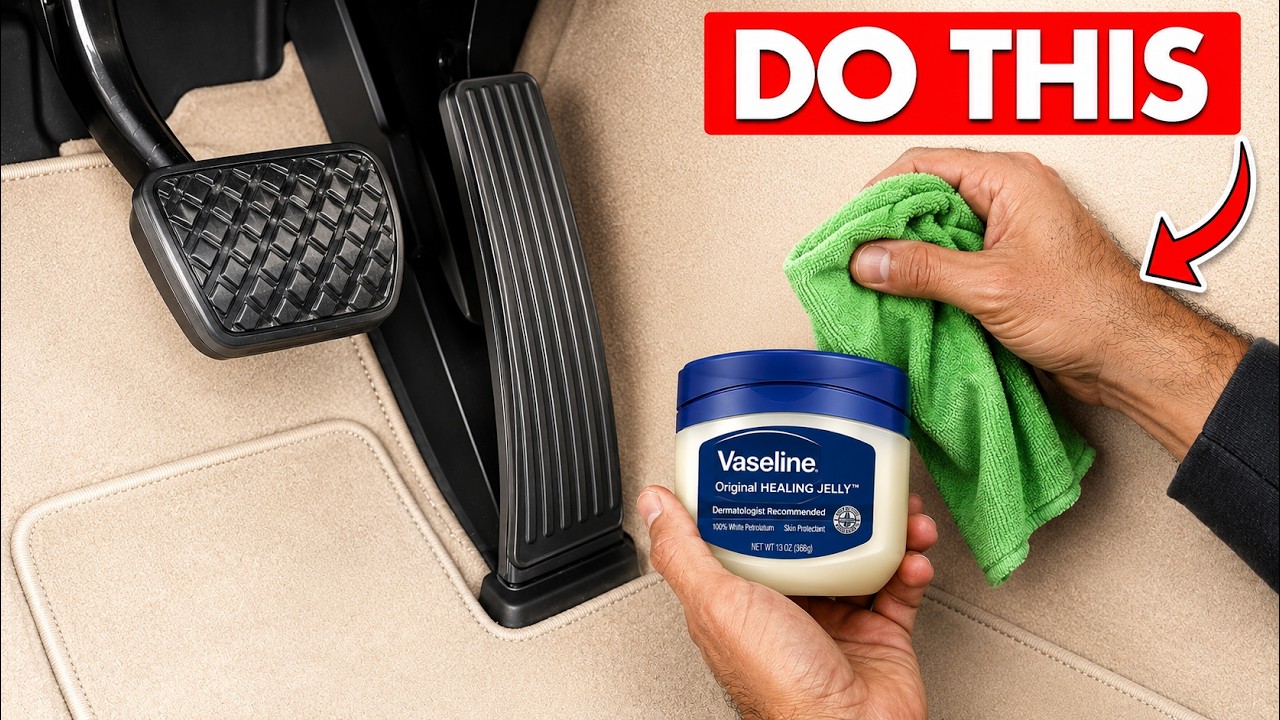
Unusual household product paired with car pedal creates an open question about an unexpected hack, and the arrow/text directs immediate attention to the action.
Improvement: Add a small before/after visual cue or result icon to hint at the payoff, increasing curiosity payoff clarity.