Whole Foods Just Did What No Grocery Store Would
Consumer Truth · 194.9K views · 2026-09-05 · 456.0x outlier
Title analysis
{Brand} Just Did What No {category} Would · curiosity_gap · reveal
Vague unprecedented action creates an open loop that demands resolution.
Title features
9 words ·
Script
3957 words · 158 wpm · 25.0 min
Hook: Whole Foods has said no to more things than any other grocery store in America... And now Whole Foods just went further than any grocery store has ever gone.
Type / score: bold_claim · 7/10
Structure: explainer
Promise: partial
Tone: investigative, authoritative, faux-expert
Diagnosis: The script hooks well with a bold institutional-conflict claim and sustains curiosity through specific policy details (natural flavor loopholes, hexane extraction), which gives it real specificity for a faceless channel. However, it loses momentum in the long middle section comparing competitors (Kroger, Albertsons, Trader Joe's), which repeats the same argument structure without new stakes, risking viewer drop-off before the somewhat thin payoff/conclusion.
Full transcript with timestamps
00:00 Whole Foods has said no to more things
00:03 than any other grocery store in America.
00:05 No to bromated flour. No to artificial
00:08 colors. No to over 250 ingredients that
00:11 you will find on the shelves of every
00:13 other major retailer without a second
00:15 thought. That list of refusals is the
00:18 product. It's what the store sells
00:19 before you've picked up a single item.
00:22 And now Whole Foods just went further
00:24 than any grocery store has ever gone in
00:26 a way that is going to cost their
00:28 suppliers money, reshape entire product
00:30 categories, and force a conversation the
00:33 food industry has been successfully
00:35 avoiding for 30 years.
00:37 Here's what they did, why nobody else
00:39 would do it first, and what it means for
00:41 everything in your cart right now.
00:44 The store that made refusing an
00:47 identity.
00:49 To understand what Whole Foods just did,
00:51 you have to understand what Whole Foods
00:53 actually is.
00:55 Because Whole Foods is not a grocery
00:56 store in the way that Kroger or
00:58 Albertsons or Publix is a grocery store.
01:01 Those stores sell food. Whole Foods
01:04 sells a belief system about food.
01:07 The company was founded in 1980 in
01:09 Austin, Texas by John Mackey and three
01:12 partners who believed that natural food
01:14 retail could be a serious business and
01:16 not just a fringe operation.
01:19 The original store was 4,000 square
01:21 feet. It flooded in its first year. It
01:24 nearly didn't survive.
01:26 Mackey has described that period as the
01:28 moment he understood that the mission
01:30 and the margins had to coexist or
01:32 neither would survive.
01:35 What followed over the next four decades
01:37 was the construction of something that
01:38 has never quite existed in American
01:40 retail before.
01:42 A grocery store whose competitive
01:44 advantage is not price, not convenience,
01:47 not selection, but standards.
01:49 Specifically, standards of refusal.
01:53 The things Whole Foods will not sell
01:55 define the store more clearly than the
01:57 things it will.
01:58 Their list of unacceptable ingredients
02:01 runs over 250 items. Hydrogenated fats,
02:05 artificial sweeteners, bleached flour,
02:08 high fructose corn syrup, artificial
02:10 colors, artificial flavors,
02:12 preservatives used by every other
02:14 retailer without hesitation.
02:17 Whole Foods said no to all of it. Not
02:20 because the law required it, because the
02:22 brand required it.
02:25 That decision created a demographic. The
02:27 Whole Foods shopper is a specific
02:29 person,
02:30 educated, financially comfortable,
02:33 actively engaged in questions about food
02:35 sourcing, ingredient quality, and supply
02:38 chain ethics.
02:39 The kind of person who reads the back of
02:41 the package before they read the front.
02:44 This demographic is smaller than
02:46 Walmart's and less price sensitive than
02:48 Costco's, and they are willing to pay a
02:50 premium that no other grocery store in
02:52 America has been able to consistently
02:54 extract from a food shopper.
02:56 That premium funds the standards. The
02:59 standards attract the demographic. The
03:02 demographic justifies the premium. A
03:05 circular logic that has generated over
03:07 20 billion dollars in annual revenue and
03:10 created the most influential food retail
03:12 brand in the country.
03:14 And then Amazon bought it.
03:17 In 2017, Amazon acquired Whole Foods for
03:20 13.7 billion dollars.
03:23 What followed was a period of intense
03:25 internal debate about what the
03:27 acquisition would mean for the sourcing
03:29 philosophy the store was built on.
03:31 Former executives have spoken publicly
03:33 about the tension between Amazon's
03:35 logistics priorities and the supplier
03:37 relationship model that Whole Foods had
03:39 developed over four decades.
03:42 Prices came down. Private label
03:44 expanded. Some of the sourcing
03:46 complexity quietly got streamlined.
03:49 The question ever since has been whether
03:51 the standards would hold when a company
03:53 optimizing for Amazon scale efficiency
03:56 was running the operation.
03:58 What just happened is the most direct
04:00 answer to that question the company has
04:02 ever given.
04:04 What Whole Foods actually did
04:07 in 2025 Whole Foods announced a sweeping
04:10 update to their supplier standards that
04:12 goes beyond anything in their previous
04:14 banned ingredient framework. The new
04:16 policy requires that every product on
04:18 Whole Foods shelves, not just their own
04:20 label, not just new entrants, every
04:22 existing product from every existing
04:25 supplier must meet updated formulation
04:28 standards that add dozens of new
04:30 prohibited ingredients to the list,
04:32 tighten the definitions of previously
04:34 restricted categories, and close
04:36 loopholes that have allowed technically
04:38 compliant products to contain
04:40 ingredients that violated the spirit of
04:42 the standard without violating the
04:44 letter of it. Let's be specific about
04:47 what that means. The natural flavor
04:49 loophole is the biggest one.
04:51 Whole Foods has long prohibited
04:53 artificial flavors. What they have not
04:55 historically done is look hard at what
04:57 their suppliers were calling natural
05:00 flavor, which is a legally defined
05:02 category that can contain hundreds of
05:04 individual chemical compounds derived
05:07 from natural sources,
05:09 compounds that enhance taste in ways
05:11 that function identically to artificial
05:13 flavors,
05:14 compounds that include glutamate
05:16 derivatives and processed flavoring
05:17 agents that no consumer reading a label
05:20 would recognize as natural in any
05:22 meaningful sense of the word.
05:24 The updated standard requires suppliers
05:26 to disclose the specific compounds that
05:28 fall under natural flavor designations
05:30 in their products, not just that natural
05:33 flavor was used, what it actually is.
05:36 That is a level of transparency that the
05:38 FDA does not require, that no other
05:40 major retailer has required, and that a
05:42 significant number of current Whole
05:44 Foods suppliers cannot meet without
05:46 reformulation.
05:48 The new standards also tighten
05:50 restrictions around seed oils, not a
05:52 blanket ban, but specific requirements
05:54 around processing methods and labeling
05:56 transparency for products containing
05:59 canola, soybean, sunflower, and corn
06:02 oils, all of which are in a significant
06:04 number of products currently on Whole
06:06 Foods shelves.
06:08 The updated standard requires that the
06:09 processing method be disclosed. Cold
06:12 pressed and expeller pressed oils meet
06:14 the standard. Chemically extracted oils
06:16 processed with hexane, a petroleum
06:18 derived solvent, do not.
06:21 That distinction matters because the
06:22 overwhelming majority of seed oils in
06:24 packaged food products, including those
06:27 currently sold at Whole Foods, are
06:29 hexane extracted.
06:31 The extraction method has never appeared
06:32 on any label. It now has to, or the
06:35 product comes off the shelf.
06:37 These are not marginal adjustments. They
06:39 are structural requirements that will
06:41 remove products from shelves and force
06:43 reformulations across entire categories.
06:46 From a company that built itself on
06:48 saying no, this is the most
06:50 consequential no it has ever said.
06:52 The suppliers that just got an
06:54 ultimatum.
06:55 Here is where this gets uncomfortable
06:57 for a lot of brands that have spent
06:58 years trading on the Whole Foods halo.
07:01 Being on a Whole Foods shelf is one of
07:03 the most valuable things a food brand
07:04 can achieve.
07:06 The halo effect is commercially
07:07 measurable. A product that earns
07:09 placement sees increases in consumer
07:11 trust metrics, premium pricing power,
07:14 and credibility when expanding to other
07:16 retail channels.
07:18 Whole Foods acts as a signal to the
07:19 broader market that a product has passed
07:22 a meaningful standard of scrutiny.
07:24 The brands currently on those shelves
07:26 have been marketing that signal to their
07:27 consumers.
07:29 Some of them have reformulated genuinely
07:31 to meet the existing standards. Some of
07:33 them have found the gaps in the existing
07:35 standards and built products that
07:37 qualified without doing the harder work
07:39 of full transparency.
07:41 The natural flavor disclosure
07:42 requirement hits that second group
07:44 hardest.
07:45 In the beverage category, a significant
07:47 number of premium juice, kombucha, and
07:50 functional drink brands currently on
07:52 Whole Foods shelves rely on natural
07:54 flavor blends to achieve the taste
07:56 profile their products are known for.
07:59 Those blends are proprietary.
08:01 The suppliers have built their
08:02 formulations around them. Disclosing
08:04 what is actually in those blends either
08:07 reveals intellectual property they have
08:10 built their competitive advantage around
08:12 or reveals that the compounds involved
08:15 would not survive scrutiny if consumers
08:17 understood what they were. Both outcomes
08:20 require the supplier to choose between
08:22 transparency and their current product.
08:25 That is not a comfortable choice to hand
08:27 someone in the middle of a retail
08:28 relationship they have spent years
08:30 building. The snack category has the
08:32 same problem from the seed oil
08:34 direction. A brand that has been selling
08:36 at Whole Foods for a decade on clean
08:38 ingredient claims is now being asked to
08:41 disclose whether its canola oil was
08:43 hexane extracted. For a meaningful
08:45 portion of those brands, the answer is
08:48 yes. The sourcing decision nobody asked
08:51 about before is now going to be on the
08:53 label or the product is going to be
08:55 reformulated or it is going to leave the
08:58 shelf. Some suppliers will reformulate
09:01 and stay. That process is expensive and
09:04 carries the risk of changing the product
09:06 in ways that affect the consumer
09:07 experience their brand is built on. Some
09:10 will leave Whole Foods and find other
09:12 retail channels where the standard
09:14 doesn't apply. A small number will not
09:16 be able to absorb the cost and will exit
09:18 the market entirely. The brands that
09:20 reformulate and stay will have a
09:23 stronger product on the other side. The
09:25 brands that exit will free up shelf
09:27 space and that shelf space will be
09:29 filled by something. Why every other
09:31 grocery store refused to do this. Whole
09:34 Foods was not the only grocery store
09:36 that could have done this. They were the
09:38 only one with the specific combination
09:40 of incentives that made doing it more
09:42 profitable than not doing it. Start with
09:45 the demographic. The Whole Foods shopper
09:47 is the most ingredient literate grocery
09:49 consumer in America. They came to this
09:52 store specifically because of the
09:53 standards. When those standards tighten,
09:56 it does not feel like a disruption to
09:58 the Whole Foods shopper. It feels like
10:00 the store doing its job. The same policy
10:02 applied at Kroger would generate
10:04 significant supplier backlash and almost
10:07 no consumer enthusiasm because the
10:09 Kroger shopper's primary decision
10:11 variable is not ingredient standards,
10:14 it's price. That demographic difference
10:17 is the entire story of why every other
10:19 major retailer is watching this from the
10:21 sideline. Kroger cannot afford to lose
10:24 the slotting fees and supplier
10:26 relationships that would be disrupted by
10:28 a requirement of this kind. Their
10:30 private label operation, Simple Truth,
10:32 exists as the clean label up sell within
10:35 a broader ecosystem where the
10:37 conventional shelf is not subject to
10:39 anything like the same standard. The
10:41 two-tier model is the Kroger approach.
10:43 One lane for shoppers who care about
10:45 ingredients, everything else for
10:47 everyone else. That model generates a
10:49 specific margin structure that a blanket
10:51 supplier standard would immediately
10:53 threaten.
10:54 >> [clears throat]
10:54 >> Albertsons has the same problem at a
10:56 smaller scale. Their private label O
10:58 Organics line is one of the largest
11:01 organic store brands in American retail,
11:03 and its existence has never required
11:05 transparency from the conventional
11:07 products sharing the shelf next to it.
11:09 The clean label line exists as a halo
11:12 for the overall store brand, not as a
11:14 floor that lifts the entire procurement
11:16 standard. Trader Joe's is the most
11:18 interesting case because their customer
11:20 base overlaps significantly with the
11:22 Whole Foods demographic. Ingredient
11:24 aware, educated, willing to pay a modest
11:27 premium for products they believe are
11:29 cleaner than the conventional
11:31 alternative. But Trader Joe's model is
11:33 built around private label control, not
11:36 supplier transparency. Nearly everything
11:38 in the store is a Trader Joe's product.
11:41 The company controls the formulation.
11:43 They have never submitted those
11:44 formulations to external scrutiny of any
11:47 kind. A transparency requirement of the
11:49 kind Whole Foods just imposed on its
11:51 suppliers would require Trader Joe's to
11:54 apply that standard to itself. That is a
11:56 very different ask. Sprouts is the
11:58 closest structural analogue to Whole
12:01 Foods in this conversation. Natural
12:03 grocery positioning, ingredient aware
12:05 customer, premium price tolerance. But,
12:07 Sprouts is a significantly smaller
12:09 operation and the leverage they can
12:11 apply to their supplier base is
12:12 proportionally smaller. What Whole Foods
12:15 can demand and see complied with,
12:17 Sprouts can request and see ignored
12:20 because losing Whole Foods distribution
12:22 is not something a mid-sized food brand
12:25 can absorb. Losing Sprouts distribution
12:27 is painful, but survivable. Scale is the
12:30 lever. Whole Foods has enough of it to
12:32 make compliance the cheaper option for
12:34 most of their suppliers. Nobody else
12:36 does. The ingredient problem nobody is
12:39 naming. Let's talk about what's actually
12:40 at stake in the ingredients this policy
12:42 is targeting. Because the policy is not
12:44 arbitrary and every item on the updated
12:47 list has a documented reason to be there
12:49 that goes beyond brand aesthetics. Start
12:51 with the natural flavor question because
12:53 it is the one that is going to produce
12:55 the most supplier disruption and
12:56 deserves the most detailed treatment.
12:58 The FDA defines natural flavor as a
13:01 substance derived from a natural source,
13:03 including plant or animal material,
13:05 whose primary function in food is
13:07 flavoring rather than nutrition. That
13:09 definition is broad enough to include
13:11 compounds that produce specific
13:13 neurological responses in the brain's
13:15 reward system. Compounds that increase
13:17 palatability in ways that are
13:19 functionally identical to the effects
13:21 produced by artificial flavoring agents.
13:23 Compounds that have been associated in
13:25 peer-reviewed research with altered
13:27 satiety signaling, meaning they change
13:29 how your brain registers whether you've
13:30 had enough of something. The specific
13:32 compound most commonly associated with
13:34 these effects is monosodium glutamate,
13:37 which is explicitly labeled when added
13:39 directly to a product. When glutamate
13:40 compounds are introduced through a
13:42 natural flavor blend, the disclosure
13:44 requirement changes. The label can say
13:46 natural flavor. The compound producing
13:48 the neurological effect is the same. The
13:51 label is different. Whole Foods is
13:53 closing that gap. The hexane extraction
13:55 issue is less neurologically complex,
13:57 but commercially enormous. Hexane is a
14:00 petroleum derived solvent used to
14:02 extract oil from seeds more efficiently
14:05 than mechanical pressing. A canola seed
14:07 yields more oil when processed with
14:09 hexane than when cold pressed or
14:11 expeller pressed. The higher yield is
14:13 why hexane extraction dominates
14:15 industrial seed oil production. The
14:17 residual hexane in the finished oil is
14:19 measured in parts per million and is
14:21 classified by the FDA as generally safe
14:23 at those levels. What has not been
14:25 systematically studied is the cumulative
14:27 effect of consuming hexane extracted
14:30 oils across the full range of packaged
14:32 food products in which they appear
14:34 because hexane extracted oils are in
14:36 nearly everything. Crackers, sauces,
14:38 dressings, packaged snacks. The combined
14:41 daily exposure across a diet built
14:43 around packaged food has never been the
14:45 subject of a regulatory review because
14:48 regulators examine each product in
14:50 isolation, not the aggregate. Whole
14:52 Foods requiring disclosure of the
14:53 extraction method does not remove hexane
14:56 extracted oils from their shelves
14:58 immediately. It makes the method
14:59 visible. Once it's visible, the Whole
15:01 Foods shopper, who is the most likely
15:03 consumer to respond to that information,
15:05 has the data they need to make a
15:07 different choice. The market pressure
15:09 that creates is more powerful than any
15:11 regulation because it is direct and
15:13 immediate. Then there is the emulsifier
15:15 category. Carrageenan, polysorbate 80,
15:18 carboxymethyl cellulose. These are
15:20 compounds used to create stable textures
15:22 and extend shelf life in products that
15:24 would otherwise separate or degrade.
15:26 Peer-reviewed research has raised
15:28 concerns about their effects on the
15:29 intestinal microbiome, specifically
15:31 around the disruption of the gut lining
15:33 that serves as the boundary between the
15:35 digestive system and the bloodstream.
15:37 The FDA classifies them as safe. The
15:40 research suggesting they may not be has
15:42 been accumulating for over a decade
15:44 without triggering a regulatory
15:46 response. They are in products currently
15:49 on Whole Foods shelves. The updated
15:51 standard tightens the restrictions
15:53 around how they can be used and in what
15:55 concentrations. It does not ban them
15:58 entirely, but it moves the standard in
16:00 the direction the research is pointing,
16:03 ahead of the regulatory system that has
16:05 shown no interest in getting there
16:07 first.
16:09 The brands that quietly benefit.
16:12 Every policy tightening has a second
16:14 story. The first story is disruption.
16:17 The second story is opportunity.
16:19 Brands that benefit from this moment are
16:21 the ones that built their formulations
16:23 around transparency before transparency
16:27 was required.
16:28 The ones that chose cold-pressed oils
16:30 when hexane extraction was cheaper.
16:33 The ones that skipped natural flavor
16:35 entirely and built taste profiles from
16:38 actual ingredients.
16:39 The ones that have been paying a premium
16:41 to source correctly for years while
16:44 competing against products that cut
16:46 those costs and still claim the Whole
16:48 Foods shelf.
16:50 That competitive disadvantage just
16:52 became an advantage.
16:54 In the condiment and dressing category,
16:56 smaller producers who have been using
16:58 whole food ingredients and mechanical
17:00 extraction since the beginning now find
17:03 their sourcing story suddenly relevant
17:05 in a way it wasn't when the requirement
17:07 didn't exist.
17:09 A dressing made with cold-pressed olive
17:11 oil and no natural flavor wasn't
17:14 different from the label perspective.
17:16 Now it is.
17:18 The functional beverage space benefits
17:20 similarly. Brands that have built their
17:22 taste profiles from whole fruits,
17:24 fermented bases, and named botanical
17:27 ingredients, rather than proprietary
17:29 flavor blends, are now being validated
17:32 by a policy that makes the distinction
17:34 legible to the consumer.
17:36 The transparency requirement creates a
17:38 filter that the cleaner brands pass
17:41 through without effort.
17:43 The less clean brands have to choose
17:44 whether to come clean or leave.
17:48 Regional and small-batch producers have
17:50 always existed in Whole Foods supplier
17:52 ecosystem.
17:53 That preference is now structurally
17:55 encoded in a standard that regional
17:57 producers, who tend to have simpler
17:59 supply chains, are better positioned to
18:02 meet than large national manufacturers,
18:05 whose supply chains cross multiple
18:07 countries and processing stages.
18:10 The consumer who has been paying
18:11 attention to which brands were actually
18:13 clean and which were clean adjacent is
18:16 going to find the post-transition shelf
18:18 easier to navigate.
18:20 The brands that survive will have earned
18:23 that shelf space under a harder
18:24 standard.
18:26 That is a meaningful signal in a store
18:28 whose signal has sometimes been easier
18:30 to earn than it should have been.
18:34 What Whole Foods still gets wrong.
18:37 This is not a Whole Foods commercial.
18:39 Let's be clear about that before we go
18:41 any further.
18:42 The updated standards are meaningful.
18:44 The natural flavor disclosure
18:46 requirement is genuinely unprecedented
18:48 at this scale.
18:50 The hexane extraction transparency is
18:52 long overdue.
18:54 These are not cosmetic adjustments.
18:57 But, there are specific gaps in what
18:59 Whole Foods did that are worth naming
19:01 directly because the gap between the
19:03 press coverage and the policy is real,
19:06 and closing that gap is the only way to
19:09 assess what actually changed.
19:12 The first gap is Amazon's private label
19:14 operation.
19:15 Amazon has been building its own food
19:17 private label business since the Whole
19:19 Foods acquisition. And that operation
19:22 runs on a different set of incentives
19:24 from the Whole Foods supplier standards.
19:27 Amazon branded food products sold
19:29 through the Whole Foods platform are not
19:31 subject to the same supplier
19:33 transparency requirements as independent
19:35 brands.
19:37 The policy that requires a small
19:39 beverage brand to disclose what is in
19:40 their natural flavor does not apply with
19:43 the same force to the Amazon house brand
19:46 sitting on the shelf next to it.
19:48 That asymmetry remains unaddressed.
19:52 The second gap is the certification
19:54 theater problem.
19:55 >> Whole Foods has a history of giving
19:57 significant shelf space to products with
20:00 USDA organic certification and other
20:03 third-party certifications
20:05 that communicate quality claims the
20:08 certifications do not actually verify.
20:11 Organic certification does not verify
20:14 pesticide residue levels in the finished
20:16 product. We have covered glyphosate
20:18 contamination in organic bread on this
20:21 channel. That contamination exists
20:23 independently of the certification. The
20:26 updated Whole Foods standards do not
20:28 address upstream contamination of
20:30 certified products in any meaningful
20:32 way. The third gap is pricing
20:34 accessibility. The entire framework of
20:36 this policy assumes a consumer who can
20:39 afford to shop at Whole Foods. The
20:41 reformulated products that survive the
20:43 updated standard will be more expensive
20:45 to produce than what they replaced. And
20:48 those costs will be passed to the
20:49 consumer. The consumer who benefits from
20:51 this improvement is already the most
20:53 economically advantaged grocery shopper
20:55 in America. The family shopping at
20:57 Walmart or Food Lion is not reached by
21:00 any part of what Whole Foods just did.
21:02 That is not a reason to criticize the
21:03 policy. It is is to be accurate about
21:06 what the policy covers and to be honest
21:08 about the fact that ingredient standards
21:10 in American food retail remain a
21:12 privilege organized around income. Whole
21:15 Foods moved. The gap left behind is
21:17 larger than the ground they covered.
21:19 What this means for how you shop right
21:21 now. Here is the practical part because
21:23 the policy change is interesting but
21:25 knowing what to do with it in the actual
21:26 grocery aisle is more useful than
21:29 knowing the policy. First thing to
21:30 understand, the transition is not
21:33 complete. Whole Foods has issued the
21:35 standard and set a compliance timeline
21:37 but the products currently on those
21:39 shelves are a mix of already compliant
21:41 formulations, products in active
21:43 reformulation, and products whose
21:45 suppliers have not yet decided whether
21:47 to reformulate or exit. A product on a
21:50 Whole Foods shelf today is not
21:51 automatically a compliant product under
21:53 the new standard. Read the label. The
21:56 natural flavor disclosure requirement,
21:58 once fully implemented, will give you
22:00 information you have never had before
22:02 about what is producing the taste in the
22:03 products you buy. When that information
22:05 appears, use it. A product that
22:07 previously said natural flavor and now
22:10 lists specific compounds means the
22:13 policy is working. A product that still
22:15 says natural flavor without further
22:17 disclosure either hasn't completed its
22:19 transition or found a gap in the
22:21 requirement. The seed oil disclosure is
22:24 the most practically useful change for
22:26 most shoppers. If a product on the shelf
22:28 lists the extraction method for its
22:30 oils, you have a data point that the FDA
22:32 has never required anyone to give you.
22:34 Cold pressed or expeller pressed means
22:37 mechanical extraction, no solvent
22:39 involved. If no extraction method is
22:41 listed on a product containing canola,
22:43 soybean, or corn oil, the default
22:46 assumption should be hexane extraction
22:49 until the policy fully closes that
22:51 disclosure gap. Apply these standards
22:53 beyond Whole Foods. The hexane question
22:55 and the natural flavor question are not
22:57 questions that only apply inside one
23:00 store. They apply to every packaged
23:02 product in every grocery store you shop
23:04 at. The Whole Foods policy makes the
23:06 question legible in their specific
23:08 context. The question itself belongs in
23:10 every aisle you walk down, regardless of
23:13 what the sign above the door says. Buy
23:15 closer to one ingredient. This is the
23:16 principle that runs through every
23:18 investigation we have done on this
23:19 channel. The more a product is
23:21 processed, the more opportunities there
23:23 are for something to be added,
23:25 extracted, or modified in ways that
23:28 don't show up clearly on the label. The
23:30 Whole Foods policy is, at its core, an
23:32 attempt to close the gap between what
23:34 the label implies and what the product
23:36 actually contains. You can run that same
23:39 filter yourself in any store by choosing
23:41 products whose ingredient lists are
23:43 short enough to understand in 30
23:45 seconds. The store changed its standard.
23:47 Now change yours.
23:49 Here is what this moment actually means.
23:52 Whole Foods is the most influential food
23:54 retailer in the premium grocery segment
23:56 in America. When they set a standard, it
23:58 defines what premium means in food
24:01 retail. It defines what a supplier has
24:03 to be able to say about their product to
24:05 access that segment of the market. And
24:08 it defines what consumers in that
24:10 segment are allowed to expect. The
24:12 standard they just set is higher than
24:14 anything any grocery store has set
24:16 before. The natural flavor transparency
24:19 requirement alone is a structural shift
24:21 in what ingredient disclosure looks like
24:23 in packaged food. The seed oil
24:25 extraction requirement closes a gap that
24:28 regulators have shown no interest in
24:30 closing. These things matter. What
24:32 matters more is what comes next. Every
24:35 retailer watching this is now being
24:37 asked a direct question by their most
24:40 ingredient aware customers. The question
24:42 is whether they are going to match the
24:44 standard or continue to explain why the
24:47 standard is too difficult to meet. That
24:49 explanation just got harder.
24:51 You know the gap now. You know what to
24:53 look for when you flip the package over.
24:56 The store raised the bar. Now you know
24:59 exactly where it sits.
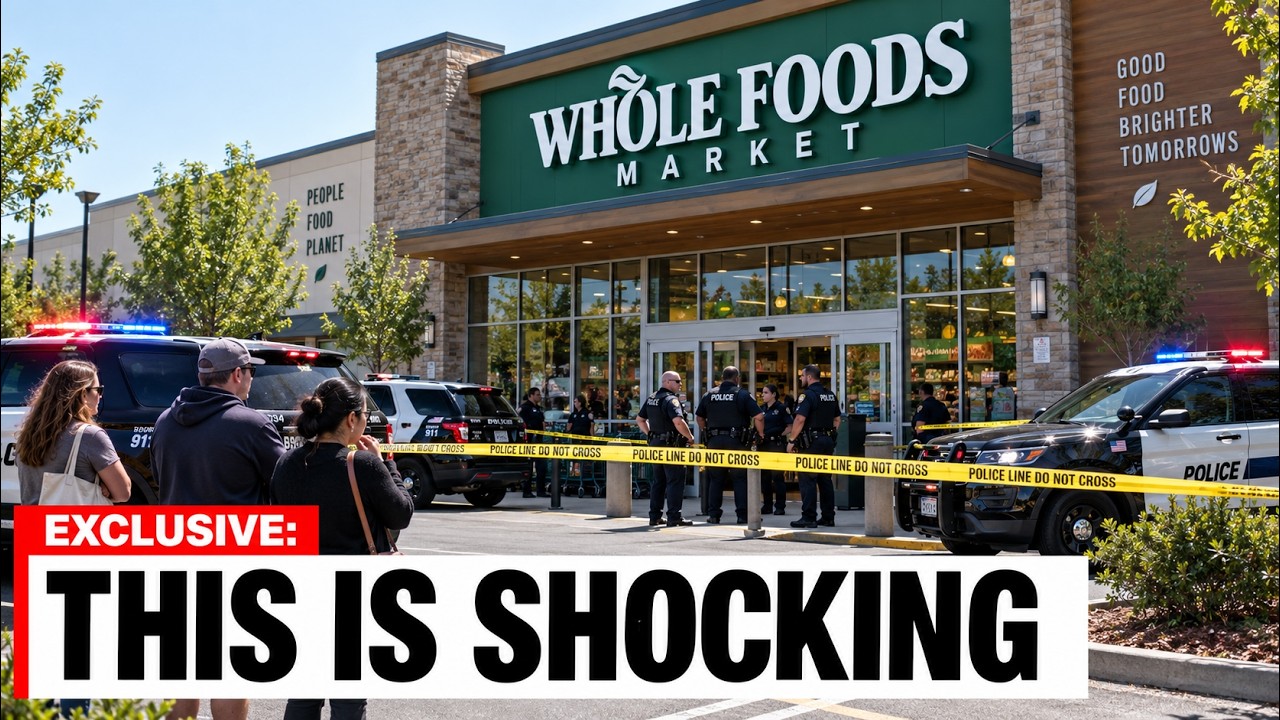
Thumbnail analysis
Pattern: Scene story Trigger: Curiosity gap
Curiosity 9 · FOMO 2 · Pain 2 · Clarity 7
Text: EXCLUSIVE: THIS IS SHOCKING · Face: no
Combining a familiar brand with police tape and vague shocking-event text creates an unanswered mystery that demands a click to find out what happened.
Improvement: Add a specific detail (e.g. what the police found or the actual action taken) in the headline to sharpen the curiosity gap and hint at stakes.