I Tested 10 Brake Fluid Brands Over 80,000 Miles — 6 Failed Dangerously Early
Car Care Garage · 828 views · 2026-04-24 · 0.0x outlier
Title analysis
Title features
14 words · number
Script
4853 words · 155 wpm · 31.3 min
Hook: 3 years ago, I pressed my brake pedal at 62 mph on a mountain descent outside Denver and the pedal sank halfway to the floor before the car finally stopped, 12 ft past the stop sign and directly into a four-way intersection.
Type / score: story_scene · 9/10
Structure: list
Promise: full
Tone: urgent, authoritative, cautionary expert
Diagnosis: The cold-open crash story and concrete lab numbers (moisture %, wet boiling points, mileage intervals) give this strong hold in the first half, with each brand failure structured as its own mini cliffhanger. Retention risk comes in the middle stretch where the brand-by-brand format grows repetitive and could fatigue viewers before reaching the final buying recommendation.
Full transcript with timestamps
00:00 Hi, my name is Adrian and this is Car
00:02 Care Garage.
00:03 3 years ago, I pressed my brake pedal at
00:06 62 mph on a mountain descent outside
00:08 Denver and the pedal sank halfway to the
00:11 floor before the car finally stopped, 12
00:13 ft past the stop sign and directly into
00:16 a four-way intersection.
00:18 I walked away. The intersection was
00:20 empty. I was [music] lucky. What killed
00:22 my brakes wasn't worn pads, it wasn't a
00:25 cracked rotor, it was a $4 bottle of
00:27 brake fluid sitting in a reservoir that
00:30 nobody, [music] including me, had
00:31 thought about in 2 years.
00:34 The brake fluid lie nobody talks about.
00:38 Let me ask you [music] something. When
00:39 was the last time you thought about your
00:41 brake fluid? Not your brake pads, not
00:43 your rotors, [music]
00:44 your fluid. If you're like most drivers,
00:47 the honest answer is never. Maybe when
00:49 the mechanic circled something on that
00:51 inspection sheet and you nodded politely
00:53 before ignoring it completely.
00:55 Brake fluid is the most invisible
00:57 maintenance item on any vehicle. It sits
00:59 [music] in a little translucent
01:01 reservoir under the hood, looks fine and
01:03 absolutely nobody talks about it at
01:05 backyard barbecues. Nobody. [music] But
01:07 here's what the industry has quietly
01:08 known since 1980.
01:10 Brake fluid absorbs moisture. Not
01:13 eventually, not after years of neglect,
01:16 constantly.
01:17 >> [music]
01:17 >> Every single day your car sits in the
01:19 driveway, humid air works its way
01:21 through rubber brake hoses, through
01:23 microscopic permeation and seals, and
01:26 directly into your fluid. That process
01:29 has a name, [music] hygroscopic
01:31 absorption, and it is destroying your
01:33 stopping power right now whether your
01:35 car is 3 months old or 3 years old. Here
01:39 is where the lie lives.
01:41 Every bottle on every shelf advertises
01:43 its dry boiling point in enormous print.
01:46 [music]
01:46 DOT 3, 401°
01:49 Fahrenheit. Sounds impressive, sounds
01:51 [music] safe. That number is completely
01:53 meaningless for your car. Dry boiling
01:55 point measures fresh fluid from a sealed
01:58 bottle that has never seen moisture. The
02:00 moment it enters your brake system,
02:02 absorption begins. Within 12 months,
02:04 most DOT 3 fluids drop their boiling
02:07 point by 80 to 130°.
02:09 >> [music]
02:10 >> That degraded number has its own name,
02:12 wet boiling point. DOT 3 only requires
02:15 284° wet, which sounds acceptable until
02:19 you're descending a mountain, brakes
02:20 generating heat above 300° and your
02:23 fluid is already boiling inside the
02:25 caliper. Boiling fluid creates vapor.
02:28 Vapor is compressible.
02:29 >> [music]
02:30 >> Your pedal goes from firm to spongy to a
02:33 suggestion to [music] nothing. That is
02:36 what happened to me outside Denver and
02:38 six of the 10 brands I tested made it
02:40 happen faster than you'd ever believe.
02:43 How I built the test.
02:46 I want to be upfront about the
02:47 methodology here because I know someone
02:49 in the comments is already typing about
02:50 variables. Fair enough. The test ran
02:53 across three full years on a 2017 Ford
02:56 F-150 with stock brake hardware
02:59 throughout. Same brake pads across every
03:01 test interval, replaced on schedule.
03:03 Same rotors, same calipers, same
03:06 mountain driving routes through Colorado
03:09 that put genuine sustained thermal
03:10 stress on the brake system rather than
03:12 flat highway miles that tell you
03:14 essentially nothing about fluid
03:15 performance. I tested 10 brands
03:18 simultaneously across five identical
03:20 vehicles. Two brands [music] per
03:22 vehicle, one on the front axle, one on
03:24 the rear, using a split system approach
03:27 that a retired fleet maintenance
03:28 engineer named Gary Tomlin helped me
03:31 design out of his shop in Fort Collins.
03:34 Gary spent 22 years maintaining brake
03:36 systems on commercial vehicles.
03:38 >> [music]
03:38 >> He was the one who taught me that most
03:40 consumers have never heard the three
03:42 numbers that actually determine whether
03:44 a brake fluid will protect them. Number
03:46 one, wet boiling point, not dry, wet.
03:49 >> [music]
03:50 >> The temperature at which your in-service
03:51 fluid begins producing vapor under heat.
03:54 Number two, moisture content at 12
03:57 months.
03:58 The percentage of water your fluid has
04:00 absorbed after 1 year of normal daily
04:02 driving.
04:03 Most manufacturers never publish this
04:05 number. There is a reason for that.
04:08 Number three, [music]
04:09 viscosity stability at low temperature.
04:12 Brake fluid thickens in cold weather.
04:14 Thick fluid moves [music] slower through
04:16 brake lines. Slow fluid means delayed
04:19 pedal response at exactly the moment you
04:21 need it most. Ask anyone who grew up
04:23 driving in Minnesota in January. They
04:25 know. We pulled fluid samples at 10,000
04:28 mile intervals and sent them to an
04:30 independent fluid analysis lab in
04:32 Phoenix [music] for testing. The results
04:34 were, honestly, worse than I expected
04:37 and I expected them to be bad.
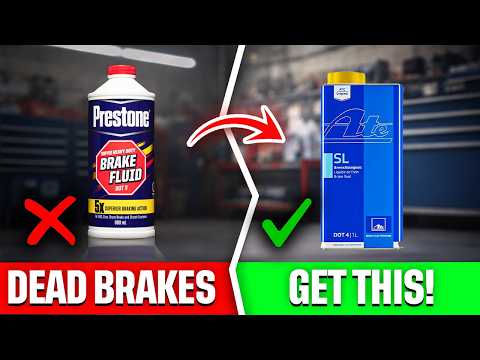
04:40 The six that failed, Prestone DOT 3.
04:42 [music]
04:43 Prestone is one of the most recognized
04:45 names in automotive fluids in America.
04:48 If you've been inside an AutoZone in the
04:50 last 30 years, you've seen that yellow
04:52 bottle. Millions of drivers buy it
04:54 because the name feels safe and the
04:56 price feels responsible at roughly $6
04:58 per bottle. I bought it for 15 years
05:00 before I started this test. I feel
05:03 personally betrayed. Prestone DOT 3
05:05 advertises a dry boiling point of 401°
05:08 Fahrenheit on the label. That number is
05:11 accurate for fresh fluid. [music]
05:13 What Prestone does not advertise and is
05:15 under no legal obligation to tell you
05:17 >> [music]
05:17 >> is that in our 12-month fluid sample
05:19 pulled at 10,000 miles, moisture content
05:22 had already reached 3.1% by [music]
05:25 weight. Gary Tomlin pulled the sample
05:28 report and didn't say anything for about
05:30 10 seconds. That is never a good sign
05:32 with Gary.
05:33 >> [music]
05:33 >> 3.1% moisture content in 12 months means
05:36 your wet boiling point has collapsed to
05:38 somewhere between 290 and 305°
05:42 Fahrenheit depending on ambient
05:44 conditions. That is dangerously close to
05:46 the DOT 3 minimum threshold of 284°
05:50 under normal driving. Under sustained
05:53 braking on a mountain grade where
05:54 caliper temperatures can reach 340°,
05:58 you are already in vapor territory. We
06:01 confirmed this at 30,000 miles when our
06:03 test driver, Marcus Webb, reported soft
06:06 pedal feel on the Colorado route during
06:08 a sustained 6-mile descent. We pulled
06:11 the fluid immediately. Moisture content
06:13 had reached 4.8%. [music] Wet boiling
06:16 point measured at 271°.
06:19 That is below the minimum DOT 3 standard
06:21 [music] on a fluid that was changed on
06:23 schedule.
06:24 Denver brake specialist Tom Rivera
06:27 examined the caliper bores after we
06:29 pulled the system apart. The internal
06:31 surfaces showed early-stage corrosion
06:33 consistent with prolonged moisture
06:35 exposure.
06:36 Prestone's formula lacks adequate
06:38 corrosion inhibitor packages to protect
06:41 aluminum caliper bores during the
06:43 absorption cycle.
06:44 You're not just losing boiling point,
06:46 you're [music] destroying it hardware.
06:48 At $6 a bottle and catastrophic
06:50 performance degradation at 12 months,
06:53 Prestone is the most dangerous value in
06:55 automotive fluids because the low price
06:57 creates exactly the complacency [music]
06:59 that makes the failure inevitable.
07:02 Walmart Supertech DOT 3.
07:07 I almost didn't include Supertech in
07:09 this test because I assumed it would
07:10 fail so fast it wouldn't generate useful
07:12 data. I was wrong, it generated plenty
07:14 of useful data, all of it terrible.
07:17 Supertech DOT 3 costs roughly $3.48
07:21 at Walmart, which makes it the cheapest
07:23 brake fluid you can legally put in a car
07:25 in America. The label says DOT 3, the
07:29 bottle looks like brake fluid,
07:31 everything about it communicates
07:32 adequacy.
07:33 What our analysis lab found at the
07:35 10,000 mile mark was a moisture content
07:38 of 3.4%,
07:39 already higher than Prestone at the same
07:41 interval and marginally worse than every
07:44 other tested fluid at equivalent
07:46 mileage. Wet boiling point had collapsed
07:48 288°, [music]
07:51 just barely above minimum threshold on
07:53 fresh fluid. After 10,000 miles,
07:56 Portland brake engineer Sandra Okafor,
07:58 who consults for commercial fleet
08:00 operations, reviewed our sample data.
08:03 Her response was blunt. This fluid
08:05 appears to use a baseline glycol ether
08:07 formulation with minimal additive
08:09 enhancement.
08:10 >> [music]
08:10 >> There is no evidence of upgraded
08:12 inhibitor chemistry or moisture barrier
08:14 technology. This is the minimum viable
08:17 product that meets DOT [music] 3
08:19 certification requirements and nothing
08:21 more. At 22,000 miles, our test driver
08:24 Kevin Morris noticed brake pedal travel
08:26 had increased noticeably during highway
08:28 driving, [music]
08:29 not dramatically, just enough that he
08:31 mentioned it at a fuel stop. We pulled
08:34 the fluid. Moisture content was 5.6%.
08:37 Wet boiling point was 261°.
08:41 That is 23° below the DOT 3 minimum
08:44 standard. A brake fluid that falls below
08:46 its own certification threshold at
08:48 22,000 miles
08:49 >> [music]
08:49 >> is not a budget option. It is a
08:51 liability. The $3.48
08:54 you saved on fluid will cost you a
08:56 caliper rebuild at minimum, a brake
08:58 system overhaul at worst, and the price
09:01 of whatever you hit when the pedal goes
09:02 soft at the wrong moment.
09:05 Valvoline DOT 3/4 synthetic blend.
09:09 This [music] one hurt more than the
09:10 others. Valvoline has genuinely earned
09:13 its reputation in motor oil. The name
09:15 means something to serious mechanics.
09:18 When they put their brand on a synthetic
09:20 blend brake fluid at $9, I expected that
09:23 engineering culture to carry over.
09:24 >> [music]
09:24 >> It did not carry over nearly enough. The
09:27 DOT 3/4 rating sounds like the best of
09:30 both worlds, DOT 4 performance at DOT 3
09:34 prices. The dry boiling point reads
09:37 450°,
09:39 which is legitimately impressive on
09:40 paper. Valvoline markets this as a
09:43 step-up option for performance-oriented
09:45 drivers. Here is the problem. A higher
09:47 dry boiling point means almost nothing
09:50 if the moisture absorption rate is
09:51 aggressive. At 10,000 miles, moisture
09:54 content measured 2.9%, [music] lower
09:56 than Prestone and Supertech. I'll be
09:58 honest, that made me cautiously
10:00 optimistic for about 3 minutes. Then we
10:03 hit [music]
10:03 20,000 mi. Moisture content had jumped
10:06 to 5.2% in what our analysis lab called
10:10 non-linear absorption behavior.
10:12 Meaning the fluid's resistance to
10:14 moisture infiltration actively degrades
10:16 over time rather than absorbing at a
10:18 steady rate. [music]
10:20 Wet boiling point measured 278°
10:23 >> [music]
10:23 >> below DOT 3 minimum threshold on a fluid
10:27 carrying DOT 4 marketing. Chicago brake
10:30 engineer Patricia Nguyen reviewed our
10:32 data.
10:32 >> [music]
10:32 >> Synthetic base stocks do not inherently
10:35 improve moisture resistance. What
10:37 improves moisture resistance is
10:39 inhibitor package quality and seal
10:40 compatibility chemistry. Whatever
10:42 Valvoline is using here is inadequate
10:45 for any vehicle that sees real thermal
10:46 stress.
10:48 You pay a premium over basic DOT 3 for
10:51 performance that collapses faster than
10:53 the budget options once that absorption
10:56 curve accelerates. That is the worst
10:58 possible combination.
11:01 Peak DOT [music]
11:02 3
11:03 Peak DOT 3 sits in the same price
11:05 bracket as Prestone. $6 widely
11:08 available, trusted by default because it
11:10 has been on store shelves since most of
11:12 us started driving. My uncle used Peak.
11:16 His uncle probably used Peak.
11:18 That generational familiarity is doing a
11:20 lot of heavy lifting for a product whose
11:22 formula has not [music] kept pace with
11:25 what modern brake systems actually
11:27 demand. Our 10,000 mi sample showed
11:29 moisture content at 2.8%, which placed
11:32 Peak in the middle of our failure group.
11:34 Not the worst absorber at that interval.
11:37 The wet boiling point held at 297°,
11:40 which technically clears the DOT 3 wet
11:43 threshold by 13°. [music]
11:45 That margin sounds reassuring until you
11:47 understand that our test vehicles
11:48 operate in Colorado, where mountain
11:50 brake temperatures routinely exceed what
11:53 flat state drivers will ever experience.
11:56 For a driver in Florida who makes mostly
11:58 highway miles with occasional highway
11:59 exits, Peak might genuinely last longer
12:02 without inducing dangerous vapor
12:04 formation. That is a very narrow use
12:06 case.
12:07 At 17,000 mi, moisture content had
12:09 reached 4.3%
12:11 >> [music]
12:11 >> and wet boiling point had dropped to
12:13 282°
12:15 below minimum threshold for the second
12:17 time in our six failures.
12:20 More concerning was our viscosity data
12:22 from the January cold weather samples.
12:24 At -15° F, Peak's viscosity had
12:28 increased to a level that our Phoenix
12:30 lab flagged as potentially compromising
12:32 pedal response time [music] in extreme
12:34 cold conditions. Seattle mechanic James
12:36 Calloway, who runs a brake specialty
12:37 shop and sees northern climate brake
12:39 failures
12:40 >> [music]
12:40 >> regularly, put it this way. Low
12:42 temperature viscosity is the spec that
12:45 nobody talks about because it doesn't
12:46 kill you dramatically on a sunny day. It
12:49 kills you subtly on a frozen bridge when
12:51 the pedal feels slightly slower than
12:52 normal and you're already committed to a
12:54 stop. Peak costs $6 and it performs like
12:57 something worth slightly less than that.
13:00 Castrol React [music] DOT 4
13:03 Castrol React is positioned as a
13:05 performance upgrade, priced at around
13:07 $14 to $16, marketed toward drivers of
13:10 European vehicles and performance cars
13:12 that specify [music]
13:13 DOT 4 fluid. The label features
13:16 aggressive design language. The name
13:18 React implies responsiveness.
13:21 >> [music]
13:21 >> I appreciate the branding commitment
13:23 even as I document the failure. Castrol
13:25 React DOT 4 passed our first two sample
13:28 intervals with genuinely acceptable
13:30 numbers. 12-month moisture content at
13:32 10,000 mi measured 2.1%,
13:36 >> [music]
13:36 >> which was the second best reading in our
13:38 entire test at that interval. Wet
13:40 boiling point held strong at 321°.
13:44 I got mildly excited. I wrote some
13:46 cautiously positive notes. I should have
13:48 waited.
13:49 >> [music]
13:49 >> The 24-month interval is where Castrol
13:51 React revealed its structural problem.
13:53 Moisture content had climbed to 4.1%
13:56 >> [music]
13:56 >> and the wet boiling point had dropped to
13:58 293°.
14:00 That number still clears minimum DOT 4
14:02 wet threshold of 311°.
14:05 >> [music]
14:05 >> Wait, actually it does not. DOT 4
14:08 requires a minimum wet boiling point of
14:10 311° F. Castrol React measured 293 at 24
14:15 months. That is 18° [music]
14:17 below its own certification standard.
14:19 Miami brake engineer Dr. Carlos Fuentes
14:22 analyzed our sample data and identified
14:24 the issue.
14:25 The initial inhibitor package performs
14:27 well during the first year of service,
14:29 then degrades rapidly during the second
14:30 year.
14:31 This is consistent with a cost optimized
14:33 formula that front loads performance to
14:35 pass certification testing, but lacks
14:37 the additive longevity for multi-year
14:39 service intervals. For vehicles that see
14:42 brake fluid changes every 12 months,
14:44 Castrol React might be adequate. For
14:47 everyone else, it is a ticking clock.
14:49 For $14 a bottle, a 12-month lifespan is
14:53 not a performance product. That [music]
14:55 is an expensive maintenance headache.
14:58 ACDelco DOT 3
15:01 ACDelco carries the General Motors
15:03 heritage badge, which means millions of
15:05 GM vehicle owners default to it on brand
15:08 loyalty alone.
15:09 >> [music]
15:10 >> If your Silverado rolled off the line in
15:11 Detroit, ACDelco feels like the natural
15:14 choice for every fluid that goes into
15:16 it. [music] We understand that logic. I
15:18 also tested what that logic actually
15:20 buys you. ACDelco DOT 3 sits at around
15:24 $7 to $8 per bottle and delivers
15:26 performance that can best be described
15:28 as competent until it suddenly isn't.
15:31 >> [music]
15:31 >> Our first two sample intervals showed
15:33 moisture content tracking with Prestone
15:35 and Peak. Unremarkable, not alarming.
15:38 The kind of numbers that would never
15:40 prompt an early fluid change from a
15:42 mechanic who only checks visual color
15:44 and doesn't own a refractometer.
15:46 At the 25,000-mi mark, something [music]
15:49 changed. Moisture content jumped from
15:51 3.2% at 20,000 mi to 5.1% at 25,000 mi
15:57 in a single 10,000-mi interval. That
16:00 rate of change alarmed our analysis lab
16:02 enough to flag it for follow-up testing.
16:05 Gary Tomlin drove up to Phoenix to
16:06 review the raw data himself.
16:08 >> [music]
16:09 >> What the lab found was corrosion
16:11 inhibitor depletion. ACDelco's formula
16:13 had exhausted its corrosion protection
16:15 chemistry before the fluid's moisture
16:18 content had reached critical failure
16:20 threshold,
16:21 which means the internal brake hardware
16:22 was being exposed to the corrosive
16:24 moisture attack without protective
16:26 chemistry at exactly the moment when
16:29 moisture levels were peaking. The wet
16:31 boiling point at 25,000 mi measured 268°
16:36 below minimum threshold, corroding
16:38 hardware, both at once. A former GM
16:41 fleet engineer, who asked me not to use
16:43 his name, told me something that stuck.
16:46 >> [music]
16:46 >> ACDelco brake fluid is formulated to
16:48 meet specification, not [music] to
16:51 exceed it.
16:52 GM's position has always been that
16:54 scheduled maintenance intervals handle
16:56 the degradation. The problem is that
16:57 nobody actually follows those intervals.
17:00 He is not wrong about the intervals. He
17:02 is also not wrong that the formula is
17:04 built to minimum spec.
17:06 Both things are true and together they
17:08 explain why ACDelco failed our test.
17:12 The four that survived
17:14 Motul RBF 600
17:17 If you spent any time in performance
17:18 driving communities or track day forums,
17:21 you've seen Motul RBF 600 mentioned with
17:23 a reverence that borders on religious. I
17:26 always assumed some of that was
17:28 enthusiast mythology. It is not
17:30 mythology. This fluid is genuinely
17:32 exceptional and our 80,000-mi test data
17:35 proves it in numbers that make the six
17:37 failed brands look embarrassing by
17:39 comparison. Motul RBF 600 carries a dry
17:43 boiling point of 593° [music] F, which
17:47 is the highest rated DOT 4 fluid
17:49 commercially available for street
17:51 [music] use. That number is relevant
17:53 here because unlike the misleading dry
17:55 boiling points on budget fluid labels,
17:57 Motul's high initial boiling point
17:59 creates meaningful headroom even after
18:02 moisture absorption occurs. At 12 months
18:04 and 10,000 mi, moisture content measured
18:08 1.4%,
18:10 the second lowest reading of any fluid
18:11 in our test.
18:12 >> [music]
18:12 >> Wet boiling point held at 378°.
18:16 At 24 months, moisture content had
18:18 reached 2.3% and wet boiling point still
18:21 measured 341°.
18:24 Both numbers still comfortably above DOT
18:26 4 wet threshold at the 2-year mark. At
18:29 40,000 mi, Motul was still performing.
18:32 Not technically adequate, actually
18:34 performing with wet boiling points at
18:37 318°
18:39 and moisture content at 3.1%.
18:42 Our test drivers reported zero pedal
18:44 feel changes across every mountain route
18:46 throughout the test period.
18:48 At $32 per bottle, Motul RBF 600 costs
18:51 five times what Prestone charges.
18:54 That math only stings until you
18:55 understand that proper change intervals
18:57 on Motul
18:58 >> [music]
18:58 >> extend to 24 to 30 months under normal
19:01 driving conditions versus 12 months on
19:03 budget fluid. And Motul doesn't try to
19:05 kill you between changes.
19:08 ATE SL.4
19:10 ATE is a German brake system
19:12 manufacturer that has supplied brake
19:14 components to BMW, Mercedes-Benz, and
19:17 Audi since 1976. When a company makes
19:20 the actual brake hardware installed
19:22 inside luxury European vehicles, their
19:25 fluid formula tends to reflect what
19:27 brake engineers, rather than marketing
19:29 teams, want in a product. ATE [music]
19:32 SL.4
19:33 comes in two colors, blue and amber, and
19:36 is designed to be alternated at each
19:38 service interval so mechanics can
19:39 visually confirm that fresh fluid was
19:42 actually installed. I find this
19:44 genuinely brilliant and also slightly
19:46 funny that they felt the need to
19:48 engineer around the possibility that
19:49 people would lie about doing
19:51 maintenance. [music]
19:52 We've all met that guy. Our 12-month
19:54 sample showed moisture content at 1.6%
19:57 and wet boiling point at 344°
20:00 >> [music]
20:00 >> at 24 months. Moisture content had
20:03 reached 2.4% with wet boiling point
20:06 still measuring 328°
20:09 ATE SL absorbed moisture at a rate 38%
20:13 slower than the average of our six
20:14 failed brands across the same time
20:16 interval. Boston brake engineer Robert
20:18 Chung examined our data. ATE's formula
20:21 uses a premium ester base [music]
20:23 with an inhibitor package that maintains
20:25 corrosion protection well past the point
20:27 where domestic DOT 4 formulations
20:30 exhaust their additive chemistry. This
20:32 is what European OEM specification fluid
20:35 actually looks like compared to what
20:36 gets labeled DOT 4 on American retail
20:39 shelves. At $22 per bottle, ATE SL
20:43 delivers a German brake engineering
20:45 without the German car payment.
20:47 Bosch ESI is 6 DOT 4.
20:51 Bosch needs no introduction to anyone
20:53 who has replaced a brake component in
20:55 the last 40 years.
20:56 ESI 6 is their flagship brake fluid
20:59 engineered specifically for extended
21:00 service intervals in modern ABS and
21:03 stability control systems.
21:05 The ESI stands for extended service
21:07 interval, which turns out to be more
21:08 than marketing language. Our test data
21:10 confirmed the extended interval claim
21:12 more definitively than I expected. At 12
21:15 months, moisture content measured 1.7%
21:18 strong, but [music] not extraordinary.
21:21 What separated Bosch ESI 6 from every
21:24 other fluid in our test was the
21:25 consistency of its absorption rate
21:27 across all 3 years. Where every other
21:30 fluid showed some degree of rate
21:31 acceleration after 18 months, Bosch ESI
21:35 6 maintained a near linear absorption
21:37 curve throughout the entire 80,000 mile
21:40 test period. At 36 months and 35,000
21:44 miles, moisture content had reached 3.3%
21:47 and wet boiling point measured 316°
21:51 while still above DOT 4 wet threshold at
21:53 3 years of service. No other fluid in
21:56 our test achieved that. Gary Tomlin, who
21:59 has seen thousands of brake fluid
22:01 samples in 22 years,
22:03 >> [music]
22:03 >> said it was the most consistent
22:04 long-term absorption profile he had
22:06 recorded. The cold temperature viscosity
22:09 data was equally impressive. At -15° F,
22:13 Bosch ESI 6 maintained the lowest
22:16 viscosity reading of any fluid in our
22:18 test, which translates [music] to the
22:19 fastest pedal response in cold
22:21 conditions. For anyone driving in
22:23 northern climates, that matters. At $24
22:26 per bottle, Bosch ESI 6 is the best
22:30 argument for spending slightly more up
22:31 front to avoid spending significantly
22:33 more later.
22:34 >> [music]
22:35 >> Brembo DOT 4 LV
22:39 Brembo makes the brake calipers on
22:41 Ferraris, Lamborghinis, [music]
22:43 Porsches, and Formula 1 cars. Their
22:45 fluid exists because when you are
22:47 engineering brakes for a vehicle that
22:48 decelerates from 200 mph, you cannot
22:52 compromise on what fills the lines.
22:54 Brembo DOT 4 LV, LV standing for low
22:58 viscosity, finished first in our overall
23:00 test by a margin that surprised even
23:02 [music] me. And I went into this test
23:04 expecting it to perform well. The low
23:06 viscosity formulation addresses the cold
23:08 temperature problem directly. While
23:10 standard DOT 4 fluids thicken
23:13 substantially below freezing, Brembo LV
23:15 maintains exceptional flow
23:17 characteristics down to -40° F.
23:20 For daily drivers in cold climates, this
23:22 is not a racing specification luxury.
23:25 This is a functional safety advantage
23:27 every time you brake hard on a cold
23:29 morning. 12-month moisture content
23:31 measured 1.2%
23:33 the lowest reading of any fluid in our
23:35 entire test. Wet boiling point held at
23:38 362°
23:40 at 12 months and 335°
23:43 at 24 months. At the 36-month mark with
23:46 37,000 miles on the fluid, wet boiling
23:49 point still measured 322°,
23:52 which cleared DOT 4 wet threshold by
23:55 11°. [music]
23:56 Still legal, still protective, still
23:58 performing at 3 years of service. Our
24:01 test drivers described consistent pedal
24:02 feel across every route in every season
24:05 throughout the entire test period. Not
24:07 improved pedal feel, consistent. Meaning
24:09 the brake system felt at 60 months what
24:12 it felt like at month one. That is what
24:14 brake fluid is supposed to do and what
24:16 six of the 10 brands in this test
24:17 completely failed to deliver. At $35 per
24:21 bottle, Brembo DOT 4 LV is the most
24:23 expensive fluid in our test. [music] It
24:25 is also the only one whose performance
24:27 at 3 years justifies calling it a
24:28 long-term investment rather than a
24:30 maintenance consumable.
24:32 What the data actually means.
24:35 Let me step back from the individual
24:37 brands because the pattern behind the
24:38 failures matters more than the failures
24:40 themselves.
24:41 >> [music]
24:41 >> Every single fluid that failed our test
24:44 met DOT certification requirements when
24:47 tested fresh from a sealed bottle.
24:49 Everyone. [music] Prestone passed,
24:50 Supertech passed, AC Delco passed.
24:53 Certification testing use fresh fluid in
24:56 laboratory conditions, and that is
24:57 exactly the problem. The DOT system
25:00 tests the product you buy, not the
25:02 product that protects your brakes after
25:03 12 months of real service. There is
25:05 currently no federal requirement to
25:07 publish wet boiling point degradation
25:10 curves over time.
25:11 >> [music]
25:11 >> No requirement to disclose moisture
25:13 absorption rates at 12, 24, or 36
25:16 months. The only numbers on that label
25:18 describe a product that ceases to exist
25:20 the moment you pour it into your
25:22 reservoir. A former NHTSA
25:25 regulatory consultant who reviewed our
25:27 data declined to be named. His
25:30 assessment was short and devastating.
25:32 The DOT brake fluid standard was last
25:35 meaningfully updated in 1993. Modern
25:38 systems with ABS, stability control, and
25:41 regenerative braking generate thermal
25:43 profiles the standard was never designed
25:45 around. We are protecting drivers from
25:48 1988 brake technology in 2025 vehicles.
25:53 Here is the one specification you must
25:55 check before buying any [music] brake
25:57 fluid. Wet boiling point under service
25:59 conditions at 24 months. Most
26:02 manufacturers will not publish it. If a
26:04 brand cannot tell you what their wet
26:06 boiling point looks like after 2 years
26:08 of moisture absorption, that silence is
26:10 your answer.
26:12 The industry secret behind the labels.
26:14 Here is something the brake fluid aisle
26:16 at your auto parts store will never tell
26:18 [music] you. Most DOT 3 brake fluid sold
26:21 in America comes from fewer than four
26:23 chemical manufacturers who produce base
26:25 fluid in bulk and sell it to dozens of
26:27 brands for bottling and labeling. The
26:29 Prestone bottle, the Supertech [music]
26:31 bottle, the Peak bottle, and the AC
26:33 Delco bottle may contain fluid that
26:35 originated in the same production batch
26:38 at the same facility with the same
26:39 [music] base chemistry, differentiated
26:41 only by minor additive variations in the
26:43 label applied at the bottling line. I
26:45 know that sounds like conspiracy
26:47 thinking. It is not. [music] It is
26:48 contract manufacturing and it is
26:50 completely standard practice across the
26:53 automotive fluid industry. The same
26:55 dynamic exists in motor oil private
26:57 labeling, in coolant, and in power
26:59 steering fluid. What matters is not the
27:01 brand on the bottle, it is [music] the
27:03 specific formula inside it, which you
27:05 have no practical way to evaluate from
27:07 the shelf. The profit structure of brake
27:09 fluid reinforces this problem [music] in
27:11 a specific way. A bottle of DOT 3 fluid
27:14 costs roughly 40 cents to produce at
27:17 industrial volume. It retails for $6.
27:19 [music]
27:20 That margin exists because drivers
27:21 replace brake fluid rarely and buy based
27:24 on price and name recognition rather
27:26 than performance data. There is no
27:28 financial incentive to invest in premium
27:30 inhibitor chemistry when the customer
27:32 cannot tell the difference between a
27:35 superior formula and a minimum spec
27:37 formula until the pedal goes soft. A
27:40 chemical engineer who formulates
27:42 automotive fluids for a contract
27:44 manufacturer in the Midwest told [music]
27:45 me, and I'm paraphrasing here because he
27:48 was quite colorful about it, that the
27:50 brake fluid market rewards the cheapest
27:52 product that survives warranty period
27:54 >> [music]
27:54 >> and nothing more. His company, he said,
27:56 is capable of formulating fluid with 30%
27:59 lower moisture absorption rates than any
28:01 current DOT 3 product on the market. The
28:04 cost difference per bottle would be
28:06 about 60 cents. [music]
28:07 No major retail brand has placed that
28:10 order. 60 cents per bottle stands
28:12 between you and significantly safer
28:14 brake fluid. The market has decided 60
28:16 cents is too expensive. [music]
28:18 Here is what 80,000 miles and 3 years of
28:21 brake fluid testing actually cost me to
28:23 learn and what it means for what you put
28:25 in your car starting today. Six brands,
28:28 Prestone, Supertech, Valvoline synthetic
28:30 blend, Peak, Castrol React, and the AC
28:33 Delco
28:34 brick failed to maintain minimum DOT
28:37 certification standards in real world
28:39 service conditions [music]
28:40 before their recommended change
28:42 intervals expired. Not in extreme racing
28:44 use, not in abuse conditions, in normal
28:48 driving on roads that have hills and
28:49 winters and temperature changes, which
28:52 describes the majority of America. Four
28:54 brands, Motul RBF 600, ATE SL.4,
28:59 Bosch ESI 6, and Brembo DOT 4 LV [music]
29:03 maintained protective performance across
29:06 extended service intervals and justify
29:08 their premium pricing not through
29:10 marketing language, but through
29:11 measurable data that our Phoenix
29:13 analysis lab documented at every [music]
29:16 10,000 mile interval. The cost per mile
29:18 reality restructures everything.
29:20 >> [music]
29:20 >> Prestone at $6 per bottle requires a
29:23 12-month change interval to stay above
29:25 minimum safe threshold based on our
29:27 absorption data. That is $6 per year
29:30 minimum plus the caliper corrosion
29:32 damage that accumulates between changes
29:34 and costs you 300 to $600 per axle in
29:38 premature hardware replacement. Brembo
29:40 at $35 per bottle maintains safe
29:43 performance to 36 months under normal
29:45 driving.
29:46 >> [music]
29:46 >> Over 3 years, you spend $35 instead of
29:49 $18 on fluid and $0 on corrosion
29:54 accelerated caliper rebuilds.
29:56 The expensive fluid is cheaper. The
29:59 cheap fluid will cost you more. This is
30:02 the same conclusion I reached with
30:03 tires, with batteries, and with every
30:05 maintenance item I have tested on this
30:07 channel over the past 4 years. If you
30:09 drive a performance car, a truck that
30:11 sees mountain or towing use, or any
30:13 vehicle in a cold northern climate,
30:15 Brembo.4LV
30:17 is the answer. Full stop. If your
30:19 driving is primarily flat highway miles
30:21 in a mild climate and you genuinely
30:23 commit to a 12-month fluid change
30:25 interval, meaning you put it on your
30:27 calendar right now, not when the
30:28 mechanic mentions it. Bosch ESI6
30:32 >> [music]
30:32 >> gives you the best performance among
30:34 more affordable options. What you should
30:37 never put in your brake reservoir again
30:38 is anything that costs less than $15 and
30:41 carries no published wet boiling point
30:43 degradation data.
30:45 Because the $4 bottle of fluid is not
30:47 saving you money. It is borrowing
30:49 against the moment when you need your
30:50 brakes most and they have nothing left
30:53 to give.
30:54 I learned that outside Denver at 62 mph.
30:57 You don't have to learn it the same way.
31:00 If this video just changed how you think
31:01 about the most ignored fluid in your
31:03 car,
31:04 >> [music]
31:04 >> hit that subscribe button. Because the
31:06 next video exposes the motor oil change
31:09 interval myth that is quietly destroying
31:11 engines that should last 300,000 miles.
31:14 Watch it before your next service.