10 Grocery Items To Buy Before June 1st, 2026
Pantry Secrets · 419.0K views · 2026-05-09 · 287.8x outlier
Title analysis
{N} {items} To Buy Before {specific date} · urgency · warning
Exact deadline date pressures immediate action to avoid missing a window.
Title features
9 words · number
Script
3673 words · 156 wpm · 23.5 min
Hook: Most people are going to walk into their grocery store in June and feel it immediately. The prices. The empty shelves in certain aisles.
Type / score: warning · 7/10
Structure: list
Promise: partial
Tone: urgent, folksy, faux-authoritative
Diagnosis: The hook and teased 'item number seven' create strong open loops that should hold viewers through the list, and the personal anecdotes give a faux-authentic persona that sustains trust despite vague sourcing. However, each item follows an identical formulaic pattern (macro trend, vague data claim, personal purchase story, storage tip) which risks fatigue and drop-off by the midpoint since the payoff (item 7) is buried deep and the 'data' cited is never concrete or sourced, undermining specificity and long-term retention.
Full transcript with timestamps
00:00 Most people are going to walk into their
00:01 grocery store in June and feel it
00:03 immediately. The prices. The empty
00:06 shelves in certain aisles.
00:08 The quiet reorganization that happened
00:11 while they weren't paying attention.
00:13 And they're going to wonder when it all
00:15 shifted.
00:16 But here's the thing.
00:17 It already shifted. It's shifting right
00:20 now. And if you know where to look, the
00:23 signs are everywhere.
00:25 I've been watching this closely for the
00:26 past several months. Retail data, supply
00:29 and news, price tracking tools.
00:32 And what I've pieced together is
00:33 genuinely concerning for everyday
00:35 shoppers who aren't paying attention.
00:38 Today, I'm going to walk you through 10
00:40 specific grocery items you need to buy
00:42 before June 1st.
00:44 Not because I want to scare you,
00:46 but because the people who act now are
00:48 going to look back and feel smart. The
00:51 people who wait are going to feel the
00:53 squeeze.
00:54 And I need to tell you,
00:55 number seven on this list completely
00:58 caught me off guard.
01:00 I've been buying this item my whole life
01:01 and I had no idea what was happening
01:03 behind the scenes.
01:05 You won't believe number seven.
01:07 We'll get there. If you're new here,
01:09 please hit subscribe right now.
01:12 I put out content like this every week
01:13 because I believe regular people deserve
01:15 to know what's actually happening.
01:18 Not just what big retailers want them to
01:19 think is happening.
01:21 Let's get into it.
01:23 Shaka, item number one, canned tomatoes.
01:28 This one feels almost too simple to
01:30 mention. And that's exactly why most
01:32 people are going to miss it. Canned
01:33 tomatoes are a foundation ingredient.
01:36 Soups, sauces, stews, casseroles.
01:39 They sit on your shelf for years. And
01:42 right now, the price trajectory on
01:44 canned tomatoes is moving in one
01:45 direction.
01:47 The issue starts with the California
01:48 processing tomato crop.
01:51 California produces the overwhelming
01:52 majority of processed tomatoes sold in
01:54 American supermarkets. And the 2025
01:57 growing season faced real challenges
01:59 with heat stress and water allocation
02:02 constraints in the Central Valley.
02:04 That kind of supply pressure doesn't
02:05 show up at the store instantly.
02:08 It takes 6 to 12 months to work its way
02:10 through the processing pipeline and into
02:12 retail pricing.
02:14 I looked at the year-over-year price
02:16 data on standard 28-oz cans across
02:19 multiple retailers last month.
02:22 What I found was a consistent pattern of
02:24 quiet price increases.
02:26 Nothing dramatic in one jump, but 3 to
02:29 5% here, another few percent there.
02:32 By summer, analysts tracking food
02:35 commodities are expecting those
02:36 increases to become much more visible.
02:40 When I stocked up on canned tomatoes
02:41 last fall, I thought I was being
02:43 cautious.
02:44 Now, I'm realizing I may not have bought
02:47 enough.
02:48 I've been going through them faster than
02:50 I expected because I've started cooking
02:52 more at home.
02:54 And I suspect a lot of you have done the
02:56 same.
02:57 My recommendation is to buy a full case,
03:01 24 cans, before the end of May.
03:03 Store them in a cool, dark place.
03:06 A basement shelf or a pantry closet
03:08 works perfectly. They'll keep for 2 to 3
03:10 years easily. You're not hoarding,
03:13 you're just shopping smart with a longer
03:14 time horizon.
03:16 You don't want to be at the store in
03:17 August looking at a can that costs 40
03:20 cents more than it did in March.
03:22 That adds up fast.
03:24 Item number two,
03:27 dry pasta.
03:29 Pasta feels like one of those things
03:31 that will always be cheap. It's always
03:33 been cheap. It's practically synonymous
03:36 with budget cooking.
03:37 But that assumption is about to get
03:39 tested.
03:40 Wheat prices have been volatile globally
03:42 for the past 2 years.
03:44 A lot of that volatility has been
03:45 absorbed by manufacturers and retailers
03:48 who are trying not to spook customers.
03:51 But there's only so long they can hold
03:52 the line.
03:54 We're starting to see that resistance
03:55 break.
03:56 National brands have already begun what
03:58 the industry calls price normalization.
04:01 That's a polite way of saying they
04:02 raised prices and are now testing how
04:05 much consumers will tolerate before
04:07 switching to store brands. And here's
04:09 the thing. Store brands are following
04:11 right behind them with their own quiet
04:14 adjustments.
04:15 I track a grocery app that logs prices
04:17 week over week, and I pulled the data on
04:20 pasta over the last 6 months. The
04:22 pattern is clear.
04:24 1-lb boxes of standard spaghetti and
04:26 penne are up meaningfully across
04:28 Walmart, Target, and regional grocery
04:30 chains.
04:31 The increases look small on a per-box
04:33 basis.
04:35 But, if you use pasta once or twice a
04:36 week the way most families do, that adds
04:38 up to real money over a year. I
04:40 personally picked up 20 lbs of dry pasta
04:43 in different shapes in April.
04:45 I vacuum-sealed most of it in Ziploc
04:47 bags with the air pressed out.
04:49 Stored it in a bin in my pantry.
04:52 Dry pasta has an essentially indefinite
04:54 shelf life when stored properly.
04:56 It doesn't spoil. It doesn't go bad. It
04:59 just sits there waiting to save you
05:01 money.
05:02 Buy it now while you still see it at
05:04 prices that feel normal.
05:06 Normal isn't going to last.
05:09 Tortillas.
05:11 Item number three.
05:13 Cooking oils.
05:14 I want to talk about cooking oils
05:16 because this category has been quietly
05:18 chaotic for 2 years, and most consumers
05:20 have no idea.
05:22 Vegetable oil, canola oil, olive oil,
05:24 sunflower oil.
05:26 These are all connected to global
05:28 agricultural systems that have
05:30 experienced repeated disruptions.
05:32 The olive oil situation in particular
05:35 has been well documented in the food
05:36 press.
05:38 Poor harvests across Spain, Italy, and
05:40 Greece pushed olive oil prices to levels
05:43 that shocked even regular buyers.
05:45 But, what's less discussed is what
05:47 happened to the substitutes.
05:49 Canola and sunflower oil saw their own
05:52 supply pressures as buyers shifted.
05:55 The result is a category where pricing
05:57 has become unpredictable.
06:00 And unpredictable in this context almost
06:03 always means upward pressure, not
06:05 downward.
06:06 Retail data from early 2026 shows that
06:09 cooking oil as a category is sitting at
06:12 elevated price levels with little sign
06:15 of meaningful in the near term. The
06:17 harvest cycles that could bring prices
06:19 down are still months away. And even
06:21 optimistic projections suggest consumers
06:24 won't see relief at the shelf until late
06:26 2026 at the earliest.
06:29 When I was shopping last month, I
06:30 noticed that the largest containers of
06:33 vegetable and canola oil, the gallon
06:35 jugs, had started to look expensive in a
06:38 way they never used to.
06:40 I remember thinking these used to be the
06:42 value size buy.
06:44 Now the math is tighter.
06:46 Get the largest container you can
06:47 reasonably store and use within a year.
06:50 Oils do go rancid, so don't overbuy.
06:53 But one or two large containers now
06:55 before summer pricing kicks in is
06:58 genuinely smart.
06:59 Keep them in a cool, dark spot away from
07:01 your stove.
07:03 This is about protecting your cooking
07:04 budget. That's not a small thing.
07:07 Duh-see item number four, canned fish
07:11 and seafood. Tuna, salmon, sardines,
07:14 anchovies.
07:16 These aren't glamorous, but they might
07:17 be some of the most valuable cans in
07:19 your pantry over the next year.
07:22 Canned fish provides complete protein at
07:24 a cost per serving that's genuinely hard
07:27 to match.
07:28 A can of tuna for a $1.50 gives you 30 g
07:31 of protein.
07:33 In a world where meat prices have been
07:35 grinding upward for years, canned
07:37 seafood is one of the last real protein
07:39 bargains left in the grocery store.
07:42 The problem is that it's starting to
07:43 lose that bargain status.
07:45 Fishing quotas, fuel costs for
07:47 commercial fishing fleets, and global
07:49 demand from markets outside the US have
07:52 all put pressure on supply chains for
07:54 canned seafood. Several major brands
07:57 reduced their can sizes, the quiet
07:59 shrinkflation that's been happening
08:00 across the grocery store,
08:02 and then began raising prices on top of
08:04 those smaller sizes.
08:06 I noticed this about 8 months ago when I
08:08 picked up a can of albacore tuna that
08:10 felt noticeably lighter than what I
08:12 remembered.
08:13 I checked.
08:15 The standard can had gone from 6 oz to
08:18 5. Same label, smaller product.
08:22 That's the kind of thing that happens
08:23 gradually and then suddenly feels
08:25 obvious.
08:26 Canned fish keeps for 2 to 4 years
08:28 easily.
08:30 Stock a variety.
08:31 Tuna for sandwiches and salads, salmon
08:34 for patties and pasta, sardines for
08:36 snacking and omega-3s.
08:38 Buy what you'll actually use.
08:41 If your family doesn't eat sardines,
08:43 don't buy sardines.
08:45 But whatever you reach for regularly,
08:47 stock it now.
08:48 The price on these items is going up
08:51 quietly, steadily, and probably faster
08:54 than you'd expect.
08:56 Sardine, item number five.
08:59 Rice Rice is the staple food for more
09:02 people on Earth than any other single
09:04 crop.
09:05 Billions of people eat it every day.
09:08 That global demand creates pricing
09:10 dynamics that affect American consumers
09:12 even though we're not heavy rice eaters
09:14 compared to Asia.
09:16 Here's what's been happening.
09:18 Several major rice exporting countries
09:20 have placed export restrictions or
09:22 levies on their rice to protect domestic
09:24 food security.
09:26 That tightens global supply.
09:28 It pushes importing countries to pay
09:30 more.
09:31 And eventually, that cost finds its way
09:33 to your grocery store shelf. This isn't
09:35 a new story.
09:37 Rice prices spiked sharply in 2023 and
09:40 2024 for exactly these reasons.
09:44 What most consumers missed is that
09:46 prices didn't fully come back down.
09:48 They settled at a new normal that's
09:50 meaningfully higher than where they were
09:52 a few years ago.
09:54 And with continued uncertainty in the
09:56 global supply chain, there's no strong
09:58 reason to expect a significant pullback
10:01 in 2026.
10:03 I pulled the price per pound on
10:05 long-grain white rice from multiple
10:06 retailers over the past year.
10:09 The trend is flat to slightly up.
10:11 That might not sound alarming, but for a
10:13 staple this important, flat is the new
10:16 down.
10:17 We're not seeing the declines that
10:19 usually follow a supply spike.
10:21 The elevated prices are sticking.
10:23 20-lb bags of rice are still widely
10:25 available and still represent good value
10:28 compared to buying smaller quantities.
10:31 Store rice in airtight containers,
10:33 food-grade buckets with lids work great,
10:36 and it will last essentially
10:38 indefinitely.
10:39 White rice stores longer than brown
10:41 because the oils in brown rice can go
10:43 rancid.
10:45 Get a couple of large bags now. It's not
10:47 dramatic. It's just smart.
10:50 So, to say, item
10:52 number six,
10:54 butter and cooking fats.
10:56 Butter has become a luxury product in
10:58 slow motion.
10:59 I don't think most people have fully
11:01 registered this yet.
11:03 The price of a standard pound of butter
11:05 has climbed significantly over the past
11:06 2 years, and the increases aren't
11:09 isolated to one brand or one store. This
11:12 is a category-wide shift driven by dairy
11:14 economics that are complex but
11:16 ultimately simple in their effect.
11:19 Milk prices, feed costs, and processing
11:22 costs all went up, and butter absorbed
11:24 more of that than most other dairy
11:26 products because of how it's priced and
11:28 distributed. Retail tracking data from
11:31 early 2026 shows butter prices sitting
11:34 well above their 5-year average with no
11:36 strong signal of correction.
11:39 The dairy industry doesn't move fast.
11:41 When prices go up, they tend to stay up
11:44 for a long time before any meaningful
11:46 relief arrives at the shelf.
11:48 I was at Costco about 6 weeks ago and I
11:50 noticed they had salted butter at a
11:52 price that still looked reasonable
11:54 compared to what I'd been seeing at my
11:55 regular supermarket. I bought 4 lb. My
11:59 wife looked at me sideways.
12:01 But butter freezes beautifully. You can
12:03 freeze it for up to a year with no
12:05 quality loss at all. Just keep it
12:07 wrapped well and put it in a freezer
12:09 bag.
12:10 If you have freezer space, butter is one
12:13 of the best things you can stock right
12:14 now.
12:15 Buy more than you think you need. You
12:18 can freeze it and forget about it until
12:20 prices look even worse.
12:22 Which, based on current trends, they
12:24 will. This is about your cooking budget
12:27 and your family's ability to eat well
12:29 without watching every cent.
12:32 Butter matters.
12:33 Jaron, item number seven, baby formula
12:37 and toddler nutrition products.
12:40 I know this one is going to surprise
12:41 people. It surprised me, too. And this
12:44 is the one I told you to watch for. You
12:46 would think that something as essential
12:47 as infant formula would be stable, well
12:50 stocked, and reliably available.
12:53 The supply crisis of 2022 should have
12:55 been a one-time shock that the industry
12:58 fixed.
12:59 In some ways, the industry did respond.
13:02 More domestic manufacturing. More backup
13:05 suppliers.
13:06 Better inventory protocols. But the
13:08 structural vulnerabilities that made
13:10 2022 so bad have not been fully
13:13 resolved.
13:14 The market is still dominated by a very
13:16 small number of manufacturers.
13:19 A disruption at any one of them creates
13:21 an outsized shortage.
13:23 And with ongoing import tariff changes
13:25 affecting the trade environment in early
13:27 2026, specialty formulas, particularly
13:30 European brands and hypoallergenic
13:33 options, are facing new pricing and
13:35 availability pressures right now.
13:38 I have a friend who works in retail
13:40 category management for a regional
13:42 grocery chain.
13:43 She told me recently that the specialty
13:46 formula section is the one she watches
13:48 most nervously.
13:50 Not because of a current crisis, but
13:52 because she knows how fast it can turn.
13:55 One production issue at one facility and
13:57 you have parents in a panic across
13:59 multiple states.
14:00 If you have an infant or toddler who
14:02 depends on formula or specialized
14:04 nutrition products, please don't treat
14:06 this as a just-in-time purchase.
14:09 Build a rotation.
14:10 Keep a 2 to 3-month supply on hand at
14:12 all times.
14:14 Check expiration dates and rotate stock.
14:17 Buy the brand your child does well on
14:18 before you need it.
14:20 For most families, formula is not
14:22 negotiable. It's not a food you can swap
14:25 out when prices spike.
14:27 That makes it more important to buy
14:28 ahead, not less.
14:30 You don't want to be standing in an
14:32 empty aisle with a hungry baby.
14:34 I've talked to parents who lived through
14:36 2022. They all say the same thing. Stock
14:39 it before you need it.
14:42 Chatter's item number eight, spices and
14:45 seasonings.
14:47 This one flies completely under the
14:48 radar.
14:50 Nobody panic buys cumin.
14:52 But maybe they should think about it.
14:53 Spices are heavily sourced from specific
14:56 growing regions around the world.
14:58 Black pepper from Vietnam and India.
15:00 Cinnamon from Sri Lanka and Indonesia.
15:04 Cumin from India and the Middle East.
15:06 Chili peppers from multiple regions.
15:09 Each of these origins has faced some
15:11 combination of drought, flooding,
15:13 political instability, or export
15:15 disruption over the past 2 years.
15:18 The result is a spice market that has
15:20 has quietly expensive.
15:22 If you've bought a jar of premium black
15:24 pepper or ground cinnamon recently, you
15:26 may have noticed it felt like a lot of
15:28 money for a small jar.
15:30 That's not your imagination.
15:32 Dried spices have a long shelf life,
15:35 especially whole spices, which keep
15:37 their potency for 3 to 5 years when
15:39 stored in sealed jars away from heat and
15:42 light.
15:43 Ground spices lose potency faster, but
15:45 are still usable for 1 to 2 years
15:47 easily.
15:48 I spent an afternoon reorganizing my
15:50 spice cabinet a few weeks ago, and I was
15:53 shocked at how many of my everyday
15:55 spices were running low. I made a list
15:58 and bought whole jars of everything I
15:59 use regularly: cumin, smoked paprika,
16:02 garlic powder, onion powder, Italian
16:04 seasoning, cayenne, ground ginger,
16:07 cinnamon.
16:08 I spent about $40, and I now have a
16:11 fully stocked spice supply for the next
16:13 2 years.
16:15 That $40 would cost me 55 or 60 if I'd
16:18 waited until late summer based on the
16:20 price trends I'm tracking.
16:22 Buy your spices now in full jars.
16:25 It's one of the highest return purchases
16:27 you can make in the grocery store right
16:28 now.
16:31 Item number nine.
16:32 Frozen vegetables.
16:34 Frozen vegetables are one of the most
16:36 underrated categories in the grocery
16:38 store.
16:39 They're often nutritionally superior to
16:41 fresh vegetables that have been sitting
16:43 in distribution chains for days. They're
16:45 convenient. They're versatile, and right
16:48 now they're still reasonably priced, but
16:51 that window is starting to close.
16:53 The processing and freezing
16:54 infrastructure for vegetables requires
16:56 energy, labor, and packaging,
16:59 all of which have become more expensive.
17:02 Add to that the fact that raw vegetable
17:04 prices themselves have been volatile due
17:07 to weather disruptions in major growing
17:09 regions like the Salinas Valley in
17:11 California and the farming regions in
17:14 Florida and Georgia.
17:16 Retail pricing on frozen vegetables has
17:18 been relatively stable because large
17:20 brands have been absorbing costs to
17:22 maintain market share.
17:25 But that strategy has limits, and
17:27 industry insiders have been signaling
17:29 that a repricing of the frozen vegetable
17:31 category is coming in the second half of
17:33 2026.
17:35 I do a big freeze vegetable stock up
17:37 about twice a year.
17:39 I buy large bags of peas, corn,
17:41 broccoli, spinach, and mixed vegetables.
17:45 I focus on items that have the most
17:47 cooking versatility. Things I can put in
17:49 soups, stir-fries, pasta dishes,
17:52 omelets.
17:54 I don't buy anything exotic or
17:55 specialized that I won't actually use.
17:58 If your freezer has space, now is an
18:00 excellent time to fill it with frozen
18:02 vegetables.
18:04 Buy the largest bags available from
18:05 Walmart, Costco, or your preferred
18:08 retailer.
18:09 You're getting better value per ounce in
18:11 the large bag, and you're locking in
18:13 current pricing before the expected
18:15 increases hit.
18:16 This is about eating well on a budget.
18:18 Frozen vegetables help you do that.
18:21 Stock them now.
18:23 Chai tea seed, item number 10.
18:26 Coffee.
18:27 I've been saving coffee for last because
18:29 the coffee story is genuinely alarming
18:31 if you follow it closely.
18:33 And almost no one follows it closely.
18:36 Coffee is grown in a narrow band around
18:38 the equator known as the coffee belt.
18:42 The two most important producing
18:43 countries are Brazil and Vietnam.
18:47 Both have experienced significant
18:48 weather disruptions to their crops over
18:50 the past two growing seasons.
18:53 Brazil,
18:54 which produces more coffee than any
18:55 other country in the world, had
18:57 back-to-back seasons affected by drought
19:00 and then frost at critical periods in
19:02 the growing cycle. The result is that
19:04 global coffee inventories have dropped
19:06 to historically low levels.
19:09 Commodity prices for green coffee beans
19:11 roughly doubled between 2023 and early
19:14 2026.
19:16 That is not a small increase. That is a
19:18 massive supply shock driven price spike.
19:21 And it has not fully flowed through to
19:23 retail prices yet.
19:25 Think about that.
19:26 The raw ingredient doubled in price.
19:29 But the coffee you buy at the grocery
19:31 store hasn't doubled.
19:33 That's because roasters and retailers
19:35 have been absorbing costs using older
19:38 inventory and managing their supply
19:40 carefully to avoid sticker shock at the
19:42 shelf.
19:43 But that buffer is running out.
19:45 Analysts tracking the coffee market are
19:47 expecting significant retail price
19:50 increases in the second half of 2026.
19:53 The estimates I've seen range from 20%
19:55 to 40% increases on packaged ground and
19:58 whole bean coffee at grocery stores.
20:00 That's not a rounding error. That's a
20:02 real hit to the budget of anyone who
20:04 drinks coffee every day.
20:06 Which is most American adults.
20:08 I started buying extra coffee in
20:10 February.
20:11 I bought whole beans from Costco. $12
20:14 bags that are now $13.50.
20:16 And I've been storing them in the
20:18 freezer in vacuum sealed bags.
20:21 Coffee freezes very well when it's
20:22 properly sealed.
20:24 Whole beans hold their quality in the
20:26 freezer for 6 to 12 months.
20:28 If you drink coffee and you have freezer
20:30 space,
20:31 this is the single most important thing
20:33 you can do right now.
20:35 Buy 3 to 6 months of your normal coffee
20:37 consumption.
20:38 Buy it now. Freeze what you don't need
20:40 immediately.
20:41 When prices jump this fall,
20:43 and they will,
20:45 you'll be sitting on a supply that you
20:47 bought at last year's prices.
20:49 That is real money. That is a real win
20:52 for your household budget.
20:53 You will not regret buying extra coffee.
20:56 You will absolutely regret not buying
20:59 it.
21:00 So here's the pattern that ties all 10
21:02 of these items together.
21:04 We are living through a period of
21:06 persistent supply disruption.
21:08 The causes are different for each item.
21:11 Climate stress on crops, global trade
21:13 shifts, energy and labor costs,
21:15 concentrated supply chains with few
21:17 backup options.
21:19 But the outcome is the same every time.
21:22 Less supply, more demand, higher prices
21:25 at your grocery store.
21:26 The retailers know this.
21:28 The manufacturers know this. The
21:30 distributors know this.
21:32 The people who don't know it or who know
21:34 it but haven't acted are the everyday
21:36 shoppers who will walk in this summer
21:39 and feel the difference without
21:40 understanding why. That's not going to
21:42 be you.
21:43 You now know what's coming. You know
21:46 which specific items to prioritize. You
21:49 know how to store them. You know why the
21:51 timing matters.
21:52 This is not about panic buying. It's not
21:55 about extreme measures. It's about
21:57 buying what you already use, buying it
21:59 now instead of later, and buying a
22:01 little more than you normally would
22:03 because the economics of the next 6
22:05 months favor people who act today over
22:08 people who wait.
22:09 The goal isn't a bunker full of
22:10 supplies. The goal is 12 months from now
22:14 looking back and realizing your grocery
22:16 bill didn't spike as hard as everyone
22:18 else's because you made a few smart
22:21 moves in May of 2026.
22:23 Most people will notice too late.
22:26 That won't be you.
22:27 If this video gave you something useful,
22:30 a real piece of actionable information
22:32 you can use this week,
22:34 please hit the like button.
22:35 >> [clears throat]
22:36 >> It takes 1 second and it helps this
22:38 channel reach more people who need this
22:40 kind of content.
22:41 Subscribe if you haven't already.
22:44 I come out with content like this every
22:46 week.
22:47 Practical, specific, and based on real
22:49 data.
22:50 Not doom,
22:52 not panic,
22:53 just the information you need to make
22:55 smart decisions for yourself and your
22:57 family.
22:58 Leave me a comment below.
23:00 Tell me which item on this list
23:02 surprised you the most.
23:04 Or tell me what you've already been
23:06 stocking up on.
23:07 I want to hear from you.
23:09 And stay tuned.
23:11 Next week I'm going to cover something
23:12 that almost nobody is talking about yet.
23:15 It has to do with a category of
23:17 household products that's about to get
23:19 significantly more expensive because of
23:21 a supply chain issue that started 18
23:23 months ago and is just now hitting the
23:25 retail shelf.
23:27 You're going to want to see it. Take
23:28 care of yourselves. Be smart out there.
23:31 I'll see you next week.
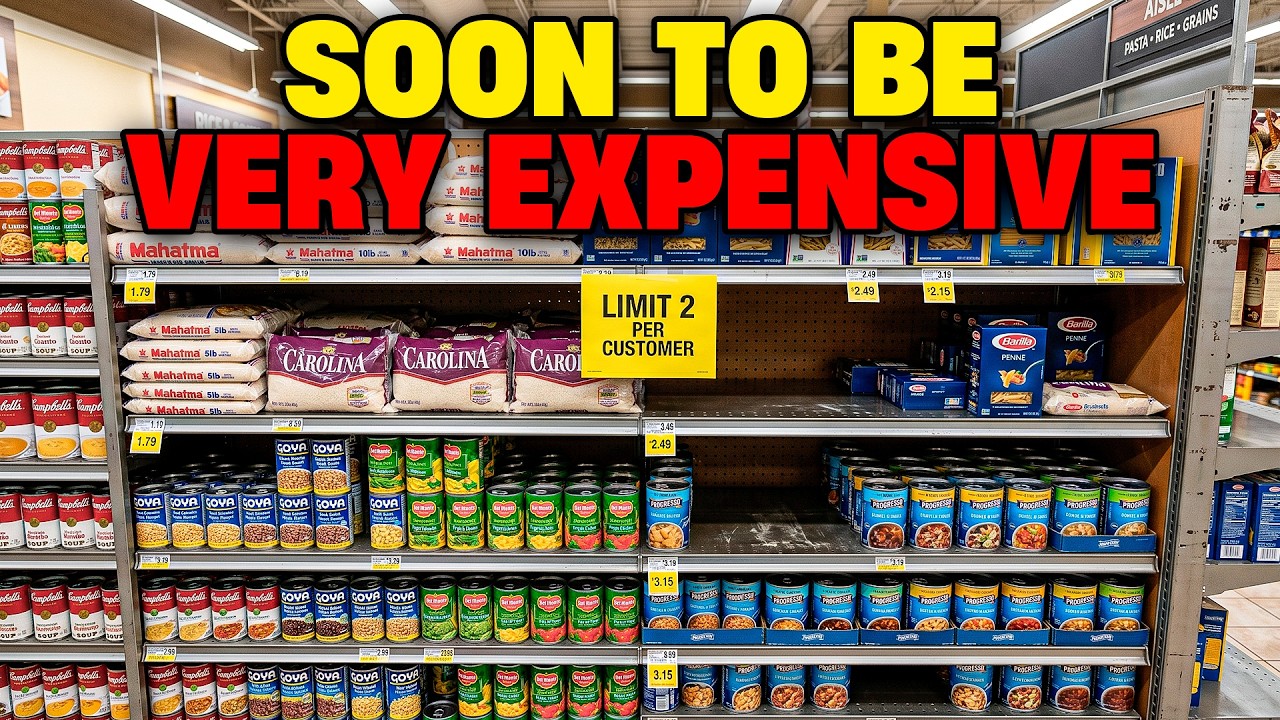
Thumbnail analysis
Pattern: Warning sign Trigger: Fomo
Curiosity 6 · FOMO 8 · Pain 6 · Clarity 8
Text: SOON TO BE VERY EXPENSIVE · Face: no
It combines a scarcity warning with a concrete deadline, triggering fear of rising prices and urgency to act before a specific date.
Improvement: Add a specific price increase percentage or dollar amount to make the threat more concrete and quantifiable.