Trader Joe’s Just Did What No Grocery Store Would
Consumer Truth · 67.4K views · 2026-09-06 · 157.6x outlier
Title analysis
{Brand} Just Did What No {category} Would · curiosity_gap · reveal
Vague unprecedented action creates an open loop demanding resolution.
Title features
9 words ·
Script
3976 words · 157 wpm · 25.3 min
Hook: Trader Joe's doesn't look like a grocery store that changes industries. It's small. It's quirky.
Type / score: contrarian · 7/10
Structure: explainer
Promise: partial
Tone: authoritative, investigative, conspiratorial-lite
Diagnosis: The script hooks with a contrarian framing and holds attention through specific ingredient names, chemistry details, and industry comparisons, which gives it real specificity and credibility. It risks losing viewers in the long middle stretch of economic analysis about slotting fees and supply chains, which slows pacing before the closing call-to-action reasserts the persona's ongoing narrative.
Full transcript with timestamps
00:00 Trader Joe's doesn't look like a grocery
00:02 store that changes industries. It's
00:04 small. It's quirky. It sells cookie
00:07 butter and frozen mandarin chicken and a
00:09 rotating cast of seasonal items that
00:11 people genuinely lose their minds over
00:14 every fall. The parking lots are a
00:16 disaster. The aisles are too narrow. And
00:19 the employees are so relentlessly
00:21 cheerful that after 20 minutes, you
00:23 start wondering if something is being
00:24 added to the samples. But what just
00:27 happened inside that store is going to
00:29 cost major food manufacturers real
00:31 money, force a conversation about
00:34 ingredient transparency that the
00:35 industry has been successfully dodging
00:37 for decades, and redefine what a grocery
00:40 store is actually allowed to promise its
00:42 customers. Here's what they did, why the
00:45 industry didn't see it coming, and what
00:47 it changes about everything in your
00:48 cart.
00:50 To understand what Trader Joe's just
00:52 did, you have to understand what makes
00:54 Trader Joe's fundamentally different
00:56 from every other grocery store in
00:57 America. And the difference isn't the
00:59 prices, although the prices are
01:01 genuinely good. And it's not the
01:03 selection, although the selection is
01:05 genuinely strange in the best possible
01:07 way. The difference is the model. Trader
01:10 Joe's runs on private label almost
01:12 exclusively. Walk into a Kroger and you
01:15 see a thousand national brands with a
01:17 Kroger store brand tucked in alongside
01:20 them. Walk into a Trader Joe's and
01:22 almost everything in the store is a
01:24 Trader Joe's product. The store is the
01:27 brand. The brand is the store. There is
01:30 no separation between the two. That
01:33 model was built by Joe Kulom who opened
01:35 the first Trader Joe's in Pasadena,
01:37 California in 1967.
01:40 Colom had a specific vision. He wanted
01:42 to create a store for overeducated,
01:44 underpaid people. His actual words. He
01:47 believed that a segment of the American
01:49 consumer was smart enough to want
01:51 quality and savvy enough to question
01:53 whether they needed to pay a premium to
01:55 get it. He read a study predicting that
01:57 Americans with college degrees would
01:59 travel more frequently and develop more
02:01 sophisticated taste preferences. He
02:04 decided to build a store for that person
02:06 before anyone else in grocery retail had
02:08 thought to. He eliminated the brands,
02:11 cut the variety, controlled the supply
02:13 chain, and passed the savings to a
02:15 customer who felt like they were in on
02:17 something nobody else had figured out
02:18 yet. That feeling is the product. It has
02:22 been the product for nearly 60 years,
02:25 and it is a more durable competitive
02:27 advantage than any slotting arrangement
02:28 or loyalty program the conventional
02:31 grocery industry has ever designed.
02:33 because it is built on something the
02:34 conventional grocery industry
02:36 fundamentally does not understand, which
02:38 is that some consumers want to feel
02:40 respected by the store they shop at more
02:43 than they want to feel rewarded by it.
02:45 The Hawaiian shirts came later. So did
02:48 the crew member culture and the nautical
02:49 theme and the handdrawn chalkboard
02:52 signs, but those are expressions of the
02:54 same underlying idea. Trader Joe's is a
02:57 store that communicates trust through
02:59 personality rather than through the kind
03:01 of formal quality signals that other
03:03 stores rely on. No slotting fees, no
03:06 national brand advertising, no
03:09 complicated tiered pricing, just a
03:11 smaller store with a curated selection
03:14 and a staff that seems genuinely happy
03:16 to be there, which is its own form of
03:18 reassurance. The consumer who shops at
03:20 Trader Joe's regularly has a specific
03:22 relationship with the store that goes
03:24 beyond transactional. They use the word
03:27 cult unironically. They follow fan
03:30 accounts dedicated to new product
03:32 arrivals. They mourn discontinued items
03:34 with a grief that is slightly
03:36 disproportionate but entirely sincere.
03:39 That emotional relationship is
03:41 commercially valuable in a way that is
03:42 almost impossible to replicate because
03:44 it cannot be manufactured. It has to be
03:47 earned over decades. Trader Joe's earned
03:50 it by making their customer feel seen.
03:52 The move they just made is the most
03:54 direct expression of that relationship
03:55 the company has ever made. And it is
03:58 going to cost them something real to
04:00 follow through on. What Trader Joe's
04:03 actually did. In 2025, Trader Joe's
04:06 announced a sweeping update to the
04:08 formulation standards for its private
04:10 label product line. Given that private
04:12 label is essentially the entire store,
04:15 this means they announced new standards
04:17 for almost everything they sell. The
04:19 update targets a specific set of
04:21 ingredients that have been present in
04:23 Trader Joe's products and in the
04:25 products of every other grocery store in
04:27 America without meaningful challenge for
04:28 decades. And the specific ingredients
04:31 they targeted reveal something
04:33 deliberate about the intention behind
04:34 the policy. The first category is
04:37 synthetic preservatives. Trader Joe's is
04:40 removing calcium propionate, potassium
04:42 sorbate, and sodium benzoate from their
04:44 product formulations. These are the
04:47 three most widely used synthetic
04:49 preservatives in packaged food. Calcium
04:52 propionate is the preservative found in
04:54 commercially produced bread that
04:56 peer-reviewed research has connected to
04:58 behavioral changes in children,
05:00 including irritability and sleep
05:01 disruption. Potassium sorbate is used
05:04 across baked goods, dairy products, and
05:06 beverages and has raised concerns in
05:09 independent research about immune system
05:11 effects at the cellular level. Sodium
05:13 benzoate when combined with ascorbic
05:15 acid in beverages forms benzene, a known
05:19 carcinogen. The combination is common.
05:22 The disclosure is not. Trader Joe's is
05:25 removing all three from their product
05:26 line. The second category is artificial
05:29 colors. Red 40, yellow five, yellow six.
05:34 The petroleum derived synthetic dyes
05:36 that the European Union has required
05:38 warning labels for since 2010 because
05:41 the research linked them to
05:42 hyperactivity in children. In the United
05:45 States, the FDA has reviewed the same
05:47 research and declined to act. Every
05:50 major food manufacturer in America has
05:52 continued using these dyes in products
05:54 sold to children without a warning
05:56 label. Trader Joe's is removing them.
05:59 The third category is something that
06:01 nobody expected a grocery store to
06:03 touch. Certain Trader Joe's products
06:05 have contained what the company now
06:07 classifies as nonfunctional additives.
06:10 Ingredients that were included not for
06:12 any nutritional purpose, not for any
06:14 safety purpose, but purely to achieve a
06:17 visual or textural effect that consumers
06:19 have been conditioned to expect and that
06:22 cheaper ingredients cannot produce
06:23 without a chemical assist.
06:25 Think of the specific brightness of a
06:27 color, the specific elasticity of a
06:30 texture, the specific uniformity of a
06:32 shape that signals quality while being
06:35 produced by a compound rather than by a
06:37 quality ingredient. Trader Joe's is
06:40 removing those additives and
06:41 reformulating the products to work
06:43 without them. That last category is the
06:46 most significant one. Removing a
06:48 preservative is meaningful. Removing a
06:50 dye is meaningful. Removing an
06:53 ingredient whose only function was to
06:54 make the product look or feel like
06:56 something it isn't is a different kind
06:58 of commitment entirely. It means some
07:01 Trader Joe's products are going to look
07:03 slightly different than what you've been
07:04 buying. The color might be less vivid.
07:07 The texture might be less uniform. And
07:10 the company looked at those trade-offs
07:11 and decided that was still the right
07:13 call, which is a sentence no major
07:15 grocery retailer has been willing to say
07:17 before. The private label label problem
07:19 nobody talks about. Here is the part of
07:22 this story that the press coverage has
07:24 largely missed. When Target reformulated
07:27 Good and Gather, they were reformulating
07:29 a store brand that operates within a
07:31 broader store where name brands continue
07:33 to sell under their own standards. When
07:36 Whole Foods tightened their supplier
07:37 requirements, they were tightening the
07:39 standards applied to independent brands
07:41 who sell through their platform. Trader
07:44 Joe's doesn't have that separation. When
07:46 Trader Joe's commits to removing calcium
07:48 proprianate from their bread, they are
07:51 not pressuring an outside supplier to
07:52 change their formulation. They are the
07:55 supplier. The accountability for what
07:57 goes into that product runs straight to
07:59 Trader Joe's and nobody else. That makes
08:02 this move either more meaningful or more
08:04 complicated depending on what you know
08:06 about how Trader Joe's actually sources
08:08 its products. Trader Joe's private label
08:11 products are manufactured by third-party
08:13 producers under contract. Many of these
08:16 producers are the same manufacturers
08:18 producing name brand products for other
08:20 retailers under different labels. The
08:23 granola that appears in a Trader Joe's
08:25 bag may come from the same facility as a
08:27 granola that appears under a well-known
08:29 national brand. The formulation is
08:31 different because Trader Joe's controls
08:33 the recipe, but the factory, the
08:35 equipment, and the supply chain for the
08:37 raw ingredients can overlap
08:39 significantly. This is the private label
08:42 supply chain reality that Trader Joe's,
08:44 like every retailer running this model,
08:46 has never fully disclosed. The mystique
08:49 of the Trader Joe's product, the sense
08:51 that it was made by someone different
08:53 using something better, has always been
08:55 partly a product of strategic ambiguity
08:57 about where things actually come from.
09:00 The new formulation standards do not
09:02 resolve that ambiguity. They do not
09:04 require Trader Joe's to disclose which
09:06 manufacturer produces which product or
09:09 what other products those manufacturers
09:11 are producing for other labels. What
09:13 they require is that whatever is in the
09:15 Trader Joe's version of the product
09:17 meets the new ingredient standard. The
09:19 sourcing can remain opaque. The
09:22 formulation has to be transparent. That
09:24 is progress. It is partial progress. And
09:27 understanding the difference between
09:29 those two things is the most important
09:30 thing you can take from this chapter.
09:33 Trader Joe's committed to what is in the
09:34 product. They have not committed to who
09:36 makes it or where the ingredients come
09:38 from. For a store whose entire identity
09:41 is built on trust, that gap is worth
09:43 watching carefully as the policy rolls
09:46 out. The customer who buys Trader Joe's
09:48 bread because they trust Trader Joe's
09:50 deserves to know not just that calcium
09:52 propriionate has been removed, but what
09:55 grain went into the flour and where that
09:57 grain was grown and whether it was
09:59 tested for glyphosate before it was mil.
10:01 That level of transparency is not part
10:03 of this policy. It may never be, but it
10:06 is the logical next question. And a
10:08 company that just answered one hard
10:10 question is going to be asked the next
10:12 one. Why every other grocery store
10:15 refused to do this? Trader Joe's did not
10:18 do this because they are more virtuous
10:20 than other grocery stores. They did it
10:22 because their specific model made it
10:24 cheaper to do this than to be caught not
10:26 doing it. That sounds cynical. It is
10:28 also accurate. And understanding the
10:31 economics is the only way to understand
10:33 why this store moved when every other
10:35 store with a similar customer
10:36 demographic chose to stay still. The
10:39 private label model eliminates the
10:41 slotting fee relationship. At Kroger, a
10:44 food manufacturer pays for shelf space.
10:47 That payment creates a financial
10:49 relationship that makes demanding
10:50 ingredient changes from that
10:52 manufacturer commercially complicated.
10:55 The fee payer is also a client. Kroger's
10:58 leverage over the ingredient choices of
10:59 their name brand suppliers is limited by
11:02 the revenue those suppliers represent.
11:05 Trader Joe's doesn't collect slotting
11:06 fees. They don't have name brand
11:08 suppliers in the traditional sense.
11:11 Every product on their shelf is under
11:13 their control. When they decide to
11:15 remove calcium propionate from their
11:17 bread formulation, they call their
11:19 contract manufacturer and change the
11:21 recipe. There is no third party to
11:23 negotiate with. There is no slotting fee
11:26 to lose. The decision lives entirely
11:28 within Trader Joe's authority. That
11:31 structural simplicity makes ingredient
11:33 decisions faster and cheaper for Trader
11:35 Joe's than for any other major retailer
11:37 in America. The cost of reformulation is
11:39 real, but it doesn't come with the
11:41 additional cost of renegotiating
11:43 supplier contracts across a product
11:45 category. Kroger's version of this
11:47 change would require reformulating their
11:50 store brand line and simultaneously
11:52 managing the commercial relationships
11:54 with every name brand supplier in the
11:56 same category. The complexity is
11:59 exponentially higher. The incentive to
12:01 accept that complexity is
12:03 correspondingly lower. Walmart's great
12:06 value line faces the same problem with
12:08 the additional constraint of Walmart's
12:10 margin structure. Great value exists to
12:13 deliver the lowest possible price on a
12:15 recognizable product. Reformulating
12:18 without synthetic preservatives
12:20 increases the cost of production and
12:22 shortens the shelf life of the product.
12:24 Both outcomes work against the great
12:26 value mandate. The math doesn't work at
12:29 Walmart's price floor.
12:32 Whole Foods moved on natural flavor
12:34 disclosure and seed oil transparency.
12:36 Their move required pressuring
12:38 independent brands, which took
12:40 significant institutional leverage. The
12:43 Whole Foods customer is willing to pay
12:45 for the clean label signal in a way that
12:47 supports the premium required to fund
12:49 reformulation.
12:51 The Trader Joe's move required Trader
12:53 Joe's to reformulate their own products,
12:56 which is faster but still expensive. And
12:59 the Trader Joe's customer has
13:00 historically expected value alongside
13:03 quality.
13:04 Raising prices to fund reformulation is
13:06 a more complicated sell at Trader Joe's
13:09 than at Whole Foods. The reason Trader
13:11 Joe's moved is that their customer
13:13 caught up to their pricing expectation.
13:16 The Trader Joe's shopper of 2025 is more
13:19 ingredient literate than the Trader
13:21 Joe's shopper of 2005.
13:23 The store's reputation is built on
13:25 trust, and maintaining that trust in an
13:28 era where ingredient scrutiny has become
13:30 mainstream is worth more to the Trader
13:32 Joe's brand than the cost savings from
13:34 keeping cheaper additives in the
13:36 formulation. They did the math. The math
13:39 said move
13:42 the ingredient problem at the center of
13:44 this.
13:45 Let's talk specifically about what
13:47 calcium propionate, potassium sorbate,
13:50 and sodium benzoate are, why they
13:52 survive this long in food marketed as
13:54 wholesome, and what the research
13:56 actually shows about each one. Start
13:59 with calcium propionate because it is in
14:01 more products than most people realize.
14:03 It is the primary preservative used in
14:05 commercially produced bread in the
14:07 United States. It is effective,
14:09 inexpensive, and has been in use since
14:11 the 1950s.
14:13 For most of that period, the assumption
14:15 was that a preservative used at low
14:17 concentrations in a product as
14:19 ubiquitous as bread must have been
14:21 thoroughly evaluated for safety. It was
14:24 not. The peer-reviewed literature on
14:27 calcium propionate began raising
14:29 specific concerns about behavioral
14:31 effects in the early 2000s. A study
14:34 published in the Journal of Pediatrics
14:35 and Child Health found that children
14:37 consuming calcium propionate showed
14:40 measurable increases in irritability,
14:42 restlessness, and sleep disturbance. The
14:46 findings were replicated in subsequent
14:47 research. The FDA reviewed the
14:50 literature and maintained the generally
14:52 recognized as safe classification.
14:54 The research continued accumulating. The
14:57 regulatory status did not change.
15:00 Calcium propionate is still in the bread
15:02 at every major grocery store in America
15:04 that isn't Trader Joe's. It is in the
15:07 sandwich bread, the hot dog buns, the
15:10 dinner rolls. It is in the snack
15:12 crackers. It is in the packaged baked
15:14 goods. It has been in those products
15:16 every day for the families who have been
15:18 buying commercially produced bread for
15:20 their children without any label
15:22 indication that behavioral research
15:24 existed on the compound they were
15:26 consuming.
15:27 Potassium sorbate is used in a broader
15:30 range of products, dairy items,
15:32 beverages, baked goods, processed meats.
15:36 It functions as a mold and yeast
15:38 inhibitor and is highly effective at
15:40 what it does. In vitro research, which
15:42 means research conducted on cells
15:44 outside the body, has raised concerns
15:47 about its mutagenic effects at the
15:49 cellular level. The FDA classification
15:52 is safe. The in vitro findings have not
15:56 been replicated in clinical human
15:58 studies at the concentrations present in
16:00 food. The concern exists in the
16:03 research. The regulatory response does
16:06 not. Sodium benzoate is the most
16:09 chemically complicated of the three. On
16:12 its own at the concentrations used in
16:14 food, sodium benzoate has not been
16:17 demonstrated to be harmful in human
16:19 studies. The problem is the reaction.
16:22 When sodium benzoate combines with
16:24 ascorbic acid, which is vitamin C, in an
16:28 acidic environment, the two compounds
16:30 react to form benzene. Benzene is
16:34 classified as a carcinogen by every
16:36 major health regulatory body in the
16:38 world. It is associated with leukemia
16:41 and other blood cancers at levels of
16:44 chronic exposure.
16:45 Sodium benzoate and ascorbic acid appear
16:48 together in a wide range of beverages
16:51 from fruit drinks to carbonated sodas to
16:54 certain functional beverages because
16:56 ascorbic acid is commonly used as a
16:58 preservative and flavor enhancer in
17:00 acidic drinks and sodium benzoate is
17:04 used to prevent microbial growth in
17:06 those same products. The benzene
17:08 formation reaction has been known since
17:10 the 1990s. The FDA has monitored benzene
17:14 levels in beverages intermittently. They
17:17 have not required manufacturers to stop
17:19 using the combination.
17:22 Trader Joe's removing sodium benzoate
17:24 from its product formulations does not
17:26 solve this problem at an industry level.
17:29 It removes the problem from the specific
17:31 products under their control, which is
17:34 the only thing they have the authority
17:35 to do. That is how ingredient reform
17:38 works when regulators won't move. one
17:42 product at a time, one company at a time
17:45 until the cumulative pressure of enough
17:48 individual decisions changes what the
17:50 industry considers a baseline
17:53 expectation.
17:55 What Trader Joe's still gets wrong.
17:58 Let's not turn this into a fan letter
18:01 because there are specific things Trader
18:03 Joe's did not do and those things matter
18:05 as much as what they did. The sourcing
18:08 opacity problem is the most significant
18:10 one and the one the company has the most
18:13 control over. Trader Joe's can tell you
18:16 what is not in their products. Now, they
18:19 cannot tell you where those products
18:21 come from, who makes them, or what
18:23 standards govern the supply chain
18:25 upstream of the finished product. The
18:28 wheat in the reformulated bread is not
18:31 traced to a specific farm. The oils in
18:34 the reformulated crackers do not carry a
18:37 disclosed extraction method. The produce
18:40 in the refrigerated section is not
18:42 always sourced transparently enough to
18:45 verify the pesticide practices of the
18:47 growers.
18:49 Ingredient reform inside the finished
18:51 product is meaningful. Ingredient reform
18:54 that doesn't extend to the raw materials
18:56 going into that product is incomplete.
18:59 The glyphosate contamination that
19:01 independent testing has found in organic
19:04 wheat products exists at the raw
19:06 material level before any manufacturer
19:09 adds a single preservative.
19:12 Trader Joe's new policy does not address
19:14 what arrives at the manufacturing
19:16 facility. It only addresses what leaves
19:19 it.
19:21 The second gap is the wine and beverage
19:23 program. Trader Joe's wines, including
19:26 the famous two buck chuck, which hasn't
19:29 actually been $2 since roughly 2005, but
19:32 we'll let that slide, are a massive part
19:35 of the store's identity and revenue. And
19:38 they have never been subject to the same
19:40 ingredient scrutiny as their food
19:42 products. Not once, not in any way that
19:46 the company has made public.
19:48 Commercial wine production involves a
19:50 range of additives and processing aids
19:53 that are not required to appear on
19:55 labels because alcohol labeling
19:57 regulations in the United States are
19:59 governed by the Alcohol and Tobacco Tax
20:02 and Trade Bureau rather than the FDA.
20:05 And the TTB has historically required
20:08 significantly less ingredient disclosure
20:10 than the FDA. Trader Joe's wine program
20:13 is large, popular, and almost entirely
20:16 opaque from an ingredient perspective.
20:18 The new formulation standards that apply
20:20 to their food line do not apply to their
20:22 beverage alcohol line. For a customer
20:24 who shops at Trader Joe's specifically
20:26 because they trust the ingredient
20:27 standards, that gap is worth knowing
20:29 about. The third gap is the timeline
20:32 ambiguity. Trader Joe's has not
20:35 published a product byproduct transition
20:37 schedule. The announcement of the new
20:39 standards does not mean every product
20:41 currently on the shelf already meets
20:43 those standards. Some products are
20:45 already compliant. Some are in
20:47 reformulation. Some have not yet had
20:49 their transition date set. A Trader
20:51 Joe's shopper who assumes the new policy
20:53 means every product is already clean is
20:56 making an assumption the company has not
20:58 authorized them to make. Trader Joe's
21:00 moved. They moved meaningfully in a
21:03 direction the evidence has been pointing
21:04 toward for 20 years. The gap between the
21:07 move they made and the full transparency
21:09 their customers deserve is real. It is
21:12 specific and it is worth tracking every
21:14 time you walk into one of their stores
21:16 going forward. What this means for how
21:18 you shop right now. Here's the part that
21:21 actually changes something in your week.
21:23 Because knowing the policy is
21:24 interesting. Knowing what to do with it
21:26 when you're standing in the aisle is
21:28 what matters. The first thing to do is
21:30 stop assuming the Trader Joe's label is
21:32 a blanket guarantee. It never was. and
21:35 the new policy doesn't make it one. What
21:37 the policy does is raise the floor for
21:39 what the label means. That floor is
21:41 higher than it was. It is not as high as
21:44 the company's marketing language
21:45 sometimes implies. Read the ingredient
21:48 list. That instruction does not change
21:50 just because the store changed its
21:52 standard. The second thing to do is pay
21:54 specific attention to the preservative
21:56 question across every store you shop at.
21:59 Calcium propionate, potassium sorbate,
22:02 and sodium benzoate are the three
22:04 compounds Trader Joe's is removing.
22:06 Those compounds are still in products at
22:08 Kroger, Albertson's, Walmart, Target
22:11 outside the Good and Gather line, and
22:13 every other major retailer in the
22:15 country. The research on calcium
22:17 propionate and behavioral effects in
22:19 children that Trader Joe's implicitly
22:21 acknowledged by removing it from their
22:22 products exists regardless of which
22:25 store you're standing in. The label on
22:26 the back of any bread product will tell
22:28 you whether it's there. The third thing
22:30 to do is look for what changed the next
22:32 time you buy a Trader Joe's product
22:34 you've been buying for a while. If a
22:36 bread you've been buying for years no
22:38 longer lists calcium propionate, the
22:40 reformulation happened. If the
22:42 ingredient list is shorter than you
22:44 remember, check what was removed. The
22:46 policy change is visible in the product
22:48 if you're paying attention. And paying
22:50 attention is the only quality control
22:52 you have. The fourth thing to do is
22:55 apply the principle elsewhere. Trader
22:57 Joe's removing synthetic preservatives
22:59 from their products doesn't mean other
23:01 brands have moved. It means the question
23:03 is now clearly worth asking. A brand
23:06 that still uses calcium propionate in a
23:08 product marketed for children is now
23:10 competing against a store that removed
23:12 it. That competitive pressure is new.
23:15 The question you ask at the shelf, why
23:17 does this product still have this
23:19 compound when Trader Joe's removed it
23:20 from theirs? is a question every
23:23 manufacturer should now have to answer.
23:25 Buy fewer ingredients from wherever you
23:27 shop. That principle has run through
23:29 everything we've covered on this
23:30 channel. No reformulation announcement
23:33 changes it. What the Trader Joe's
23:34 announcement does is validate it. The
23:37 store with the most loyal customer base
23:38 in American grocery retail just told
23:41 their customer that fewer ingredients is
23:43 the right direction. They spent money to
23:46 say that. Take them up on it. Here's the
23:48 thing about what Trader Joe's just did
23:50 that nobody in the industry wants to say
23:52 out loud. Trader Joe's is not a premium
23:55 store. It does not charge Whole Foods
23:57 prices. It does not carry the
23:59 demographic that Whole Foods carries.
24:02 Its stores are smaller. Its selection is
24:05 narrower and its brand identity is built
24:08 on approachability rather than
24:10 aspiration.
24:12 When Whole Foods raises a standard, the
24:15 industry can look at the price point and
24:16 the shopper and say, "That's a niche
24:19 move for a niche customer." And keep
24:22 doing what they're doing. That
24:24 explanation is not available for Trader
24:26 Joe's. The Trader Joe's customer is a
24:29 mainstream customer paying mainstream
24:32 prices who now has access to a store
24:34 that is committed to removing compounds
24:37 that every other mainstream grocery
24:39 store is still selling without comment.
24:42 That comparison is going to become a
24:45 conversation in pediatrician offices, in
24:49 school pickup lines, in the comment
24:51 sections of every food account that
24:53 covers this story. The store nobody
24:56 expected to move first just moved. And
24:59 every other store that hasn't is now
25:02 being asked to explain why. You know the
25:05 answer. You know what's in the products
25:07 they haven't touched yet. You know what
25:10 to look for when you flip the package
25:12 over. The industry's ability to keep you
25:15 from asking the question just got
25:17 harder.
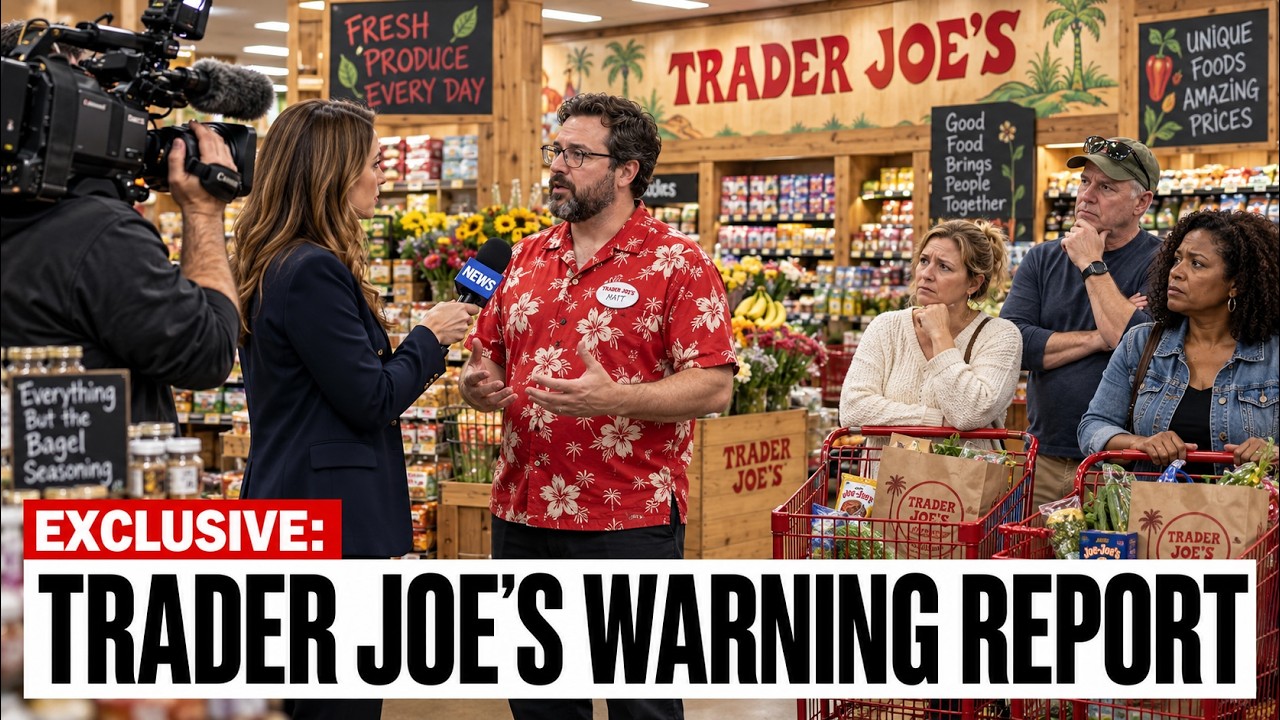
Thumbnail analysis
Pattern: Scene story Trigger: Curiosity gap
Curiosity 8 · FOMO 2 · Pain 3 · Clarity 8
Text: EXCLUSIVE: TRADER JOE'S WARNING REPORT · Face: yes
Mimics a breaking news report format with 'EXCLUSIVE' and 'WARNING' text, creating urgency and curiosity about what Trader Joe's did that's unusual enough to warrant news coverage.
Improvement: Add a close-up reaction face with visible shock/concern to intensify emotion and give viewers a clearer emotional cue to click.