What a Stroke Looks Like the Day Before It Hits Early Warning Signs You Should Never Ignore
Vitality After 60 · 761.3K views · 2026-06-28 · 2533.3x outlier
Title analysis
What {condition} Looks Like the Day Before It Hits · fear · warning
Health fear plus urgency drives immediate self-checking behavior.
Title features
17 words · question
Script
4248 words · 168 wpm · 25.3 min
Hook: Stop what you're doing for the next 10 minutes, because what I'm about to share with you could save your life or the life of someone you love. Here's the truth nobody tells you. A stroke does not start the moment it happens.
Type / score: warning · 8/10
Structure: list
Promise: partial
Tone: urgent, caring, authoritative elder-guide
Diagnosis: The hook and repeated stat-driven authority claims (Harvard, ABCD2 score, Ireland study) plus the tease of a 'mysterious sign #6' create strong open loops that should sustain attention through the list, and the metaphors (pipes, extension cord, dimmer light) add texture for a low-literacy health audience. However the pacing sags in the middle as each sign follows an identical formulaic script (mechanism, metaphor, scenario, action steps), and viewers who don't care about signs 1-2 (well known) may drop off before reaching the promised novel sign six.
Full transcript with timestamps
00:00 Stop what you're doing for the next 10
00:01 minutes, because what I'm about to share
00:03 with you could save your life or the
00:06 life of someone you love.
00:08 Here's the truth nobody tells you.
00:10 A stroke does not start the moment it
00:12 happens. It starts the day before,
00:15 sometimes 2 days before.
00:17 Your body sends out a warning, a quiet
00:19 knock on the door, and most people never
00:22 hear it. They think it's just tiredness,
00:24 just a clumsy moment, just getting
00:27 older. It's not.
00:29 Doctors have a name for this warning.
00:31 It's called a TIA, a mini stroke. And
00:34 here's the part that should scare you a
00:35 little, in a good way, a way that makes
00:38 you pay attention.
00:39 Up to one in 10 people who have one of
00:41 these warning signs go on to have a full
00:44 stroke within just 48 hours, 2 days.
00:47 That's all the time your body gives you.
00:49 Today, I'm going to show you exactly
00:51 what those warning signs look like, what
00:53 they feel like, and what you need to do
00:56 the moment you notice them.
00:58 Stay with me until the end, because the
01:00 last sign on this list is the one almost
01:02 nobody recognizes, and it's often the
01:05 very first one to appear.
01:07 Here's what most people believe. Strokes
01:09 come out of nowhere. One moment you're
01:11 fine, the next moment everything
01:14 changes.
01:15 That belief is dangerous, because it's
01:17 not true. Most strokes are not sudden
01:20 strangers. They are loud knocks after a
01:22 series of quiet ones. Your brain has
01:25 been trying to get your attention, and
01:27 you didn't know it was talking to you.
01:29 Here's the new way to think about it.
01:31 Your blood vessels are like the pipes in
01:32 an old house. Before a pipe completely
01:35 bursts and floods the kitchen, there are
01:37 little signs. A drip here, a weird sound
01:40 there, a bit of rust in the water. A
01:43 stroke works the same way. Before the
01:45 flood, there are drips, small, brief
01:48 moments where blood flow to part of your
01:50 brain is interrupted for a few minutes,
01:53 then it comes back. You feel normal
01:55 again. You shake it off, But your brain
01:58 remembers, and so should you.
02:01 Here's the good news, and it's real good
02:03 news. Because there's a warning period,
02:05 that means there's a window. A window to
02:08 act. A window to call for help. A window
02:11 to change the outcome completely. This
02:14 isn't a hopeless story. It's a story
02:16 about catching the drip before the pipe
02:18 bursts.
02:19 I've spent years studying how strokes
02:21 develop, working alongside neurologists
02:24 and emergency physicians, and reviewing
02:26 the research on what actually happens in
02:28 the hours and days before a major
02:30 stroke. Here's my promise to you today.
02:33 By the end of this video, you will know
02:35 the six warning signs that can show up
02:37 the day, or even just hours before a
02:40 stroke. You'll know exactly what they
02:42 look like in real life, not just in a
02:44 textbook. And you'll know what to do the
02:47 second you spot them.
02:48 This isn't about scaring you for no
02:50 reason. It's about giving you the kind
02:52 of knowledge that frankly, could save
02:54 your independence, or your life. Let's
02:57 begin. Let's talk numbers for a moment,
03:00 because numbers don't lie, and these
03:02 numbers matter to you.
03:04 According to Harvard Medical School,
03:06 about 1/3 of people who experience a
03:08 mini stroke, a TIA, will eventually go
03:11 on to have a full stroke. And the danger
03:14 isn't spread out evenly over months. The
03:16 risk is highest right at the start. Up
03:19 to 10% of people who have a TIA go on to
03:22 have a full stroke within just 48 hours.
03:25 Let that sink in. Two days. Researchers
03:28 have also developed something called the
03:30 ABCD2 score, a simple checklist doctors
03:34 use to estimate how dangerous a warning
03:36 sign really is.
03:38 For people with the highest risk scores,
03:40 the chance of a full stroke within 48
03:43 hours can be as high as 8%. That's
03:46 roughly one in every 12 people with
03:48 serious warning signs. Now, here's the
03:51 part that worries me most as someone who
03:53 studies this.
03:54 A study of older adults in Ireland found
03:57 that less than half could correctly
03:59 identify the common early signs of
04:01 stroke.
04:02 Less than half.
04:04 That means for every two people watching
04:06 this video right now, statistically, one
04:09 of them would not have recognized these
04:10 signs before today. What does that mean
04:13 in real life? It means someone feels a
04:15 strange weakness in their hand on a
04:17 Tuesday, brushes it off, and by Thursday
04:20 they're in an ambulance or worse. It
04:22 means a wife sees her husband's words
04:24 slur for 30 seconds at breakfast, and
04:27 they both laugh it off, not knowing they
04:29 just witnessed a five-alarm fire
04:31 warning. This is why today's video
04:33 matters so much. Knowledge, real
04:36 knowledge, closes that gap. Now, I'm
04:39 going to walk you through six warning
04:40 signs your body may show in the day or
04:42 two before a stroke. Some of these you
04:45 already kind of know. Face drooping,
04:47 trouble speaking. Most people have heard
04:50 of those. But warning sign number six,
04:53 that one is different. It's subtle. It's
04:55 easy to dismiss. And in my research,
04:58 it's one of the most commonly reported
05:00 signs in the hours leading up to a major
05:02 stroke. Yet almost nobody talks about
05:04 it. Most people mistake it for something
05:06 completely harmless. So stick with me
05:09 all the way to the end because sign
05:11 number six might be the one that saves
05:13 you. Let's start with sign number one.
05:16 Before we dive in, I want to ask you
05:18 something, and I really want you to
05:20 answer in the comments below. How old
05:22 are you right now? 55? 65? 75 and still
05:27 going strong? And here's my second
05:29 question. Have you ever felt one of
05:31 these signs, even for a few seconds, and
05:34 brushed it off as nothing?
05:36 Maybe a sudden moment of dizziness, a
05:38 word that came out wrong, a hand that
05:41 felt strangely weak for just a moment.
05:43 Type it in the comments. Yes, I've felt
05:46 that, or no, never. Not only does it
05:48 help me understand who's watching, it
05:50 might help someone else reading the
05:52 comments recognize their own warning
05:54 sign for the first time. Your comment
05:56 could genuinely help save someone else's
05:58 life today. Now, let's get into it. Sign
06:01 number one, the sudden face drop. The
06:04 first sign is one of the most
06:05 well-known, but most people only picture
06:08 the dramatic version. The truth is, it
06:11 can be much smaller than that. This is
06:13 sudden weakness or numbness on one side
06:15 of the face. Sometimes it's obvious. One
06:19 side droops noticeably when the person
06:21 tries to smile, but sometimes it's tiny.
06:24 A little tingling near the mouth. A
06:26 feeling like one side of the face isn't
06:28 listening to you.
06:30 Here's why this happens. Your brain
06:32 controls the muscles of your face like a
06:34 puppeteer controls a puppet, each string
06:37 connected to a different muscle.
06:39 When blood flow to one side of the brain
06:41 is interrupted, even briefly, some of
06:43 those strings go slack. The result is a
06:46 face that suddenly doesn't move evenly.
06:49 Think of it like a porch light on a
06:50 dimmer switch. Most of the time, it's
06:53 either fully on or fully off. But for a
06:56 moment, before it fails completely, it
06:58 might flicker, dimmer on one side of the
07:01 room than the other. That flicker is
07:03 information. It's telling you something
07:06 in the wiring is wrong.
07:08 Doctors at the National Stroke
07:09 Association built an entire test around
07:12 this sign because it's so reliable.
07:14 Ask the person to smile and watch for
07:17 one side drooping.
07:19 Picture this scenario. A woman in her
07:21 late 60s is having coffee with her
07:23 sister. She goes to smile at a joke, and
07:26 her sister notices, just for a second,
07:29 that one side of her mouth doesn't move
07:31 the same way.
07:32 It passes in under a minute. They both
07:34 laugh it off as a weird face.
07:37 That kind of moment is exactly the kind
07:39 of warning sign that gets dismissed
07:41 every single day. What you need to do,
07:44 if you or someone near you has any
07:46 facial drooping, even briefly, even if
07:49 it goes away, treat it as an emergency.
07:52 Ask the person to smile. If one side
07:55 doesn't move right, call emergency
07:57 services immediately. Do not wait to see
08:00 if it happens again.
08:02 The second sign shows up in the arms,
08:04 and it's often the one people notice in
08:06 themselves before anyone else does.
08:08 This is sudden weakness, heaviness, or
08:11 numbness in one arm. Usually just one
08:14 side of the body. You might try to lift
08:16 a cup, and your arm feels strangely
08:19 heavy, like it's made of wet sand. Or
08:22 you go to raise your hand, and it just
08:23 doesn't rise the way the other one does.
08:25 Here's the simple science. Each side of
08:28 your brain controls the opposite side of
08:30 your body. So, when blood flow gets
08:32 blocked on one side of the brain, the
08:34 opposite arm is often the first place
08:36 the weakness shows up, because the nerve
08:39 pathway runs a long distance from brain
08:41 to fingertips, and even a small
08:43 interruption shows up clearly along that
08:45 path. Think of it like a long extension
08:48 cord running across your yard. If
08:50 there's a kink near the plug, you might
08:52 not notice anything wrong right next to
08:54 the outlet. But by the time the cord
08:57 reaches the far end, the lamp barely
08:59 lights up at all.
09:00 A small problem at the start becomes
09:02 very obvious by the time it reaches your
09:04 hand. This is part of the FAST test that
09:07 hospitals and stroke researchers use
09:09 worldwide. Ask the person to raise both
09:12 arms, and watch if one arm drifts
09:14 downward. Here's a scenario worth
09:16 picturing. A retired teacher, 71 years
09:19 old, reaches for his morning newspaper,
09:22 and notices his right arm feels asleep,
09:25 like pins and needles, but heavier than
09:27 usual.
09:28 It passes in two or three minutes. He
09:31 goes about his day.
09:32 That kind of fleeting weakness is one of
09:34 the most commonly reported signs in the
09:37 hours before a major stroke.
09:40 What you need to do.
09:41 If one arm suddenly feels weak, heavy,
09:44 or numb, even if it resolves quickly,
09:47 don't wait. Try raising both arms above
09:49 your head at the same time. If one arm
09:52 drifts down or won't lift, treat it as a
09:55 medical emergency and call for help
09:57 right away.
09:59 Sign number three, words that slip and
10:01 slide.
10:03 The third sign involves speech, and this
10:05 one can be embarrassing, which is
10:07 exactly why people try to hide it
10:09 instead of getting help. This is sudden
10:11 slurred speech, trouble finding the
10:13 right words, or saying something that
10:15 comes out garbled or doesn't make sense.
10:18 It might last only a few seconds. The
10:20 person might laugh and say, "Wow, I just
10:23 had a tongue-tied moment." Here's the
10:25 science simplified. Speech is one of the
10:28 most complex things your brain does. It
10:30 requires coordination between the part
10:32 of your brain that forms ideas and the
10:34 part that controls your mouth, tongue,
10:36 and breath. Almost like a live broadcast
10:39 with a control room and a microphone
10:41 working in perfect sync.
10:43 When blood flow falters even briefly,
10:46 that live broadcast can glitch. Words
10:48 come out scrambled, or the connection
10:50 seems to cut out mid sentence. Picture
10:52 it like a radio losing signal as a car
10:55 drives through a tunnel. For a few
10:57 seconds, the voice on the radio breaks
10:59 up, the words get cut into pieces, and
11:01 then
11:02 it clears up again as you come out the
11:04 other side.
11:05 That brief static is exactly what's
11:07 happening in the brain during a
11:08 speech-related warning sign. This is the
11:11 S in the FAST test that emergency
11:13 responders are trained to check
11:15 immediately. Imagine this scenario. A
11:18 husband and wife are having dinner, and
11:20 the husband, 68, tries to say "Pass the
11:23 salt," and instead says something
11:25 slurred and jumbled. His wife laughs
11:27 thinking he's joking. 30 seconds later,
11:30 he's talking normally again. They never
11:32 mention it to a doctor.
11:34 What you need to do. If speech suddenly
11:36 slurs, scrambles, or stops making sense
11:39 even briefly, ask the person to repeat a
11:42 simple sentence. If they can't say it
11:44 clearly, call emergency services
11:46 immediately. Do not wait for it to
11:48 happen again to be sure. Before we
11:51 continue to sign number four, if this
11:53 information feels important to you,
11:56 please take a moment to hit that like
11:57 button. Here's why it actually matters.
12:00 This video reaches more people, more
12:02 seniors, more caregivers, more sons and
12:06 daughters worried about their parents
12:08 when more of you engage with it. A
12:10 simple like helps this knowledge spread
12:12 to someone who might desperately need it
12:14 today. And if you haven't already,
12:16 consider subscribing. I share videos
12:18 like this regularly, videos built to
12:21 help you and the people you love stay
12:23 strong, aware, and protected as the
12:25 years go on. This channel exists for
12:28 exactly one reason, to help people like
12:31 you live longer, fuller, more
12:33 independent lives. All right, let's get
12:36 back to it because the next three signs
12:38 are some of the most important on this
12:39 entire list.
12:41 Sign number four, the world tilts
12:44 sideways. Sign number four is sudden
12:46 dizziness, loss of balance, or trouble
12:49 walking. And it's one that's frequently
12:51 mistaken for simple clumsiness or just
12:54 getting older.
12:56 This is a sudden feeling that the room
12:57 is spinning or that your legs won't
12:59 carry you the way they should or that
13:01 you're veering to one side when you try
13:03 to walk a straight line.
13:05 Here's the science.
13:07 Your brain has a built-in balance
13:09 system, like a tiny carpenter's level
13:11 constantly checking if you're standing
13:13 straight.
13:14 It's part of a brain region that needs a
13:16 steady, uninterrupted supply of blood to
13:18 function.
13:19 When that supply is briefly disrupted,
13:22 your internal level goes haywire.
13:24 You feel like you're on a tilting boat
13:26 deck even though you're standing on
13:27 solid ground. Think of it like a ship's
13:30 compass that gets knocked off balance
13:32 during a storm.
13:34 For a moment, it doesn't point true
13:35 north. It swings wildly, and so does
13:38 your sense of balance, even though
13:40 nothing around you has actually moved.
13:42 Researchers studying stroke warning
13:44 signs have found this type of sudden
13:46 imbalance is significant enough that it
13:49 was added as the B in an expanded
13:52 version of the FAST test, now called BE
13:55 FAST, specifically because it's so often
13:57 missed.
13:59 Picture this. A woman, 74, is walking to
14:02 her mailbox and suddenly grabs the fence
14:05 because the ground feels like it tilted
14:06 beneath her. She blames her shoes. She
14:09 blames the uneven sidewalk.
14:12 15 minutes later, she feels completely
14:14 normal.
14:15 What you need to do. If you suddenly
14:17 feel off balance, dizzy, or unable to
14:19 walk a straight line, especially without
14:22 an obvious cause like standing up too
14:24 fast, sit down immediately and have
14:26 someone check your face, arms, and
14:28 speech right away. If anything seems
14:31 off, call for emergency help without
14:33 delay.
14:34 Sign number five, the vision that goes
14:37 dark or doubles.
14:39 Sign number five is sudden vision
14:41 changes, blurriness, double vision, or
14:44 even a curtain of darkness coming down
14:46 over part of your sight, often in just
14:48 one eye. Here's why this happens. The
14:50 signals from your eyes travel along very
14:53 specific pathways to reach the part of
14:55 your brain that actually sees the image,
14:58 like a cable carrying a picture from a
15:00 camera to a TV screen.
15:02 If blood flow to that pathway is
15:04 interrupted, the picture can blur, split
15:07 into two, or go dark entirely, even
15:10 though your eyes themselves are
15:11 perfectly healthy. Think of it like a TV
15:14 losing its signal cable for a moment.
15:16 The screen doesn't turn off completely.
15:18 It flickers, splits, or goes to static,
15:21 even though the television itself is
15:23 working fine. The problem isn't the eye,
15:26 the screen, it's the connection. This
15:28 sign is often more frightening than the
15:30 others because vision feels so immediate
15:32 and personal. People will frequently
15:34 visit an eye doctor first, thinking it's
15:37 a problem with their eyes, when really
15:39 the message is coming from much further
15:41 up the line, and the eye doctor's office
15:43 is the wrong place to be when minutes
15:45 matter. Picture this scenario. A man,
15:48 66, is reading the newspaper, and
15:51 suddenly the words on the right side of
15:53 the page seem to vanish, like a shade
15:55 pulled halfway down. It lasts about 4
15:58 minutes, then clears. He assumes he
16:01 needs new glasses and makes an
16:02 appointment for the following week.
16:04 What you need to do.
16:06 If vision suddenly blurs, doubles, or
16:08 partially disappears, even briefly, do
16:11 not schedule a routine eye exam. Call
16:14 emergency services.
16:16 This is one of the most under-recognized
16:18 warning signs there is, and waiting for
16:20 next week's appointment can cost
16:22 precious time.
16:23 Sign number six, the headache that
16:26 doesn't belong.
16:27 This is it, the final sign, and in many
16:30 ways the most important one of all.
16:33 This is a sudden, severe headache that
16:35 feels completely different from any
16:37 headache you've had before, often
16:39 described as the worst headache of your
16:41 life, sometimes called a thunderclap
16:43 headache because it hits all at once,
16:46 like a clap of thunder with no warning
16:48 rumble beforehand. Here's why this
16:50 matters so much. Most headaches build
16:52 slowly, tension, stress, a sinus issue,
16:56 but this kind of headache is different.
16:58 It can signal bleeding in or around the
17:00 brain, or it can come alongside the
17:03 other warning signs we've already
17:04 covered, almost like your brain's smoke
17:07 alarm going off all at once, instead of
17:09 one quiet beep at a time.
17:11 Think of it like the difference between
17:13 a slow leak in a tire and a blowout. A
17:16 slow leak gives you days of warning. The
17:18 tire just looks a little low. A blowout
17:21 gives you one sudden violent bang, and
17:24 you know immediately that something is
17:25 seriously wrong.
17:27 A thunderclap headache is the blowout.
17:29 It does not whisper. It shouts.
17:32 This sign is so often missed because so
17:35 many people live with regular headaches
17:37 and learn to push through.
17:39 That habit, built over years of ordinary
17:41 headaches, is exactly what makes this
17:43 sign so dangerous.
17:45 People apply yesterday's normal to a
17:48 today that is anything but normal.
17:50 Here's a scenario to picture. A
17:52 grandmother, 70 years old, is gardening
17:55 when a headache hits so suddenly and so
17:57 severely that she has to sit down right
18:00 where she's standing. She tells herself
18:02 it's just the heat, takes a pain
18:04 reliever, and lies down.
18:06 It's a story that repeats in different
18:09 forms far too often. And it's exactly
18:12 the kind of moment where minutes matter
18:14 most.
18:15 What you need to do, and please take
18:17 this seriously, any headache that is
18:20 sudden, severe, and unlike anything
18:23 you've experienced before should be
18:25 treated as a medical emergency
18:27 immediately. No waiting, no let's see if
18:30 it passes, no pain reliever and a nap.
18:33 Call for help right away. Nine. 10. The
18:37 hidden truth.
18:38 Now, here is something I need you to
18:40 really sit with. All six of these signs
18:43 share one thing in common, and it's the
18:45 most important pattern in this entire
18:47 video. They often come and go. That's
18:50 the cruel trick of a warning stroke. The
18:53 symptom shows up, scares you for a
18:55 moment, and then disappears completely
18:57 within minutes. Your body feels normal
18:59 again. Your brain, eager for relief,
19:02 tells you, "See, it was nothing." And so
19:05 you move on with your day.
19:07 This is precisely why TIAs, mini
19:09 strokes, are so dangerous. They are not
19:12 almost strokes that you can safely
19:14 ignore. They are full dress rehearsals
19:16 for a major stroke performed by your own
19:19 circulatory system showing you exactly
19:21 what's coming if nothing changes. And
19:24 the research is clear. Roughly one in
19:26 three people who experience a TIA will
19:29 eventually have a full stroke and the
19:31 risk is highest in the first 48 hours. I
19:34 think about a man I read about in stroke
19:36 research case discussions in his late
19:38 60s who felt his hand go numb for 90
19:41 seconds while watering his garden. He
19:44 shook his hand out, felt fine, and went
19:46 back inside for lunch. He didn't mention
19:49 it to anyone.
19:50 Two days later he had a major stroke
19:53 that left him unable to use that same
19:55 hand for months of rehabilitation.
19:57 This is not meant to frighten you for no
19:59 reason. It's meant to hand you the
20:01 single most valuable piece of
20:03 information in this entire video. The
20:06 going away is not the good news. It is
20:09 the warning.
20:10 If anything on this list happens to you,
20:13 even for 30 seconds, even if it
20:15 completely resolves, you treat it
20:17 exactly like you would treat the worst
20:19 case version of that symptom. Because
20:22 your body has just shown you its hand.
20:24 It has told you in the clearest language
20:26 it has that something is wrong with your
20:28 blood flow right now, today. Call
20:31 emergency services. Do not drive
20:33 yourself. Do not wait to see your
20:35 regular doctor next week. Do not sleep
20:38 on it. These minutes are not yours to
20:40 spend casually. They belong to your
20:42 future self, the one who gets to keep
20:45 walking, talking, and living
20:47 independently.
20:48 11. Summary plus action plan.
20:52 Let's bring it all together simply so
20:55 you remember it when it matters most.
20:57 Sign one. The face that suddenly droops,
21:01 even slightly.
21:02 Sign two. The arm that suddenly feels
21:05 weak or heavy on one side.
21:07 Sign three, speech that suddenly slurs
21:10 or scrambles.
21:12 Sign four, sudden dizziness or loss of
21:15 balance.
21:16 Sign five, sudden vision changes,
21:19 blurring or darkness.
21:21 Sign six, a sudden severe headache
21:24 unlike any other.
21:26 Here's how you combine all of this into
21:28 one simple action plan. If you notice
21:31 any one of these signs, even briefly,
21:33 even if it fades, do three things fast.
21:37 First, note the time it started. Doctors
21:40 need this. It can change your treatment
21:42 options. Second, do a simple check. Ask
21:45 the person to smile, raise both arms,
21:48 and say a simple sentence. If anything
21:50 looks wrong, move to step three
21:52 immediately.
21:54 Third, call emergency services right
21:56 away. Don't drive to the hospital
21:58 yourself. Ambulances can begin treatment
22:01 on the way and alert the hospital before
22:03 you even arrive.
22:05 Consistency matters here, too. Not just
22:08 in an emergency, but every day.
22:10 Many of these warning signs become far
22:12 less likely when you manage blood
22:14 pressure, stay active with light daily
22:16 movement, and keep up with your
22:18 medications and checkups.
22:20 Prevention and quick recognition work as
22:22 a team.
22:23 One reduces how often the warning shows
22:25 up. The other makes sure that if it does
22:27 show up, you're ready.
22:30 12.
22:31 Emotional closing.
22:33 I want you to hear something clearly,
22:35 just for a moment. You were not meant to
22:37 spend your later years living in fear of
22:39 your own body.
22:40 You were not meant to feel like every
22:42 dizzy spell or tired afternoon is a
22:44 countdown clock.
22:46 You were meant to keep gardening, keep
22:48 walking your dog around the block, keep
22:51 holding your grandchild's hand without
22:53 worrying if your fingers will cooperate.
22:55 Keep telling the same old joke at dinner
22:57 and laughing at how your spouse rolls
22:59 their eyes every time.
23:01 Knowledge like this isn't meant to make
23:04 you afraid of life.
23:05 It's meant to make you ready for it.
23:08 Picture this just for a second. Picture
23:10 yourself 5 years from now. You're still
23:12 walking that same path you walk today.
23:15 Still calling your kids without
23:16 struggling to find your words. Still
23:19 independent. Still you.
23:21 That future isn't guaranteed by luck.
23:23 It's protected by awareness. The kind
23:26 you now have sitting right here having
23:28 watched this video all the way through.
23:31 So today, I want you to do something
23:33 simple. Talk to someone you love about
23:35 these six signs. Your spouse, your
23:38 sibling, your adult child. Not to scare
23:41 them, but to arm them. Because the
23:44 people around you are often the ones who
23:46 will notice these signs in you before
23:48 you notice them yourself.
23:50 This is how we protect each other. Not
23:52 with fear, with readiness.
23:55 You deserve to move through your life
23:57 with strength, with clarity, and with
23:59 confidence. Not despite your age, but
24:02 because of everything you've learned
24:04 along the way.
24:05 Let today be the day you take that
24:07 seriously. Not tomorrow. Not when I get
24:11 around to it. Today.
24:13 13. Final call to action.
24:16 If this video gave you something
24:18 valuable today, and I hope it did,
24:20 please subscribe. New videos like this
24:23 come out regularly. Built specifically
24:25 to help you and the people you love stay
24:27 strong, independent, and protected as
24:30 the years go by. Share this video with
24:32 someone today. A parent, a spouse, a
24:36 friend who lives alone.
24:38 This is the kind of information that's
24:39 genuinely better shared than kept to
24:42 yourself. Because you may not be the one
24:44 who needs it. They might. And before you
24:47 go, I want to hear from you. Out of all
24:49 six signs we covered today, which one
24:52 surprised you the most? Which one will
24:54 you remember to watch for starting
24:56 today?
24:57 Type it in the comments below. Your
24:59 answer might be the exact thing that
25:01 helps someone else reading those
25:02 comments recognize a warning sign in
25:05 themselves. And that, right there, is
25:08 how this video keeps doing its job long
25:11 after you finished watching it. Take
25:13 care of yourself. Watch for the signs,
25:15 and I'll see you in the next video.
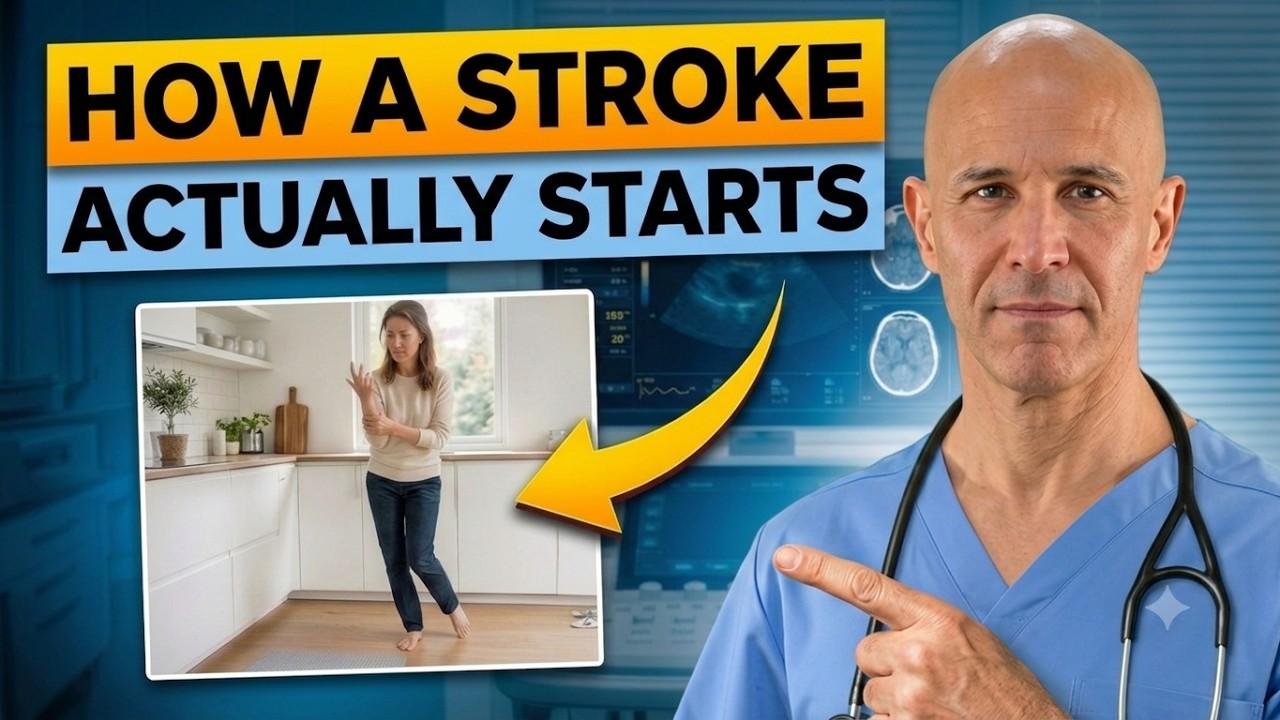
Thumbnail analysis
Pattern: Avatar presenter Trigger: Fear
Curiosity 8 · FOMO 0 · Pain 7 · Clarity 8
Text: HOW A STROKE ACTUALLY STARTS · Face: yes
It combines a highly threatening health topic with an authoritative doctor avatar and a visual promise to reveal the hidden beginning of a stroke.
Improvement: Replace the generic doctor avatar with a close-up of a visibly distressed person showing a clear warning symptom, while keeping the headline shorter and larger.