STOP Cooking Rice with Just Water. Do This for Fluffy Rice Every Time (The Chinese Way)
Shufen's Kitchen · 138.0K views · 2026-09-06 · 561.1x outlier
Title analysis
STOP {common practice}. Do This Instead for {better result} · contrarian · tutorial
Correcting a common mistake taps ego and desire for the 'right' way.
Title features
16 words · bracket
Script
3044 words · 180 wpm · 16.9 min
Hook: You measure the rice. You measure the water. The way the bag told you to. You put the lid on and you wait. And what comes out is not what you wanted.
Type / score: personal_confession · 8/10
Structure: tutorial
Promise: full
Tone: warm, authoritative, myth-busting teacherly
Diagnosis: The script hooks hard by naming a shared failure and promising specific, surprising fixes (finger measurement, dust/glue explanation, oil not water), then delivers each with concrete steps and timings, which should hold viewers through the tutorial. Risk points are the soak/wait step and the mechanism explanation mid-video, which could lose impatient viewers before the payoff step six lands.
Full transcript with timestamps
00:00 You measure the rice. You measure the
00:02 water. The way the bag told you to. You
00:04 put the lid on and you wait. And what
00:07 comes out is not what you wanted. It is
00:10 heavy. The grains cling together in
00:12 clumps that hold the shape of the spoon.
00:15 There is a wet layer at the bottom and a
00:17 slightly hard bit in the middle of some
00:19 grains. And when you stir it, it goes
00:22 glueyer rather than looser. And you look
00:24 at it and you think quietly, that rice
00:27 is just one of those things some people
00:29 can do and you cannot. It is not you and
00:32 it is not your pot. Your rice was coated
00:35 in glue before the heat was ever
00:37 switched on and you made the glue
00:39 yourself in the first 10 seconds without
00:41 knowing it. Nobody ever showed you the
00:44 three things a Chinese kitchen does
00:46 before a pot of rice goes anywhere near
00:48 a stove.
00:49 They take about four minutes between
00:51 them. They cost nothing and they are the
00:53 entire difference between rice that
00:55 clumps and rice that stands up in
00:57 separate glossy grains.
00:59 So, that is what I'm handing you today.
01:01 All of it. Including the one thing that
01:03 goes into the pot that is not water. And
01:05 the last step, which is 10 minutes of
01:07 doing absolutely nothing and is where
01:10 fluffiness actually comes from.
01:12 And a few of these will surprise you.
01:14 Did you know that the water measurement
01:16 printed on your bag of rice is very
01:18 probably for a completely different kind
01:21 of rice?
01:22 That the reason your rice sticks is a
01:24 fine white dust on the outside of every
01:26 grain that you can wash off in 90
01:28 seconds. Or that Chinese cooks measure
01:31 the water with a finger instead of a
01:33 cup. And that the finger is more
01:35 accurate than the cup for a reason that
01:37 is genuinely clever.
01:39 My name is Shu Fen. Rice is the one
01:41 thing in a Chinese kitchen that is never
01:43 allowed to be mediocre.
01:45 Everything else on the table can be
01:47 simple. The rice cannot because the rice
01:50 is the meal and the rest is what you put
01:52 on it. A cook who ruins the rice has
01:55 ruined the dinner no matter what else is
01:57 on that table, and everybody knows it,
01:59 and so it is the first thing anybody is
02:01 taught and the last thing anybody stops
02:04 paying attention to. The whole method,
02:07 every measure, is written out in the
02:09 description below, so you can cook
02:11 along. Now, get out your rice, a bowl,
02:14 and a pot with a lid that actually fits.
02:17 That lid matters more than the pot does.
02:20 First, let me clear away the folklore.
02:22 You have been told not to rinse your
02:24 rice because you will wash the nutrients
02:26 away. Here is the honest version. If
02:30 your bag says enriched, that rice has
02:32 been dusted with a vitamin coating on
02:34 the outside, and rinsing does remove
02:37 some of it. That is real, but imported
02:40 jasmine from Thailand is generally not
02:42 enriched, and either way you are getting
02:44 those vitamins from the rest of your
02:46 food. The texture you gain is enormous,
02:49 and the loss is small, and every
02:51 rice-eating country on Earth rinses.
02:54 Rinse it. You have been told one cup of
02:57 rice to two cups of water. That ratio
03:00 was written for American long grain and
03:02 parboiled rice and then printed on the
03:04 back of everything. And for jasmine, it
03:07 is far too much water. Follow it, and
03:09 you will get exactly the heavy wet rice
03:12 you have been getting. You have been
03:13 told to salt the water. Chinese rice is
03:16 not salted, and it is deliberate. The
03:19 rice is the plain thing that everything
03:21 salty sits on top of, and salting it
03:24 flattens the contrast the whole meal is
03:26 built on. If you like salted rice, salt
03:29 it. Just know it is a choice and not a
03:31 rule. And you have been told to stir it
03:34 while it cooks so it does not stick.
03:37 Stirring is what makes it stick. Every
03:39 time you move a spoon through cooking
03:41 rice, you break grains open and release
03:43 starch, and that starch is the glue.
03:46 Rice is left alone. Now, the mechanism,
03:50 because everything below follows from
03:52 it. A grain of rice is a tight bundle of
03:55 starch. Cooking it means getting water
03:57 into that bundle, so the starch granules
04:00 swell and soften. That is all. But rice
04:03 does not arrive clean. It has been
04:06 milled and polished and moved and
04:08 bagged, and all of that rubbing leaves a
04:10 fine white dust of broken starch
04:13 clinging to the outside of every grain.
04:15 You can see it the moment you add water
04:18 because the water goes cloudy white
04:20 instantly. That dust dissolves the
04:22 second it meets hot water and turns into
04:25 a thin paste, and then your rice cooks
04:27 inside that paste, and when it cools,
04:30 the paste sets, and it glues every grain
04:32 to its neighbors.
04:34 So, your rice was never really sticking
04:36 to itself. It was set in a glue you made
04:39 in the first 10 seconds by pouring water
04:41 onto unrinsed rice. And the second
04:44 thing, water takes time to travel to the
04:47 middle of a hard dry grain. Put dry rice
04:50 straight into heat, and the outside
04:52 swells and gelatinizes immediately, and
04:55 that swollen outside becomes a barrier
04:57 that slows the water going further in.
05:00 So, the outside is soft, and the center
05:02 is still firm, and you have to overcook
05:04 the outside to fix the middle. That is
05:07 where mushy outsides with slightly
05:09 chalky centers come from. Rinse away the
05:11 glue, let the water in before the heat
05:14 arrives, then get the amount right, and
05:17 leave it alone. That is the whole thing.
05:20 Here is the method, exactly, in order.
05:23 It is printed word word in the
05:25 description. Two cups of jasmine rice,
05:28 water,
05:30 1 tsp of neutral oil, or better, a small
05:33 spoon of rendered chicken or pork fat,
05:36 optional, two thick coins of ginger and
05:38 one scallion tied in a knot. Step one,
05:42 rinse it, and rinse it properly. Rice
05:45 into a bowl, cover with cold water, and
05:48 put your hand in and swirl it gently,
05:50 moving the grains against each other. Do
05:53 not scrub or squeeze because broken
05:55 grains make more starch, not less. The
05:58 water will go milky white almost
06:01 immediately. Pour it off, do it again,
06:04 and again, three or four changes until
06:07 the water is only faintly cloudy rather
06:09 than white. It does not need to be
06:11 perfectly clear, and chasing that just
06:14 wastes water.
06:16 90 seconds. This one step is the largest
06:19 single improvement available to you, and
06:21 most people in this country have never
06:23 done it once.
06:25 Step two. Soak it. 20 to 30 minutes in
06:28 cold water, and then drain it. I know
06:31 this is the step everybody skips because
06:34 you are hungry and the pot is right
06:35 there, but this is where the water gets
06:38 into the center of every grain gently
06:40 before any heat is involved so that when
06:42 the heat does arrive, the whole grain
06:45 cooks at the same rate from the outside
06:47 to the middle.
06:48 Soaked rice cooks faster, cooks evenly,
06:51 and comes out noticeably fluffier. And
06:54 it costs you nothing but planning it
06:55 half an hour ahead, which you can do
06:57 while you cut everything else.
06:59 Step three. The water, and this is the
07:02 finger.
07:03 Drain the soaked rice properly, then tip
07:06 it into your pot and shake it flat and
07:08 level.
07:09 Now rest the tip of your index finger
07:11 lightly on the surface of the rice, and
07:13 add water until it comes up to your
07:15 first knuckle. About an inch above the
07:18 rice. That is it. That is how it is
07:21 measured in an enormous number of
07:23 kitchens, and it is more reliable than a
07:25 measuring cup. And here is the clever
07:27 part. What decides how much water a pot
07:30 of rice needs is not the total amount of
07:33 rice. It is the depth of the bed of rice
07:35 and the surface area of the pot because
07:38 that is what governs how the steam moves
07:40 through it. A wide pot with a shallow
07:43 bed and a narrow pot with a deep bed
07:45 need different amounts of water for the
07:47 same weight of rice, and a cup
07:49 measurement cannot know that.
07:51 Your finger measures depth, so it works
07:53 for one cup or for six in any pot you
07:56 own, and it always has.
07:59 If you want a number, soaked and drained
08:01 jasmine wants roughly one to one water
08:04 to rice by volume.
08:06 The finger will land you very close to
08:08 that on its own.
08:10 Step four, and this is the part the
08:12 title is about. Do not put in only
08:14 water.
08:15 A teaspoon of neutral oil stirred
08:18 through. That is the smallest version,
08:20 and it is enough.
08:22 What it does is coat each grain in the
08:24 thinnest possible film, so the grains
08:26 cannot weld to one another as they
08:28 swell, and it gives the finished rice a
08:31 low shine instead of a dull matte
08:33 surface. Restaurant rice glistens. This
08:36 is why.
08:37 Better than oil, if you have it, is a
08:39 small spoonful of rendered chicken or
08:42 pork fat from the jar in your fridge,
08:44 which adds a savory depth underneath
08:46 everything without making the rice taste
08:49 of anything in particular.
08:51 And if you want to go further, this is
08:53 the moment. Two thick coins of ginger
08:56 and a scallion tied in a knot laid on
08:58 top of the rice, both fished out at the
09:01 end, or replace some of the water with
09:03 stock, or with the water you soak dried
09:05 mushrooms in. A single dried scallop
09:08 dropped in. Any of these turns plain
09:11 rice into something people notice
09:12 without turning it into a dish. Step
09:15 five, cooking, and the lid does the
09:17 work. Bring it to a boil uncovered over
09:21 medium-high heat.
09:22 When it is boiling properly and you can
09:24 see craters forming on the surface, put
09:27 the lid on and turn the heat to the very
09:29 lowest your stove will go. 12 minutes
09:32 for two cups. And now the rule. Do not
09:35 lift that lid. Not once, not to peek,
09:39 not to check. The rice is not being
09:41 cooked by the water. Below the surface,
09:44 the water is being absorbed, and above
09:46 it, the rice is being cooked by trapped
09:48 steam.
09:49 Lift the lid, and that steam is gone in
09:51 a second, and the grains at the top will
09:54 be underdone, and there is no getting it
09:56 back. Step six. This is where fluffiness
09:59 actually comes from, and it is the step
10:01 people skip because they think the job
10:04 is done. After 12 minutes, turn the heat
10:07 off completely, and leave the pot
10:09 exactly where it is, with the lid still
10:11 on, for 10 minutes. Do not touch it.
10:14 Here is what is happening in there. At
10:17 the moment the heat goes off, the bottom
10:19 of that pot is wetter than the top,
10:21 because the water has been traveling
10:23 upward as steam and condensing. If you
10:26 open it now, you get a wet layer
10:28 underneath, and a drier layer above.
10:31 Those 10 minutes let the moisture even
10:33 itself out through the whole pot, and
10:36 let the grains firm up just enough to
10:38 hold their shape when you move them.
10:40 This one wait is the difference between
10:42 rice that clumps under a spoon, and rice
10:45 that falls apart into separate grains.
10:47 Step seven. Fluff it correctly, because
10:50 there is a wrong way. Take a rice
10:53 paddle, or a fork, and cut down through
10:55 the rice and lift, turning it over
10:57 gently from the bottom. Cut and lift.
11:01 Cut and lift. Do not stir it. Stirring
11:04 drags and mashes and breaks grains, and
11:07 releases the very starch you spent 90
11:09 seconds rinsing away. Then put the lid
11:12 back on until you serve. Now, the same
11:15 pot gives you three quite different
11:17 things, and it depends only on what you
11:19 do at the end. The first is what we just
11:22 made, plain, separate, glossy, standing
11:25 up on the plate. That is the everyday
11:27 one, and it is the point of the whole
11:29 video. The second is the crust.
11:32 After the 12 minutes, before the rest,
11:35 turn the heat up to medium for another 2
11:37 to 3 minutes and listen.
11:40 You will hear it change from a soft
11:41 bubbling to a faint crackle. That is the
11:44 layer against the metal turning golden
11:46 and crisp. And in China that crust has
11:49 its own name and people argue over who
11:51 gets it.
11:53 Then rest as normal and lift it out in
11:55 sheets with a spatula. It is the best
11:57 part of the pot and it is free.
12:00 And the third is not for tonight at all.
12:02 Cook double deliberately and spread the
12:05 extra thin on a tray. Cool it fast and
12:08 put it in the fridge uncovered. Cold
12:10 rice from yesterday is not a leftover.
12:13 It is a different and better ingredient
12:15 and it is the only thing that makes
12:17 proper fried rice. You are already
12:19 boiling the water and dirtying the pot.
12:22 Do it every time.
12:23 Now the honest words because your first
12:26 pot will teach you things. If it came
12:28 out heavy and clumped, you did not rinse
12:31 or you used too much water or you
12:33 stirred it at the end. If it came out
12:36 wet at the bottom and dry on top, you
12:38 skipped the 10-minute rest. If some
12:41 grains were soft outside and hard in the
12:43 center, you did not soak. If the top
12:46 layer was under done, you lifted the
12:49 lid.
12:50 If it boiled over and made a mess of
12:52 your stove, that foam was the loose
12:54 starch you did not rinse off. It will
12:56 not happen again once you do.
12:59 If it burnt on the bottom when you did
13:01 not want it to, your lowest heat is not
13:04 low enough and the fix is a heat
13:06 diffuser or simply a thicker pot. And if
13:09 it tasted flat and dull, that is the
13:11 teaspoon of oil and the ginger you left
13:14 out and it is the whole reason for the
13:16 title of this video.
13:18 Now let me say the plain thing about the
13:20 pouches.
13:21 Go and look at the shelf where they sell
13:23 rice in a plastic pouch that you
13:25 microwave for 90 seconds. $2.50
13:29 for one and a bit cups of cooked rice.
13:31 The rice inside that pouch cost about 12
13:34 cents.
13:35 You are paying $2.40
13:38 for somebody else to have boiled water
13:40 and for the belief sold quite
13:42 deliberately that plain rice is
13:44 difficult and slow and best avoided. It
13:47 is not difficult. It is 4 minutes of
13:49 hands and 20 minutes of a pot doing its
13:52 own work while you cook everything else
13:54 and half of that is waiting. I do not
13:57 think there is a wicked man in a back
13:59 room. It is duller and sadder than that.
14:02 There is money in a pouch. There is
14:04 money in a bag with instructions on the
14:06 back that were copied from a different
14:08 kind of rice and never checked because
14:11 nobody complains about rice. They simply
14:13 blame themselves. There is no money at
14:15 all in telling somebody to rinse the
14:17 dust off and then leave the pot alone
14:19 for 10 minutes. Nobody films a
14:21 commercial for leaving a lid on.
14:24 Now the habit and it is two very small
14:26 ones. Rinse and soak in the morning or
14:29 before you go out or the moment you get
14:31 in.
14:32 The rice can sit in its soaking water
14:34 for hours quite happily and then dinner
14:37 starts 20 minutes closer to finish than
14:40 it did before.
14:41 And cook double every single time.
14:44 The pot is already dirty. The extra cost
14:47 you 30 cents and takes no more of your
14:49 attention and tomorrow it is fried rice
14:52 or congee or the thing that saves you on
14:55 a bad evening.
14:56 That is not a recipe. That is insurance.
14:59 So here is what I would ask of you.
15:02 Tonight change only three things and
15:04 nothing else. Rinse it until the water
15:07 stops going white. Use your finger
15:09 instead of the cup and when the 12
15:11 minutes are up, turn the heat off and
15:14 walk away from the pot for 10 full
15:16 minutes without lifting the lid.
15:18 Then fluff it by cutting and lifting,
15:20 not stirring and look at what is in the
15:23 pot, because it will not be what usually
15:25 comes out of it. And come and tell me in
15:27 the comments whether the grains stood
15:29 apart, because that is the one thing I
15:31 want to know.
15:33 Tell me honestly whether you had ever
15:35 rinsed rice before today, because a
15:37 great many of you will not have, and I
15:39 would like all of you to see each other.
15:42 And tell me what kind of rice you buy,
15:44 and what it says on the back of the bag,
15:46 because I am genuinely curious how wrong
15:49 those numbers are in different
15:50 countries. Next time, we take that crust
15:54 at the bottom of the pot and make it the
15:56 entire point. Clay pot rice, where the
15:59 rice cooks with the meat sitting
16:00 directly on top of it, so everything
16:03 drips down through, and where the bottom
16:05 goes deep golden and crackling, and it
16:07 is all done in one pot on one burner in
16:10 25 minutes. Bring the heaviest pot you
16:13 own with the lid. But today you start
16:16 with the pot that has been disappointing
16:17 you. You wash the glue off the grains,
16:20 which takes 90 seconds and changes
16:22 everything.
16:24 You let the water in gently before any
16:26 heat arrives. You measure with your
16:28 finger, the way it has always been
16:30 measured. You put something in that is
16:32 not water.
16:34 And then you leave the lid alone twice,
16:36 when everything in you wants to look.
16:39 The women who fed whole families out of
16:41 one pot knew a thing we have very nearly
16:43 let go of. That the plainest thing on
16:46 the table is the one worth getting
16:48 right, because everything else is only
16:50 sitting on top of it, and that almost
16:52 nobody makes any money at all from
16:54 teaching you to do that properly.
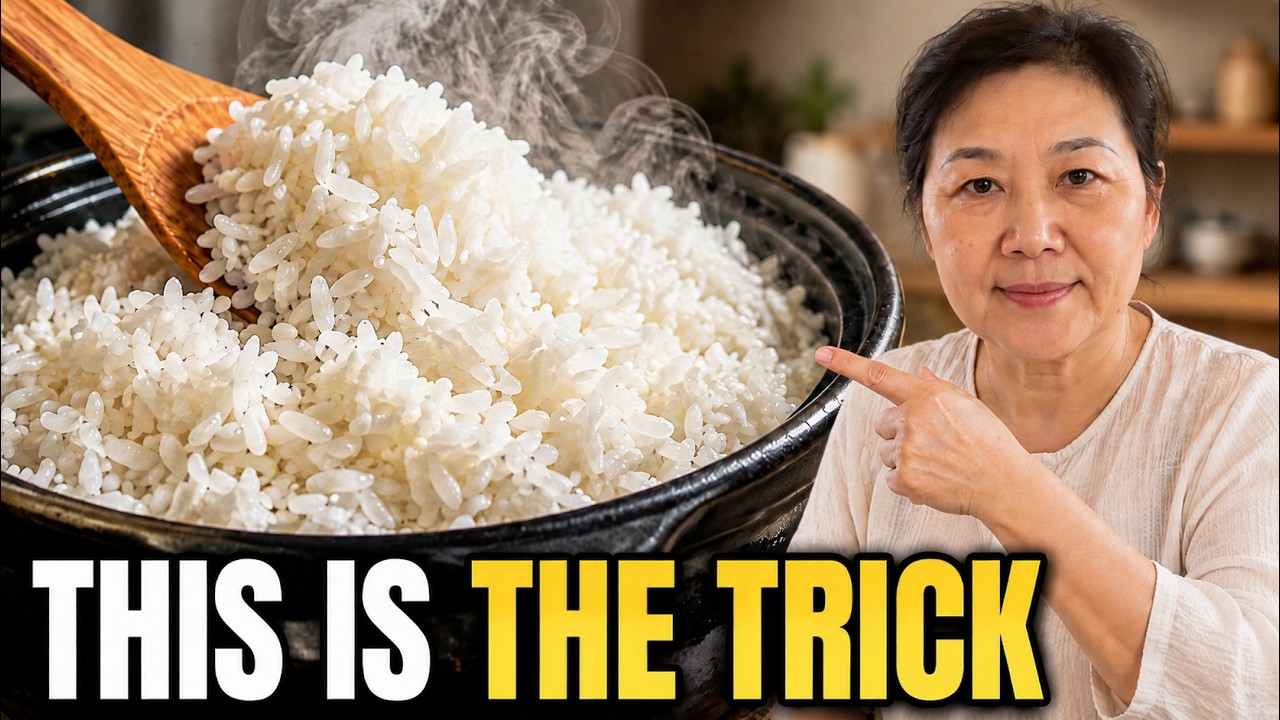
Thumbnail analysis
Pattern: Object closeup Trigger: Contrarian
Curiosity 7 · FOMO 1 · Pain 5 · Clarity 8
Text: THIS IS THE TRICK · Face: yes
Steamy close-up rice plus a confident pointing woman implies an authoritative secret method, and the bold contrarian text challenges the viewer's current cooking habit.
Improvement: Add a visual contrast (e.g., bad vs good rice) to reinforce the 'stop doing this' premise instantly.